The Toughest Transition: From Top Biller to Team Leader in Recruiting

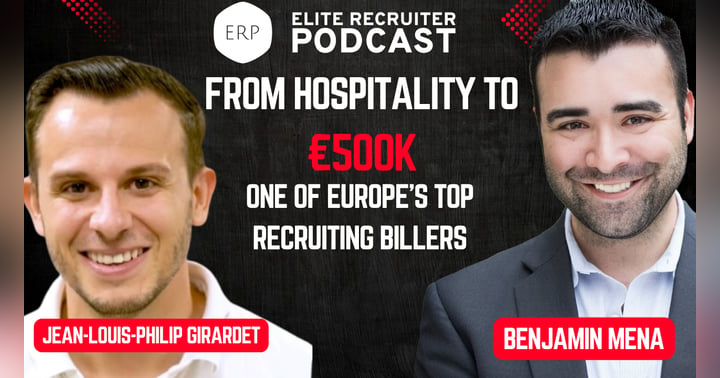
Welcome back to the blog for another deep dive into the world of elite recruiting! In our latest episode, we sat down with an incredible guest who has truly mastered the art and science of this demanding profession. If you haven't had a chance to listen yet, you absolutely need to check out "From Hospitality to €500K: One of Europe's Top Recruiting Billers". Today, we're going to expand on the fascinating, and often surprisingly difficult, journey of transitioning from being a star individual contributor to leading a team. This is a path many high performers eventually consider, but few truly understand the profound shifts required.
The Allure and the Abyss of Transitioning from Top Biller to Team Leader
There's an undeniable allure to the idea of leading a team. For many top billers, it feels like the natural next step, a reward for consistent success, and an opportunity to amplify their impact. The thought of mentoring others, shaping strategy, and influencing a broader business outcome can be incredibly appealing. However, lurking beneath this attractive surface is an abyss of challenges that often catch even the most seasoned recruiters off guard. The skills that make you a phenomenal individual performer – relentless drive, deep market knowledge, exceptional candidate management, and persuasive salesmanship – are critical, but they are not the same skills required to inspire, develop, and manage a group of individuals. This blog post, and our recent episode, delves into these challenging realities and the crucial mindset shifts that are necessary to navigate this complex transition successfully. We'll explore the hard truths, the strategies, and the lessons learned from someone who has not only excelled as a top biller but has also made the difficult leap into leadership.
From Michelin Stars to Million-Dollar Billing: JLP's Unexpected Journey into Recruiting
Our guest, Jean-Louis-Philippe Girardet (JLP), didn't start his career in recruiting. His early professional life was steeped in the high-pressure, exacting world of luxury hospitality. He managed renowned restaurants in bustling metropolises like Los Angeles and London, even working in a Michelin-star establishment. This background, seemingly miles away from the often transactional nature of recruitment, became the unlikely bedrock of his extraordinary success in the field. When JLP eventually transitioned into recruiting, he arrived with zero prior industry knowledge. However, he brought with him a unique set of principles honed in the demanding environments of fine dining. This fusion of hospitality standards and recruitment practices is what sets him apart and forms the core of his success. It’s a powerful reminder that transferable skills and a commitment to exceptional service can redefine what’s possible in any industry. His story isn't just about changing careers; it's about fundamentally re-engineering how recruiting is done, by applying a service-first ethos to a sales-driven world.
The Luxury Service Standard: How Hospitality Principles Revolutionized JLP's Recruiting
One of the most compelling aspects of JLP's approach, discussed extensively in our episode, is how he directly translated the principles of luxury hospitality into his recruiting practice. In high-end restaurants, every detail matters. The guest experience is paramount, from the greeting at the door to the final farewell. This requires impeccable attention to detail, anticipating needs before they arise, personalized service, and an unwavering commitment to quality. JLP applied these same tenets to his candidate and client interactions. Imagine treating every candidate not as a resume in a pile, but as a valued guest at a prestigious establishment. Consider every client call as a reservation that needs to be managed with precision and care. This elevated standard means going beyond the transactional to build genuine relationships, foster trust, and deliver an experience that leaves both parties feeling valued and respected. It’s about creating a "wow" factor, not just in the placement itself, but in the entire recruitment journey. This dedication to a luxury service standard is what allowed JLP to stand out and build a reputation for excellence, even in a crowded market.
Beyond the Cold Call: Replicating Success Through Relationship Building (The 60% Rule)
The episode highlights a remarkable statistic: 60% of JLP's substantial €500K billing year came from relationships he had already cultivated. This is a testament to the power of relationship building over a constant chase for new business. In recruiting, it's easy to get caught in the cycle of cold outreach, always looking for the next deal. However, JLP’s success demonstrates that nurturing existing relationships and providing consistent, high-quality service can yield far greater returns. This "60% Rule" isn't about neglecting new business development, but rather about prioritizing and leveraging the network and trust already established. It means staying in touch, understanding evolving needs, and proactively offering solutions. When you treat your existing clients and candidates with the same level of care and attention as you would a new prospect, you create a loyal ecosystem. This approach not only drives repeat business but also generates invaluable referrals, creating a sustainable and profitable recruitment engine.
Mastering the Desk: The Duo Billing Model for Sustained High Performance
To manage the volume of business generated by his relationship-focused approach, JLP developed and implemented a highly effective "duo billing model." This model allowed him to simultaneously manage an impressive 20-30 open assignments without sacrificing quality or his own sanity. In many recruiting environments, individual recruiters are expected to carry a massive workload alone, often leading to burnout and compromised service. The duo model, as described in the episode, suggests a collaborative approach, likely involving a recruiter and a resourcer or assistant working in tandem. This division of labor allows for specialization and efficiency, ensuring that both the candidate experience and the client service remain at the highest level. By effectively distributing tasks and leveraging complementary skills, this model enables sustained high performance, preventing the overload that often plagues individual high achievers and paving the way for scalable success.
The Hardest Truth: What No One Tells You About Leaving Top Biller Status Behind
This is where the transition from individual contributor to leader becomes truly profound. The episode touches on the "hardest truth" – the significant emotional and psychological challenge of stepping away from the thrill of personal billing success. For many top billers, their identity and self-worth become intrinsically linked to their individual performance. The constant validation of closing deals, hitting targets, and seeing their name at the top of the leaderboard is incredibly powerful. Relinquishing this direct impact and shifting focus to enabling others can feel like a loss. You're no longer the one making the final placements; you're the one guiding, coaching, and sometimes, making difficult decisions that impact the team's performance but not necessarily your own direct billing. This requires a profound shift in perspective, learning to derive satisfaction from the success of others and the collective achievements of the team. It's about finding a new definition of success that is less about personal wins and more about shared victories and team growth.
The 20/70/10 Framework: JLP's Strategy for Leading and Developing a Team
To navigate the complexities of team leadership, JLP has developed a practical and insightful framework: the 20/70/10 rule. This is not about the distribution of billing, but rather a strategic approach to managing and developing a team. While the specifics are best heard directly from JLP in the episode, the essence lies in understanding how to allocate time, focus, and effort across different team dynamics. It likely involves dedicating a portion of leadership effort to driving core business objectives (the 20%), a larger portion to developing and coaching team members (the 70%), and a decisive portion to making tough calls and addressing underperformance (the 10%). This framework provides structure, clarity, and a repeatable process for leading a team effectively. It’s a blueprint for not just managing people, but for actively investing in their growth, fostering a high-performance culture, and making the strategic decisions necessary for collective success. It’s a sophisticated approach that moves beyond simply managing tasks to cultivating talent and driving long-term team excellence.
Cultural Nuances: Salary Taboos and Building Candidate Trust in France
Our discussion also delved into fascinating cultural nuances, particularly regarding salary transparency and its impact on building candidate trust in France. Unlike some other markets where salary discussions are more open and upfront, in France, salary can be a more sensitive and taboo topic. This presents a unique challenge for recruiters. JLP shared his insights into how he navigates these cultural differences, emphasizing the importance of building trust through other means. This includes demonstrating a deep understanding of the market, providing comprehensive career advice, and ensuring absolute discretion. When direct salary negotiation is more complex, the emphasis shifts even more heavily to the recruiter's credibility, professionalism, and ability to act as a trusted advisor. Understanding and respecting these cultural differences is crucial for any recruiter operating in France, and JLP’s approach offers valuable lessons on how to overcome these barriers and still achieve exceptional results by prioritizing candidate relationships and ethical practices.
Lessons from Jack Welch: Competing at the Highest Level
The episode also touches upon the influence of leadership philosophies from titans like Jack Welch, particularly his book "Winning." This philosophy emphasizes a relentless pursuit of excellence, a commitment to being the best in your field, and a clear understanding of competition. For JLP, this translates into a mindset of continuous improvement and a drive to outperform not just competitors, but also previous personal bests. It’s about fostering a culture of high standards within the team, pushing individuals to reach their full potential, and constantly seeking ways to innovate and improve processes. The lessons from Welch underscore that excelling at the highest level requires more than just talent; it demands a specific mindset, a commitment to rigorous execution, and a willingness to embrace competition as a catalyst for growth. This perspective is invaluable as JLP transitions from being a top performer himself to cultivating that same drive and excellence within his team.
Conclusion: Embracing the Leader Within - Key Takeaways for Aspiring Leaders
The journey from being a top-performing individual recruiter to a successful team leader is one of the most challenging, yet rewarding, transitions in our industry. As we've explored, it requires a fundamental shift in mindset, a willingness to let go of personal accolades, and a focus on empowering others. JLP's extraordinary career trajectory, detailed in our episode "From Hospitality to €500K: One of Europe's Top Recruiting Billers", provides a compelling roadmap. Key takeaways for any aspiring leader include: embracing a service-first mentality, understanding the profound power of nurturing relationships, developing scalable operational models like the duo billing system, mastering the art of team development through frameworks like the 20/70/10 rule, and staying attuned to cultural nuances that impact candidate trust. The hardest truth is that your individual success, while a great foundation, is no longer the sole measure of your impact. True leadership is found in the collective achievements of your team. It’s about cultivating an environment where others can shine, grow, and ultimately, surpass your own past successes. This transition is not an end to your own development, but rather the beginning of a new chapter, where your influence expands exponentially, and your legacy is built not just on what you accomplished, but on who you helped become.
Beyond the Sales Pitch: Building Candidate Trust in a 'Salary Taboo' Market