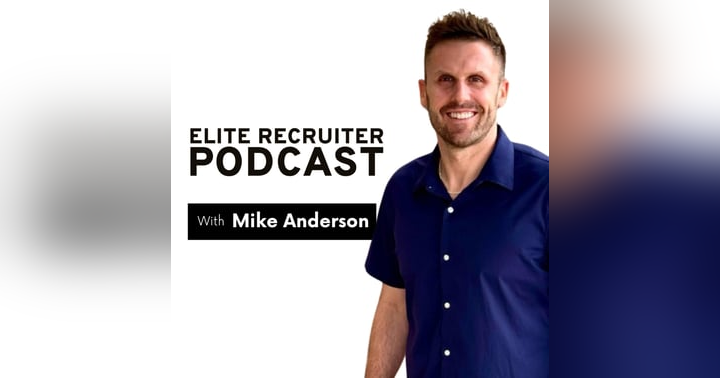
Burn the Ships: When Recruiters Should Go Lone Wolf (And When They Shouldn’t)
Welcome to a powerful new episode of The Elite Recruiter Podcast! In this special installment, host Benjamin Mena welcomes back one of the show's most popular guests, Mike Anderson—a recruiter with a remarkable journey from overcoming personal adversity to finding professional freedom in the recruitment industry.
This episode dives deep into the pivotal question many recruiters ask themselves: Should you go “lone wolf” and start your own business, or is your best move staying right where you are? Mike Anderson shares why he left the big agency world, what drove him to burn the ships and never look back, and how making the leap changed more than just his career—but his entire life.
You’ll hear raw stories of hardship, transformation, and honesty about what it really takes to make it on your own. Learn the common pitfalls recruiters face when going solo, what signs to look for before making the jump, and how to know if you need a partner (or if you’re just trying to plug a hole).
Whether you’re feeling unfulfilled at your desk or questioning if you’ve got what it takes to thrive independently, this episode offers no-fluff advice, real-world numbers, and heartfelt motivation. Plus, stick around for hands-on tips—including the very first steps to set up your own recruiting business, and why building demand should come before buying tools.
If you’ve ever found yourself daydreaming about the freedom and challenge of running your own shop, don’t miss this conversation. Get ready for candid truths, actionable takeaways, and some laughs along the way. Let’s get into it!


🎙️ PART 1
Burn the Ships: When Recruiters Should Go Lone Wolf (And When They Shouldn’t)
1️⃣ Episode Hook
Thinking about going solo?
Before you burn the ships… you better know what you’re actually walking into.
🔥 JOIN THE 30-DAY BD CHALLENGE (KICKS OFF FEB 9TH)
2026 is the year of action. We are launching a 30-day challenge to help you crush your business development goals, build accountability, and implement the strategies from this podcast.
Join The Elite Recruiter Community to participate:
https://elite-recruiters.circle.so/checkout/elite-recruiter-community
2️⃣ Why This Episode Matters
Every recruiter eventually asks the question:
Should I stay at my agency… or go build something of my own?
This episode breaks down the real math, mindset, and recruiting strategies behind going lone wolf — so you can decide with clarity instead of emotion. Whether you're billing $300K or $1M+, this conversation could change your career trajectory.
3️⃣ What You’ll Learn
- The dangerous lie recruiters tell themselves before going solo
- How to know if your success is agency-dependent
- The financial runway number you should hit before burning the ships
- Why most recruiting partnerships fail (and how to avoid it)
- The identity shift that happens when you lose the big agency logo
- How to evaluate whether your desk would survive without corporate support
- The psychological test that reveals if you're truly built for lone wolf life
4️⃣ About the Guest
Mike Anderson is a top-performing recruiter turned solo operator who has billed millions and built multiple revenue streams after walking away from the big agency world. Known for his elite sales skills and unfiltered mindset, Mike brings real-world recruiter training and hard-earned perspective.
5️⃣ Extended Value Tease
Imagine knowing — with confidence — whether going solo is your next move.
No more mental gymnastics.
No more wondering.
No more “what if?”
After this episode, you’ll either double down and scale inside your agency… or prepare to build something that’s truly yours.
This is about identity.
This is about leverage.
This is about protecting your time.
6️⃣ Listen Now CTA
If you’ve ever questioned your path in recruiting, this is required listening.
Press play and decide your future with clarity.
7️⃣ Timestamp Highlights
00:00 – Why recruiters romanticize going solo
04:12 – The real reason Mike left big agency recruiting
09:38 – The math behind keeping more of your billings
14:50 – Agency-dependent vs. self-created revenue
23:26 – The financial runway test every recruiter must pass
27:30 – Why business development is your ultimate safety net
32:21 – The truth about partnerships in recruiting
36:45 – The biggest mistake recruiters make when they leave
41:15 – Identity shift: who are you without the logo?
47:38 – Burn too fast vs. burn too late
8️⃣ Sponsors
🚀 Atlas – AI-first ATS & CRM
Automates admin, syncs resumes/emails, and uses AI to build polished profiles and reports.
Try it free or book a demo → https://recruitwithatlas.com
9️⃣ Summit + Community
🎯 2026 This is Your Year Recruiter Summit – April 27-May4
https://this-is-your-year-recruiter-summit.heysummit.com/
💼 Join the Elite Recruiter Community
https://elite-recruiters.circle.so/checkout/elite-recruiter-community
🔟 Tools & Links
Free Trial: PeopleGPT → https://juicebox.ai/?via=b6912d
Free Trial: Talin AI → https://app.talin.ai/signup?via=recruiter
Free Trial: Pin → https://www.pin.com/
Signup for emails → https://eliterecruiterpodcast.beehiiv.com/subscribe
YouTube: https://youtu.be/TdXYBTo_kXg
Follow Mike Anderson on LinkedIn: https://www.linkedin.com/in/recoveryandrecruitingmike/
Host Benjamin Mena: http://www.selectsourcesolutions.com/
Benjamin LinkedIn: https://www.linkedin.com/in/benjaminmena/
Benjamin Instagram: https://www.instagram.com/benlmena/
Benjamin Mena [00:00:00]:
The 30-day BD challenge kicks off February 9th in the Elite Recruiter community. This was the most awesome sales and BD summit yet, but here's the thing. Now is the time for action. We are kicking off on February 9th, a 30-day BD challenge to start putting everything into action. Whether you need a little bit of help in the BD side, or you just need the accountability, join the Elite Recruiter community. And join us for the BDD Challenge because I want 2026 to be the year that you crush it. This is your year, Onik. Coming up on this episode of the Elite Recruiter Podcast, what's actually working right now with getting new clients?
Mike Anderson [00:00:40]:
Go add people on LinkedIn and when they add you back, voice note them. And be like, hey Steve, my name's Mike Anderson, dude. I just went off on my own, started my own business.
Benjamin Mena [00:00:50]:
How do you find the right partner?
Mike Anderson [00:00:51]:
I mean, I can answer that professionally, not personally, because I'm still single. Bye! Welcome to the Elite Recruiter Podcast with your host Benjamin Mena, where we focus on what it takes to win in the recruiting game. We cover it all from sales, marketing, mindset, money, leadership, and placements.
Benjamin Mena [00:01:13]:
Admin is a massive waste of time. That's why there's Atlas, the AI-first recruitment platform built for modern agencies. It doesn't only track resumes and calls, It remembers everything, every email, every interview, every conversation, instantly searchable, always available. And now it's entering a whole new era with Atlas 2.0. You can ask anything and it delivers. With Magic Search, you speak and it listens. It finds the right candidates using real conversations, not simply looking for keywords. Atlas 2.0 also makes business development easier than ever.
Benjamin Mena [00:01:43]:
With Opportunities, you can track, manage, and grow client relationships powered by generative AI and built right into your workflow. Need insights? Custom dashboards give you total visibility over your pipeline. And that's not theory. Atlas customers have reported up to 41% EBITDA growth and an 85% increase in monthly billings after adopting the platform. No admin, no silos, no lost info, nothing but faster shortlists, better hires, and more time to focus on what actually drives revenue. Atlas is your personal AI partner for modern recruiting. Don't miss the future of recruitment. Get started with Atlas today and unlock your exclusive listener offer at recruitwithatlas.com.
Benjamin Mena [00:02:19]:
I'm excited about this episode of the Elite Recruiter Podcast because we have a returning guest. This is one of the most popular podcast guests that we had over the last, like, I think a year. Has it been a year already? But man, his story changed lives. And here's the thing. We're going to break down why he walked away from the big agency world. Why did he decide to go lone wolf? Why did he decide that it was everything was going to be different on the other side? And maybe this is something that you've been thinking about too. Maybe this is something like, maybe I should go out there on my own, or maybe the best thing that you could do is stay where you're at. But for those that are thinking about doing it, we're going to walk through how Mike Anderson burned his boats and never looked back and went all in.
Benjamin Mena [00:03:10]:
So Mike, welcome back to the podcast.
Mike Anderson [00:03:12]:
Hey, Ben Mena. Thanks for having me, man. I'm stoked. I'm pumped to be here, dude. Yeah, dude, that last podcast, we went live with it like a year ago, recorded it, I think in December of '24, went live in January. And like, yeah, dude, I'm stoked to be back. I got to hand it to you, dude, one of the best podcasters out there. So when you commented on my LinkedIn post a while ago about the Lone Wolf and you're like, podcast? I'm like, dude, say when, let's go.
Benjamin Mena [00:03:34]:
Well, definitely excited because I know personally, I remember when I first started this, I was working at one of the biggest agencies in the United States. And I thought I was going to spend so much time there. It was a career. Like, I loved recruiting there. Then all of a sudden, they actually— like, I found an account, I grew it, and then some politics. They took that account away from me. I wasn't allowed to make a single placement on that account. I missed President's Club by— I think it was just a few thousand dollars.
Benjamin Mena [00:04:05]:
The person that took over my account halfway through got President's Club, and at the end of the year, they told me I didn't work hard enough.
Mike Anderson [00:04:13]:
Bro, that story is everywhere. And yes, dude, I'm sorry that happened to you, but obviously we all, the rest is history. You've been on your own. I'll tell you this, if you were still there, you wouldn't be doing the Elite Recruiter. That's true. But yeah, dude, all of these stories, like that story times a thousand. I hear it all the time, dude. And like the world is ready for these lone wolves, baby.
Mike Anderson [00:04:32]:
They ready. They ready.
Benjamin Mena [00:04:34]:
All right. So let's get started. Quick 30-second introduction. For those that have not heard of Mike Anderson yet.
Mike Anderson [00:04:40]:
All right. Uh, let's see, 30-second introduction. I don't know if I've ever done anything in my life under 30 seconds, but my name is Mike Anderson. Uh, let's see, uh, I'm a, uh, 38-year-old guy living here in Franklin, Tennessee. I've been in the agency recruiting game or on the recruiting side, third-party recruiting side, for— I started in late 2013, so we're going on 12 and a half years. And then, uh, I've got a crazy wild story, but for those who don't know, I'm in recovery. I've got 7 and a half years clean and sober from drugs and alcohol. And, uh, as of November of last year, I just celebrated 5 years without placing a bet, which by far was the hardest one.
Mike Anderson [00:05:16]:
So no gambling, no alcohol, no drugs. I'm just all in on fitness, recruiting, and my faith. And I love it. So, but yeah, I've got to have a wild story and, uh, I don't know if you want me to dive into it more. I'm happy to, but, uh, it's pretty crazy where I came from.
Benjamin Mena [00:05:29]:
So for those that are— this is the first time you're hearing Mike, go back and listen to the previous episode that we had together. He walks through every single one of the hardships, his life absolutely turning around. And real quick, maybe I'll just highlight that real quick. Like, what was the moment that it— like, you hit that wall and said, like, fuck, I need to change?
Mike Anderson [00:05:50]:
So from 2009 to 2018, I didn't start recruiting until 2013, but basically 2009 to 2018, I'm just going to call it my 20s. And there's a bunch of why this happened. There's basically 3 major events that happened in 2009 that sort of set me on my path. But yeah, I fell in love with alcohol and then, you know, I'm a big guy. I'm 6'4". And so I started blacking out too much and my friends were like, dude, you need to stop blacking out. So I'm like, okay, cool. Well, then hit me with some of that white powder.
Mike Anderson [00:06:17]:
Started down the cocaine route and basically 2014 to 2018. 18, when I was making a ton of money, just starting the AC game. It's all a blur, but I was spending probably 50 to 75% of my money on alcohol and drugs. And, uh, you know, I knew I had a problem when I always tell people I knew I had a problem when my drug dealer, he had an apartment. And then when I stopped going to him, when I first started going to me in an apartment, when I stopped going to him, he had a house. Uh, so that was probably a, uh, it's probably a telltale sign, but, uh, but I hit rock bottom. I was arrested between 2011 and Or sorry, 2010 to 2018, I was arrested 18 times. I got a DUI in 2011, another DUI in 2012.
Mike Anderson [00:06:55]:
And then I was like, oh, I know what the solution is. I'll stop driving. And then Uber came along and then I started Ubering and Ubering, but then I realized it's kind of awkward to ask your Uber guy to drive you to your drug dealer's house. So I'm like, let me just drive. And then after I would pick up stuff at the drug dealer, then I'd be like, well, let me just go to a bar. And then it just started and started. But finally on May 25th, 2018, I was arrested for the, uh, for the last time. And I woke up in a jail cell on May 26th, 2018, and that's my sobriety date.
Mike Anderson [00:07:21]:
I'm now friends with the cop that arrested me. I've actually placed his daughter in a job. That's a true story. I actually went to his retirement party. This guy's a Costa Mesa PD and, uh, just grateful for that. Turned my life around completely. But what's wild is when I stopped, when I got sober from alcohol and drugs, 2018, the next 2 and a half years until November of 2020, actually gambling took off, which is a real thing for addicts., it's like whack-a-mole. You knock one down and the other one comes up.
Mike Anderson [00:07:46]:
And so 2 and a half years of gambling. What's wild is that, and I really mind being vulnerable at this, but I was, you know, I was making a lot of money. And when I stopped gambling in, uh, in November of 2020, I had $17,000 to my name. That's all I had. And now I have a, you know, a 7-figure net worth, et cetera. So I've turned it around all in the way that, uh, you know, God's grace, et cetera, et cetera, through the power of the Lone Wolf, through the power of the blueprint, through the power of recruiting. All the stuff, but then obviously all of that was always coming in the top of the funnel. I mean, except the Bill Print and the Lone Wolf, which is new stuff the last 2 years, but I was always making a ton of money.
Mike Anderson [00:08:19]:
But finally I plugged the hole in the bottom and stopped gambling and then turned it around since. And now I'm, uh, I don't know, I guess, uh, you know, a guy doing well. I own, you know, I bought a house for my mom and, uh, you know, it's just total freedom, sober, abstinent from gambling and just grateful for where I've come from. So that's a little bit more about my story. It's a lot more in depth on that original podcast. Hopefully that helps.
Benjamin Mena [00:08:40]:
Go back to the original podcast, but I absolutely love that the power of recruiting, you were able to buy your mom a house.
Mike Anderson [00:08:45]:
Yep.
Benjamin Mena [00:08:46]:
Amazing. The focus of this conversation is like, should you make the jump or should you stay where you're at? Both are incredible options because recruiting is incredible. But for you, what was the moment that you realized that the big agency wasn't for you anymore?
Mike Anderson [00:09:04]:
It's funny because at the big agency, I started to create sort of a process that allowed me to, I was just heavy on the client side, bringing in clients and clients and clients and clients. And I had a great delivery team and, you know, they would find me candidates and I would do splits. I mean, like I said, I did, I think, I think one year I sent $4.8 million out in invoices and obviously on splits I did $2, $2.4 that year. But like all of that stuff, I just remember being like, every time something would come in, I'd be like, Why am I making 35 or 40 or 45% of this total fee? And then, you know, and you look around and you're like, okay, well, I guess there's a roof and I got to pay for that person over there. And I got to, this chair I'm sitting on costs money and I have to pay for a building and a parking spot. Like I started, like, I like understood it. Right. And there's a couple of snacks in the fridge, which I took full advantage anyway.
Mike Anderson [00:09:53]:
So I started like, okay, but then you start doing the math and you're like, okay, so I build 2 floors. I made right around a million bucks, like, you know, whatever. Like, that's a lot of money for the company. And you start to like, you start to do this mental math and then you're like, okay, cool. Which is cool. And that's part of that. That was part of my decision-making was the mental math. And then you look at it and then you think, okay, what's proprietary that my company has done? And the truth is they had great delivery.
Mike Anderson [00:10:16]:
There was a lot there. Like I knew I wasn't going to be able to replicate exactly what I was doing at an agency. And I'm not sitting here to tell people that you can do that because you can't, it's going to be different., but if the value that you know that you have is enough to supply enough money for you to go off on your own and you value quality of life, et cetera, it ended up making sense for me. So you have to understand too, at the time, you know, I'm making a lot of money, you know, I was doing well, but like, I'm also, dude, I was fatter than I've ever been. I was like looking like, dude, like I was on a dating app and I was getting no matches. And I'm like, what's going on here? And it's just not good. And, you know, it's just like I had to like change something and I needed time to do that. And I remember my best friend Andy was like, yo dude, yo dude, you should probably get your, uh, your blood work done.
Mike Anderson [00:11:02]:
And then so I did. And then I remember this, I'm going to, I'm going to, I'll promise you all. I know I'm kind of rambling, but this is important. And he's like, you should get your blood work done. So I get my blood work done. I remember that I was at my company at this time when this happened, get my blood work done. And the doctor's like, yo dude, you're pre-diabetic. You need a treadmill and a salad.
Mike Anderson [00:11:18]:
And I'm like, bruh. And so I'm like, when I got all this money, he's like, you ain't going to be able to spend it because you're going to be gone. And so I'm like, oh my gosh, like that, that makes sense to me. And so I was like, I had to change. And so when you combine the personal with the professional, I was like, dude, I could do this. I want to go do this. And also my priorities at that time was like, I have done well professionally and I'm single, right? At the time I was 35 and single. I'm still 38 and single, but like, I wanted to like focus on my health and I wanted to put myself out there and like that gave me the ability to do that.
Mike Anderson [00:11:48]:
Lastly, on the personal side, as you can tell, I'm not the most corporate of people. Okay. I'm not like really good at it. If you read some of my emails, they're not like howdy greetings. Like I'm just not that guy. And so like I got, you know, I'm reprimanded sometimes like, Mike, you can't say corporate email, you know what I mean? I just got tired of that. You get enough hand slaps. You're like, you know, I just want to go do what I do.
Mike Anderson [00:12:11]:
And then if I swing and strike out, so be it. I'll figure something else out. So that was kind of my story. So hopefully that was not too long-winded, but hopefully it helps.
Benjamin Mena [00:12:18]:
I was actually going to ask you just because like, you know, given the chance to know you and like, you know, I've gone through, you know, both of your courses and I'm like, that doesn't play well with corporate. Do you ever get your hand slapped?
Mike Anderson [00:12:28]:
Oh my bro, bro, dude, hand slapped, bro. I've been in so many meetings where it's like you walk in and somebody high up is just like, and you're like. And then they're just like looking at, but then they look at the numbers and they're like, but he's crushing, but he keeps saying, you do that dance. And it's just like, dude, I just, I belong nowhere near corporate America. Like I don't, I have to make this work because I'm not getting a job in corporate America. Let's call it what it is.
Benjamin Mena [00:12:55]:
So, you know, you hit that wake up call, like you saw that, but when did you actually pull the trigger and say, like, I have to actually burn my boats. I'm getting rid of my plan B. Yep.
Mike Anderson [00:13:07]:
So June of 2023, I'm in Texas and, and I'm just like, enough is enough. So I, I left my company and I took a little bit of time to be like, all right, like it wasn't like, you know, quit on a Friday, start on a Monday because I wasn't, I wasn't like hurting at all. And my relationships with everybody that I deal with have always been very strong. Like I don't, I've never had an issue building relationships. I can always, and even if. You know, and it's not like I was like, I'm not walking away, taking a bunch of clients with me. Like, that's not what I was doing. Like, people want to work with Mike Anderson.
Mike Anderson [00:13:38]:
They want to work with Mike Anderson. They don't, like, I'm not too worried about, I was not that whole setup thing, which is something to consider. And I do talk about that in the Lone Wolf. We do talk about that, but like, I was never really worried about that. And I trusted who I was and I was like, you know what, I'm going to do it. I had the financial wherewithal. I took in a couple of facts. I was like, I have the financial wherewithal.
Mike Anderson [00:13:55]:
Like, how long can I go without doing a deal? And like, it was like 5 years or something. Like, I was not going to go 5 years without doing a deal. It's funny. So I was good. And then it was like, okay, so I have that. I had a big network on LinkedIn. And so what really helped me was when I stopped, I knew I was going to start my own company. I knew that.
Mike Anderson [00:14:10]:
I just didn't know how soon I was going to do it. I ended up launching in September of that year and it was going to be sooner than that. But like I was on the treadmill one day and I put up a post on LinkedIn and I was like, hey guys, at that time I had a pretty big following and I would always get questions. That was another thing. I would always get a ton of questions from people asking me questions in DMs on LinkedIn.. And I could never really answer them because they're like a competitor. And it's like, I didn't really care, but like corporate world says you can't help somebody else or whatever the thing is. And so I just never did.
Mike Anderson [00:14:36]:
And then finally I was like, hey guys, I just quit my job. I put up a post, like, I think it went viral. It was like a bunch of views, bunch of likes, bunch of stuff. I was like, hey guys, I'm open for coaching. Give me a call if you want. It was just like, boom. And I'm like, dude. And I think within like a month I had like 16 people I was coaching.
Mike Anderson [00:14:51]:
And I was like, and it was like weekly. And I was like, dude, that's a bunch of people. And it was like, I was helping them. I was like, this is cool. So then I started doing that and I was getting the managerial side of like what I enjoyed the, cause I like talking to people clearly. That's why I'm on your podcast. But like I enjoyed that in the coaching. And then it was like, but at some point, like, dude, the dog's got to eat, dude.
Mike Anderson [00:15:10]:
You got to do some deals. You got to do some deals. And I was like, it's time to start. And so I launched my company that September and I've just never looked back. And then. Anyways, I could talk about where the blueprint came from and all that, but that's the start of it. So September of '23, that's when I went off and officially started my own. So I've been on my own for 2 and a half years and it's freedom, baby.
Mike Anderson [00:15:28]:
Freedom.
Benjamin Mena [00:15:29]:
And I know you just started a new company with Connor and at the recording of this podcast, how long has it been since you guys started and how much have you guys built? Cause I know you shared that recently on LinkedIn.
Mike Anderson [00:15:40]:
Yep. Yep. 4 and a half. Yep. So we started on, we started on July 28th was our official launch date. July 28th was our official launch date. And we basically did in 4 months, we did $330,000 and then we took off December and now we're back on. And honestly, we just sent out a $50,000 invoice this week.
Mike Anderson [00:16:00]:
We got another candidate starting in like 2 weeks. And then, uh, and we just have a ton of stuff in process. So like I, anyways, from our goal from July 28th to this July 28th, we want to do $800,000 and we're Not worried about doing that at all.
Benjamin Mena [00:16:14]:
And for those listening also, like how many clients have you guys been able to get in that short amount of time?
Mike Anderson [00:16:19]:
Oh dude, if you're asking the Mike Anderson version of what a client is, a client is somebody who pays you. So we've done, I want to say 13 deals across 9 clients. Okay. But if you're asking how many agreements I've signed, 32, I don't know, a ton.
Benjamin Mena [00:16:35]:
Cool.
Mike Anderson [00:16:35]:
And we might get invited. That's my, that's my whole shtick is BD. I just love business development. I love it.
Benjamin Mena [00:16:40]:
And we might dig deeper in the BD, but I just want, as we're digging this, like, this is what could be possible for you, but also it's all important on what path you want to choose. Like right now, the path that you're on could be the absolute best path for you. But here's the thing. Like if somebody's listening, listening to you right now talking and are quietly thinking like, I could do this myself. What do you think they're really craving? Are they craving like freedom, control? Respect, money, identity.
Mike Anderson [00:17:08]:
So dude, man, those are like big time buzzwords and yes, all of that. And I've gotten, dude, Ben, I can't even tell you how many people have reached out, DMs, questions, you know, they're at an agency, they work at ABC, XYZ, wherever it is. We don't need to go into names, but like they work at whatever company they're at. Right. And they're like, man. And then every time the reason is. The number one reason is, is generally speaking, is they look at, they're making a lot and they want to keep more of it. And so I always am the guy that like, I want to poke a hole in that.
Mike Anderson [00:17:43]:
And I'll be like, hey, this isn't apples for apples. This isn't, you don't just like leave and it's just the same. And it's just whatever. Like that's not the case. But in general, the main reason that people leave is nothing that their company is doing is proprietary. Their company might be holding them back, i.e., geography. I.e., niche that they can work on. The commission split might be low.
Mike Anderson [00:18:03]:
They don't get enough support on their reps. They might have a ton of reps and they don't get enough support on them. I mean, there's a ton of different reasons that go into it, but in general, I think everybody wonders fundamentally, can I do this? Could I do this? He's doing it. I think I could, like, or whatever they, whatever they see or feel. I'm like, you just wonder. And I think that anybody who's ever done a I'd say, you know, if you've done 10 deals in your career, it's like, you know, if you're a year in and you all of a sudden have $250,000 in invoice that comes in and you, in your last job, you were making $50K and now all of a sudden you're like, I'm going to make over 6 figures. It's like awesome. And you're like, this is incredible.
Mike Anderson [00:18:44]:
I remember feeling that in 2013, 2014, like, oh my gosh, dude, I'm going to be here forever. I'm retiring, like put my parking spot. This is where it is like that, you know, whatever. Cause you're crushing deals. You're making more money than you ever have. Cause I came from the fitness industry and that wasn't paying that. And I was like, boom, I remember my first year when I made, I think 2014, I made like $260 grand. I was like, oh my gosh, dude, I'm loaded.
Mike Anderson [00:19:03]:
Like Forbes top 500, whatever. Like I just thought I was the man. And then all of a sudden, then you start to math and you're like, dude, I only had 2 bags of Cheetos, but they kept $350 grand off my billing. It's not adding up. I didn't even go off of my own until 2023. So like, it's definitely a thing., but like, if you can wrap your head around it, and I talk about this in the course, but if you can wrap your head around it, and like there are checks and balances and things you can look at to say I should or I shouldn't, like it pretty, it comes down to relatively black and white. Ultimately, you got to burn the ships, but you don't need to just burn the ships because you're just mad at somebody. Like you could actually look at it anyway.
Mike Anderson [00:19:37]:
So there's a million reasons, but I think ultimately there's not a better feeling I've had professionally. I'll say this. There's not a better feeling that I've had professionally. Than these two things. One, taking somebody I don't know from LinkedIn and them telling me that I've inspired them in their sobriety journey or their abstinence journey or their faith journey from what they've seen. That's like, that's just like my cup overflows. I love that. Cause like, that's the stuff that really matters to me, but that's one.
Mike Anderson [00:20:04]:
Number two, the most one or the next, like actual personal thing was me going off on my own and being like, I can do this. And I, when I hit that spread, like seeing the money come in and like making it and like, I can repeat this and I can do this. I'm like, okay, I'm good. I don't never need to go back to corporate America. And that, that, that feeling when I, when I hit that sort of like, I know I can do it. Oh, it was like the world unlocked. And then it was just like, cool. What do I want to focus on beyond just professionally? And it gave me all my time back.
Mike Anderson [00:20:35]:
We talk about it all the time. The biggest thing and the biggest thing that you have to protect in this business is your time. And if you can protect it, you get more of it.
Benjamin Mena [00:20:44]:
Ooh, we're going to definitely like highlight the protecting time. Cause I think that is so important later on in the episode. But like for those listening, this wasn't a decision like that happened one day and you learn something, you're out on your own. This was a work in progress of your story, your journey before were you like, it's time to burn the boats.
Mike Anderson [00:21:01]:
Dude, I remember I had a client I did, I've had in my career, I have 4 clients that I've done over a million dollars with, 4. And I remember 2 or 3 of the clients said to me, cause I'm like, you become close with them. You do enough deals with them. You're like, hey dude, I'm tired of sending resumes. I want to send invoices or like whatever you have fun with them. And you start like, you build these relationships. And I just remember being, I remember some of them, you know, and I'm friends with them. I've been to their houses.
Mike Anderson [00:21:28]:
I've talked to them, played golf, et cetera, whatever. And they're just like, dude, Like, why? Look at how much we gave you. Like, why would you not go do it yourself? And you just like, they're like, you know, like, and you're kind of like, but like, dude, like I I have, get mouse pads and I like, you know, I get to go to the beach on Thursdays when we have happy hour or whatever, you know, and they're like, got it. You can do that when you're on your own too. You know, just like, and, and like unbiased sort of, not by unbiased, but like people that are sort of outside looking in to be like, what am I missing here? And sometimes it takes somebody who's kind of ignorant to the industry to say, guy. So there's that. Then you look at people that are like, you look at a law firm or an accounting firm or whatever. And it's like, it's like Smith, Johnson, Andrews, and Moore.
Mike Anderson [00:22:13]:
And then all of a sudden it's like Johnson, Andrews, and Moore. And then Smith is over there and Smith starts his own thing. And you're like, oh, it is possible.
Benjamin Mena [00:22:21]:
So I know you and Connor talk to a lot of people that are thinking about this and You know, some of the conversations I've seen you guys do on LinkedIn, you guys actually try talking people out of this. Like, why?
Mike Anderson [00:22:32]:
Oh, for sure, dude. To be honest with you, like, I don't have any, I don't have any monetary incentive to get somebody to go off on their own. I don't have anything against agency or against on your own. I'm not incentivized either way, but I just know that when I would do these mental gymnastics that I was doing for years, if I knew what I knew now. It would've made that process a lot easier. And what I mean by that is it doesn't mean I would've— for me, I would've left on my own sooner. I'll say that. Yes.
Mike Anderson [00:22:59]:
But for somebody else, maybe they'll stop the mental gymnastics and realize I shouldn't go off on my own. And so like, that's why we've created the course because like, it's what we didn't want to do. And, and we talk about this in the course. Our goal is not, we don't, we just want you to have the clarity that you need to decide whether or not you should go off on your own because it's hard to do your job well when you're wondering if you're in the right spot. We're recruiters. We deal with it all the time. It's like, it's hard to do that well. And we deal with it all the time, right? Like, you, you know, you talk to a candidate and they're like, I'm miserable here.
Mike Anderson [00:23:26]:
And like, you just know they're not doing their best work because they can just get off the phone with you and then just start hustling. Like, it just doesn't happen that way. And so anyways, you dig why I talk about the common things in the lone wolf and the blueprint lone wolf. We talk about the stuff that the common things that you'll see, but we talk people out of it because there are situations where it doesn't make sense, i.e. You were handed a big account and you're making a ton of money with it. It's pretty much wash, rinse, repeat. They kind of just, you run the show, you have delivery taken care of. Like, why would you leave? You obviously can't take that golden goose account with you.
Mike Anderson [00:23:56]:
The company's obviously going to keep that. There's probably every non-compete in the world. You've got a good delivery team. You basically could play golf on Fridays. It might not make sense for you to leave. You're paying your bills or whatever. Like there is a certain level of like, okay, I need this to survive. Okay.
Mike Anderson [00:24:09]:
I talk about the monetary side. If you don't have the financial runway to do it, and I talk about this much more in depth, I get specific numbers. If you build X amount, And I talk about this in how and in what period of time, like I show that stuff. It also talks about what's proprietary. In other words, if you're somebody that relies on a system that your company has created, like an ATS or some specific tools or whatever. Now there are tools that you can buy, but it might not, it might not translate the same exact way. So there's that. There's also the, the legal backing and the, uh, invoicing backing and the back office stuff that you all now have to do this on your own..
Mike Anderson [00:24:42]:
And like, if you don't want to deal with any of that, and by the way, I hate that stuff more than anything on the planet. Like, I don't belong anywhere near back office, all that. No, that's all Connor. He's incredible at it. He's amazing at it. We'll talk about how important it is to pick a partner like that. But like, I know where I'm good. And I always say this, good recruiters know where they're good, great recruiters know where they're not.
Mike Anderson [00:25:00]:
And I have zero business doing anything administrative or back office. That's just not my jam. I'm really good at just being front lines, etc. So I knew what I was good at. And then my thought was this is what my strength— okay, stay with me here— my strength, business development, relationship building, knocking down doors, all the stuff that I do. If there is something that's holding me back from doing that on another level, on a grand scale, because I'm at a corporate office, it didn't make sense for me to stay. And so when I looked at my skillset, whatever the thing was that I honed in on, which is business development, sales side, account creation, hunting, and then also building accounts, revenue generation. Here's the deal, dude.
Mike Anderson [00:25:39]:
You want to build a relationship with somebody, you're going to at some point have to stop the corporate speak. You'll be able to talk to them like this. And if you have to stay corporate speak all the time, which I can't, I'm nowhere, whatever, like that, there was certain things I wanted to say to clients and my clients would love the fact that I'd say it, you know, they'd follow me on Instagram and they'd laugh and all this stuff, but like, I can't say it in the office or whatever. I just want to be able to talk freely how I do. And that was held back. From an agency standpoint. So like when you added it all up, it just made more sense for me with my skillset to go off on my own. But there are people where it doesn't make sense and that's totally okay.
Mike Anderson [00:26:12]:
There's nothing wrong with it. But I'll say this too, when you're in recruiting, okay, there's a lot of people out there that are in recruiting and they don't know if they want to stay in recruiting. And I think that it's a really hard thing to decide if it's what you want to do. When you're at a company. I think if you're on the fence with it, if you're an average biller, $250,000 to $350,000 a year, you know, you're making, you're paying your bills, you're doing okay, whatever. And you're like, and you're making money and that's cool, but you're not getting fulfilled. Like then it's probably something where my suggestion in that situation would be go off on your own. See if it refills your cup because now your own incentives are involved and you might like it or you might, you know, not like it or whatever.
Mike Anderson [00:26:56]:
But the other part, the other part of that is, is by naturally recruiting, the nature of recruiting says that you're networking. I tell people all the time that if, if I quit today, I'd have 100 people say, hey, come sell whatever, where it is that we sell, clients or whatever. And so it's naturally networking and the dialogue becomes more open where you can say on your own, you're like, yeah, dude, I really don't like doing this. I'll find you guys candidates, but this is not fun. And like, they might be like, well, come work for us or whatever. There's a lot of stuff that you can kind of open dialogue when you're on your own. And so when you're at an agency, you kind of have to Kool-Aid drink and papa rah rah. And if you're not papa rah rah, then it's not that great.
Mike Anderson [00:27:30]:
So I don't know if that makes but I think sense, it's perfect.
Benjamin Mena [00:27:32]:
Yeah, that makes perfect sense. And I've actually seen friends actually go off on their own, realize it's not for them, and then they're better at the agency afterwards.
Mike Anderson [00:27:41]:
Yeah.
Benjamin Mena [00:27:42]:
And let me just kind of ask you this, because all the conversations that you have, you know, what is the most dangerous lie a recruiter tells himself? Before going in on their own?
Mike Anderson [00:27:54]:
I think the biggest lie is they say, I build this amount by myself or at a company, $450,000. I'm going to go build $450,000 on my own and I'm going to keep it all. It's not an apples to apples translation. It's not. The job is the same, but the way that you look at it, it's It just, it doesn't translate exactly. Okay. It just doesn't. And so I think that's a big lie.
Mike Anderson [00:28:20]:
The other one too is they tell themselves they're good at all aspects of the job, not realizing that when they're at an agency, any weakness they have is covered by somebody else. That happens a lot. I.e., me. I don't know if this is, if this is news to anybody, but I suck at LinkedIn Recruiter. I'm not great at it. Like, I don't love Boolean, I don't love scrolling, I don't love any of that, whatever. What I do love is going and breaking down doors and having somebody tell me no, that they don't want to work with me, and let me tell them, hey dude, you're missing the mark here, or whatever I do. That's what I'm good at.
Mike Anderson [00:28:58]:
On the candidate side, it's not that I can't do it. I'm a great closer. I'm really good at that piece of it, but sourcing and scrolling and Booleaning and the stuff like, no. Is zero. So for me, understanding that was where like, okay, so if I leave, because that was definitely taken care of at my agency, who, how's that going to get handled? So then it was critical that I entered on my own as a partner. So there are people that have a great desk, $600,000, $700,000, $800,000 desk at an agency, but it's not going to translate because they're not going to bill at that level because it's very hard to run a 360 desk by grabbing a rack and then going to get all the candidates. The whole thing with Recruiter Blueprint, Lone Wolf, and the network that I have, I mean, I run a coaching business. I have all of my people are all doing all splits together because some have strengths and some have weaknesses.
Mike Anderson [00:29:49]:
I've introduced everybody to a lot of people and they're all working splits. I had two people that just did $60K in splits in the last week and a half. And they don't even know each other. They wouldn't know each other unless I introduced them. But like, that's an example of like them understanding where they're weak. And that's a big part of it is having a network as well that can fill in your gaps.
Benjamin Mena [00:30:06]:
I mean, let's say, let's dig into this a little more. Like you're sitting there, you bill $350K, you bill $500K, you bill $700K, you bill $1 million. Like, how do you realize whether your success is actually agency dependent versus them dependent?
Mike Anderson [00:30:21]:
Dude. So let's just take a recruiter and I did this with multiple people. I'm not going to give away names because I don't want to do that, but let's take a recruiter and you look at, they work at an agency, they work at a company and they're doing the dance, right? Oh, should I go off my own? Should I stay here? Should I go off my own? Whatever, right? All that dance, right? They're doing that dance. So they reach out and you're like, how do I know? So one of the things that I always tell people is go look at your last year. Okay. And look at every deal you closed. Look at where the client came from. Was it proactive outreach on your end that you could do that was not proprietary to your company? Or was it handed off to you? Was it somebody got fired and they gave you the account and all of a sudden Susie quit and now they're hiring or whatever? You gotta know that.
Mike Anderson [00:31:08]:
Okay. So understand that because a number doesn't tell the full story. You have to understand the number contextually. Okay. So there's that. So looking at clients over the last year, then I tell them, now look at all the candidates where they came from. Okay. When I look at my desk, right, I remember that year that I did 2-4, I did 96 deals that year.
Mike Anderson [00:31:25]:
I did 3 full desk deals or 2, 2 or 3. It was like not more than that. And 93 of them were splits. And that is all me on the client side, not me on the candidate side. Now I come in and I'll close the deal at the end and deal with the candidate, et cetera, et cetera. But like from that standpoint, it was very clear to me that I had to solve delivery, knowing what I was going to do. Prior to me going off on my own, if you're an incredible recruiter and you just love talking to candidates and candidate experience and rah, rah, bullying and scrolling and all that, all that stuff that just makes my skin crawl. If you're good, if that's you and you're like, oh, but business development is like, if that's you, then you have to understand, like you need to link up with somebody like me or somebody like that is out there that's on the front lines that just wants to hammer, hammer, hammer, hammer.
Mike Anderson [00:32:10]:
Okay. And it's personality based and all that kind of stuff, but you know where you're strong, you know where you're weak. I will say this, very few people are really good here and are really good here. They might be, for me, I'm really good on the sales side. I can pass a test on the recruiting side. Like that's about where I'm at. Knowing yourself, right? I can drive it 330 off the tee, but I can't putt it 4 feet.
Benjamin Mena [00:32:36]:
But one of the challenges is if you go off on your own, you have to get good at the sales side, even if you don't like it.
Mike Anderson [00:32:43]:
There's not a world where being good at sales doesn't help. That's a fact. Okay. And even if you're good at recruiting and finding candidates, I mean, what we all know this, right? A good recruiter knows LeBron James is good at basketball. A great recruiter knows he's not leaving the Lakers, et cetera. So, I mean, it's like somebody, like a junior recruiter reaching out to me saying, hey, I've got an open recruiting role at an agency. It's like, they're, they got to know that I'm not leaving. You know what I mean? And so being on the sales side and being strong on it, like if reaching out to somebody cold, And being told to F off or having a candidate tell you to go kick rocks or getting the, you know, you get some candidate that drunk emails you at 2:30 AM and tell you to go to hell.
Mike Anderson [00:33:15]:
We've all gotten or whatever you get, like all of that stuff. If all of that stuff, if that bothers you and like it, you need that support next to you at an office where somebody can laugh with you about it and take you to lunch and talk about it. Don't go off on your own. You got to be able to create demand out of thin air. And I talk about this. I talk about this in the course. You got to be able to create demand out of thin air, whether you're candidate or client related. Because if you can't do that, whether you or not you believe it, you're relying upon the marketing that your agency has given you.
Benjamin Mena [00:33:43]:
Here's a thought for you.
Mike Anderson [00:33:44]:
Yeah.
Benjamin Mena [00:33:44]:
I know this is definitely like, we talk about this in the podcast and I'm sure this is something that like is just how the industry works, but I feel like a lot of recruiters romanticize going solo.
Mike Anderson [00:33:55]:
You feel like a lot of recruiters what?
Benjamin Mena [00:33:57]:
Romanticize the idea of going solo or going lone wolf.
Mike Anderson [00:34:02]:
Oh, dude, if I had a nickel, bro, it's like, hey Mike, I want to go off on my own. Great. What's the last client you picked up? Right before COVID Stay where you're at.
Benjamin Mena [00:34:12]:
Well, there's that answer right there.
Mike Anderson [00:34:14]:
There you go, bro.
Benjamin Mena [00:34:15]:
So you mentioned that one of your holes was the delivery side of the house.
Mike Anderson [00:34:20]:
Let me jump in there real quick, man. It's not a hole. It's something I hate. So I could do it. I just don't want to do it. If you hate a part of the job, you're eventually going to resent it. So I'd rather give away money, split it with my partner and have that filled and love the job.
Benjamin Mena [00:34:40]:
In saying that, you've got the partner. Like, I'm looking forward to having a conversation with Connor. Like, he looks amazing. I have seen over the years in my, my God, I'm coming in like One month away from 20 years in recruiting. I've seen so many things from the time of this recording. So many partnerships fail, but I've seen some amazing partnerships just absolutely fucking crush it.
Mike Anderson [00:35:07]:
Yeah.
Benjamin Mena [00:35:07]:
How do you find the right partner if you choose the partnership route?
Mike Anderson [00:35:12]:
Bro, that's a great question. I mean, I can answer that professionally, not personally, because I'm still single. But, but dude, so, um, how do you find the right partner? I can tell you what I did. I don't, I don't even know if there's a right answer. Number one, find somebody in a similar stage of life as you. I think what I mean by that is Connor, my business partner, fantastic. One of the best human beings you'll ever meet. One day, one time he said to me, he's like, bro, what I'm He's so impressed with is my story.
Mike Anderson [00:35:48]:
Cause Connor knew me back when I was a party animal. He knew who I was. He knows where I come from. He's seen my story. And so for him, he looks at it as he's like, man, this guy is determined. He's a value add. Like he values the work that I did and that I value, like the things that I value. In other words, we have the same personal motivations.
Mike Anderson [00:36:05]:
We have the same faith background. We have the same desires. We had the same issues. With the recruiting world out there. Like, we're going to run on integrity. We're going to run on transparency. We're going to be aggressive as all get out, but we're not going to lie to people. We're not going to cheat people.
Mike Anderson [00:36:18]:
We're going to go, go, go, go, go, but we're going to do it the right way. Right? Like all of that stuff. Right? And so it was very much a mindset, a methodology of like, first of all, has the guy done deals? Be honest. Right? Is he a different personality than me? I don't want to partner with another Mike Anderson. I'm exhausted. Oh my God, I'm exhausting. And so Connor can take me and he's, Connor's like, super even keel, mild mannered. One of the best guys you'll ever meet.
Mike Anderson [00:36:47]:
For me, I'm all over the place. Like I just, I'm, people say, are you really not doing cocaine? I'm like, dude, I swear it's just all Diet Pepsi. So anyways, we take Connor and he's very good at managing his emotions from this standpoint. Not that I'm bad at it, but like he just balances me out. We're very much yin and yang in that standpoint. Okay. We have similar aspirations financially, very similar. In other words, I'm not going to partner with somebody who just wants to pay their bills.
Mike Anderson [00:37:09]:
That's not going to work because I'm going to out-sprint that and I'm going to end up resenting the fact that— what's that?
Benjamin Mena [00:37:16]:
I was going to say, like, you were going to resent them. I've seen that happen.
Mike Anderson [00:37:19]:
Yeah. You'll end up resenting them because you'll end up— you want to run at a certain pace to make a certain level of financially. And they're like already good a while ago and they don't need it. You know what I mean? So like, you want to make sure that that piece, like almost somebody wants to outbill you. So that's, that's fantastic. Another consideration was, does he have a setup in the physical setup, like an office and a desk and like a whatever, or is he going to be all around all the world all the time? And like, no, he's like, dude, very dialed in, very, that was a big consideration. And the other piece is Connor knows this and his wife knows this. And like, I'm very close with him and his wife and his family.
Mike Anderson [00:37:55]:
Like I love his daughters. Like all of this stuff, like he's one of the best people ever. And when I'm hustling, I'm thinking about providing for my family. When I say my family, like paying for my mom's house and take, you know, my brother and my sister-in-law and, you know, helping them out and all the stuff that I do for my niece and all that. And I'm thinking about that. And I'm thinking about the motivation that I have to make sure that Connor can do the same thing for his family. And so it's like, we're rowing the boat the same direction because we're both motivated for each other. So there's that.
Mike Anderson [00:38:21]:
And then there's the level of pride that's just like, dude, I don't ever want to go back anywhere. And he doesn't want to go back. He was like a ship. Burner. He was like, I'm out. I'm done. Like, I'm going. And so when you're a ship burner, like, you got to swim.
Mike Anderson [00:38:35]:
And I needed a swimmer. And he's a, he's an incredible swimmer. And like, he's very, very good. Great on the recruiting side. And like I said, yin and yang. So I know I'm going kind of roundabout, but hopefully this is helping.
Benjamin Mena [00:38:45]:
I want to dig a little deeper. Like, you guys knew each other for a while. So like, maybe like now is the perfect time, but I see so often in some of the groups and just some of the conversations where Somebody's looking for a partner just to quickly fill the gap where I really think like, is this not enough time for that kind of relationship? You see where I'm going?
Mike Anderson [00:39:06]:
Preach, dude. Preach. Oh, let me double-click on that for you. So check this out. There's a difference between a business partner and somebody you do splits with. Like a massive difference. Connor is a business partner. In other words, yeah, we do splits together because he's finding candidates, et cetera.
Mike Anderson [00:39:25]:
Like, you know, we're good at different parts of the job, et cetera. But like, he is a partner in this thing. He will have my back. He's right there with me. We're in the trenches together. If I got something going on, he could jump in. If he's got something going on, I could jump in, like whatever. A, that is a natural thing.
Mike Anderson [00:39:39]:
If you're doing splits with somebody that is a different, like a person that you, and this is, you know, this is real. Like we do splits outside of our company. Our company's locked in town. We've used other recruiters out there to do splits with us. Okay. And in doing that, that's great, but that doesn't mean they're a partner with us. They're just doing a split with us, which is a massive difference. Now that we cover this too, we cover this big time in the Recruiter Blueprint, Lone Wolf, talking about the difference between a partner and a network.
Mike Anderson [00:40:06]:
Like it's a massive difference. It's not just like somebody that's partnering with you is like, I'm in this in the trenches. This is the person that like we can laugh about our day at 8 o'clock at night, not your buddy that you went to lunch with. You know what I mean? And so, you know, I would akin to a marriage or something. It's not marriage, but you know what I'm saying? And I've never been married, but that's what I would say. It's very, very valuable. Very important. Now, from a split standpoint, okay.
Mike Anderson [00:40:31]:
If you are going to run splits, defining who's responsible for what is incredibly important. And Connor and I had the exact same vision on that. In other words, like, and it's not like, you know, dude, that's your mess, you clean it up. It's not like that. It's like, we can each do it, but like the expectation is Connor's going to do this much on the candidate side. I'm going to do this much on the client side and then we're going to meet in the middle. And then we, you know, we maneuver as accordingly, right? That's what it is. It's not dude, like, hey dude, I sourced this guy.
Mike Anderson [00:41:00]:
Can you take the call? Can you set up the interview? Can you do everything? It's not that. It's very much a split desk. If you looked at a healthy split, you would see very healthy between Connor and I.
Benjamin Mena [00:41:10]:
And I always tell people, I did this to me personally, I'm like, if you're looking for that, there are two different things. Like, maybe do splits with them, date them first. Like, date them. Don't sign the contract for marriage if you don't know the person well enough and like the expectations and the motivations. But it's important.
Mike Anderson [00:41:29]:
I sat next to Connor in 2014, like we were 15 feet away and like we watched each other grow in the business. We started like a month and a half or like, I think it was like 6 months apart or something like that. And we just like, and we both had similar mindsets. We've always stayed friends. We've always stayed close. We've always, you know, whatever, like we competed against her because he was, you know, he was at Jobbot. I was at Calibra and Sendion, like obviously we're competing, but we always were just really good friends and like respected each other and like knew the game and like, that's what I'm talking about. If you have a business partner and they don't know about you on the personal side, it's probably really not a good business.
Mike Anderson [00:42:04]:
They should know where you're coming from. And I will say this a lot as a coach and as people who have bought the Recruiter Blueprint and Recruiter Blueprint Online, by the way, two separate courses. So people have bought those. I see a lot when it's two partners that don't have not defined like the way that it should go. And invariably it ends up with one person being very annoyed with the other person and they use me as like a therapist.
Benjamin Mena [00:42:33]:
So I am, I don't know how to really ask this question. So I'm going to kind of like lay this out and let you kind of expand upon it. There's a lot of times I see people that are great on the recruiting side, but they've never really mastered the business development. They're looking for a partner that's great with BD. I feel like they need to get a little better on the BD side of the house so that way they can start doing their own stuff. Because at the end of the day, whoever has— is the greatest with BD, like whoever has the client control has the control.
Mike Anderson [00:43:02]:
For sure. 100%. You could go down a rabbit hole on this stuff, but I've always said, don't ever get too far away from the desk because the farther you get away from the desk, the more irrelevant you get. And when I say the desk, I'm talking about generally speaking on the sales side. But like, if you think, if you think that you're a really good recruiter and you want to go out on your own, like that's a more difficult decision because for you than it would be for a guy like me who can generally speaking, there's going to be more people good on the recruiting side than there are going to be on the sales side. Like generally speaking, and that's why a lot of, a lot of people buy my stuff because they want my business development approach and they want to learn more about how I do it. All that's true. But I'll say this, if you want to get better at it.
Mike Anderson [00:43:41]:
Like it's a skill, like you can get better at business development. I mean, you didn't wake up, walk into recruiting one day and all of a sudden know what an iOS 19 developer was. Like you didn't know that, like you had to learn it and then whatever. And so the problem is that people have this mental, like this thing with it. When it came to candidates, we're not charging candidates. So you're not doing anything to bug them other than just call them or whatever. But when you think when you have to go get somebody to be a client, there's like this hurdle of like, oh my gosh, I'm going to ask somebody to pay me money. You better get good at that real quick, or you better get used to being always on the recruiting side.
Mike Anderson [00:44:13]:
And so if you want to get better at it, if you want to get better at it, stay where you're at and go talk to your boss or somebody, or don't even talk to them. Just start doing full desk. Just start doing business development and see what happens. Somebody will say this, I'm a recruiter. That's what they pay me for. It's like, dude, if you take your boss a $35,000 invoice that you just did because you got your own client, do you think he's going to be upset? And if he is, bye. That's the conversation. Like, get good at business development.
Mike Anderson [00:44:40]:
There, I've never heard anybody say, man, you need to stop doing sales.
Benjamin Mena [00:44:45]:
If your boss is pissed and you still want to stay somewhere, hit me up. I know a lot of great companies hiring.
Mike Anderson [00:44:53]:
Ben does. And then if you're like, I wonder if I should leave, recruiter Bill Printlow and Wolf.
Benjamin Mena [00:44:58]:
Well, okay, let's dive in this. You like, Picture this, you've made the decision, you're jumping in, you've burned your boats, you're looking at your first 30 days, like looking at week 1, what do you think the minimum viable setup to get the shit started is?
Mike Anderson [00:45:11]:
Here's the thing, common mistake I'd see. Somebody wants to, they want to get every tool in the book. They basically want to basically create the current tool setup they have at their agency and they want to create it on their own. In my opinion, that's a bad move. And here's why you might have every tool, whatever, all those tools cost money. They probably get some ridiculous agency discount, et cetera, et cetera. But if you've got, I'm making this up, right? You've got an ATS, you've got ZoomInfo, you've got LinkedIn Recruiter, you've got DocuSign, you've got all these, these tools at your disposal. Okay.
Mike Anderson [00:45:44]:
At your disposal at an agency, it's not like you just get to have those. So you gotta, you gotta get those. But the problem is that everybody knows that. So everybody goes and gets them and they sign up a 1-year subscription or 6-month subscription or 2-year subscription or whatever. And it's like, dude, how about a client? Get demand before you get tools. So the bare minimum to get started, and I talk about this in the course, but you should have a business bank account. You should have your own LLC and talk to a tax person about this. Do you want to get an LLC? Do you want to get an S corp, et cetera? You want to talk about that.
Mike Anderson [00:46:15]:
You want to know what your non-compete states, you want to know what you're going up against, have an idea of what you're leaving. You know, make sure that you're not doing anything shady. I'm not here to create sweep shade. Don't do that. Don't do anything shady to your company. Be upfront. So you want to make sure that you're good there. But I would say business checking account, LLC, and honestly, you don't even need LinkedIn Recruiter to start.
Mike Anderson [00:46:35]:
You could literally just use your Gmail if you wanted to and just start emailing people or just start something and get somebody, somebody out there in the United States of America or wherever to say, hey, I need your help hiring. And if that happens, be like, great. And so just keep that in mind. Okay. That's, that's getting going. Like if you were going to start on a Monday, you would want to have the business bank account, your LLC, you know, and we dive way deeper into this, but assuming you have the basic things set to go, which is not going to be, it's a couple hundred bucks to get started. It ain't that big a deal. So you get going and then it's all about demand.
Mike Anderson [00:47:10]:
It's all about demand. Let the demand dictate the tools that you go get. You might not need LinkedIn Recruiter for 2 months. You might have a network already just on people that you're already connected to on LinkedIn. You don't need to get stuff just to get stuff. Now, do we have all this stuff? Yeah, because we're a $1 million business. Like, this is not— of course we have all that now, but we didn't need it in the beginning. Like, you let the business dictate what it is, and then you go and you do what you do.
Mike Anderson [00:47:32]:
And so there are tools out there that we don't have because we don't need it because of what we do differently or whatever. So it's not like we just have every tool. So that's really important. The other thing too is that first week, Give yourself a goal. I'm going to do 3 hours of business development, which is going to be 45 emails a day. And I'm going to add 50 people in the space that I'm focused on, on LinkedIn and voice note everybody that, that gets back to me and let them know that I just started my business and I'm looking for some demand before I go buy a bunch of tools. Just tell them whatever. Just see what happens.
Mike Anderson [00:48:08]:
Staring at your computer is not going to do anything, and analysis by paralysis is not going to do anything. You got to just start. Just start and let the engine start running and see where the car goes. Like, that's what you got to do. So that's getting started on day one. And we talk about everything exactly way more in depth in the Loan Wolf course. But that's a big thing I see is people buying way more tools before they have any demand. Okay.
Mike Anderson [00:48:26]:
You could be in this $5,000 a month, or you can be in this $200 one time to start before you have to pay anything. Do the math. But you should, you should be in a little bit more because you said about the recruiter billboard and lone wolf. That's true. Okay.
Benjamin Mena [00:48:37]:
You just got done with part 1 of the interview with Mike Anderson. Make sure to hop over to part 2 and make sure you catch the rest of the interview. Admin is a massive waste of time. That's why there's Atlas, the AI-first recruitment platform built for modern agencies. It doesn't only track resumes and calls, it remembers everything. Every email, every interview, every conversation. Instantly searchable, always available, and now it's entering a whole new era. With Atlas 2.0, you can ask anything and it delivers.
Benjamin Mena [00:49:04]:
With Magic Search, you speak and it listens. It finds the right candidates using real conversations, not simply looking for keywords. Atlas 2.0 also makes business development easier than ever. With Opportunities, you can track, manage, and grow client relationships powered by generative AI and built right into your workflow. Need insights? Custom dashboards give you total visibility over your pipeline. And that's not theory. Atlas customers have reported up to 41% EBITDA growth and an 85% increase in monthly billings after adopting the platform. No admin, no silos, no lost info, nothing but faster shortlists, better hires, and more time to focus on what actually drives revenue.
Benjamin Mena [00:49:41]:
Atlas is your personal AI partner for modern recruiting. Don't miss the future of recruitment. Get started with Atlas today and unlock your exclusive listener offer at recruitwithatlas.com.
Mike Anderson [00:49:52]:
Thanks for listening to this episode of the Elite Recruiter Podcast with Benjamin Mena. If you enjoyed hit subscribe and leave a rating.

Co-Founder & Partner
Just your everyday guy who went to college to play baseball, didn't go pro, got a useless degree and had no idea what to do. Fell into recruiting by happenstance, realized that this business was heavily predicated on relationships, started building them, and haven't looked back since.
In the interim, I've been redeemed through faith, been sober from drugs and alcohol since Memorial Day Weekend 2018 and I am approaching four years of abstinence from gambling (11/28/20). I love where I've come to, but as I often say, if God would have shown me what I'd have to go through (jail, courts, the 12 steps, owning mistakes, having to learn who I am sober, etc.) to get where I am, I'd have never done it. But in His grace, he knew it was best for me to only see one step at a time, not the whole staircase.
Today, my life is wonderful! I have my faith, my relationships with my family are true and authentic, I've lost 80 lbs. through fitness, and own a recruiting firm, a sales/recruiting coaching business, and most recently, I've just built an online recruiting course called the Recruiter BILLprint!