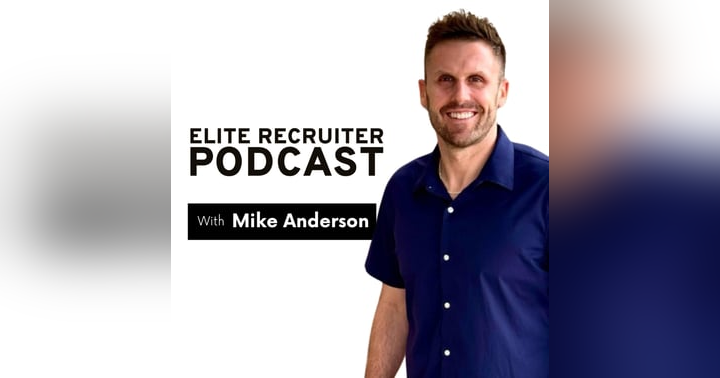
Create Demand Out of Thin Air: A BD System That Actually Works
Welcome to The Elite Recruiter Podcast! In this epic Part 2 of the interview with Mike Anderson, host Benjamin Mena dives deep into what it really takes to create demand out of thin air—and why a proven business development system is the key to success.
Mike, known for his “lone wolf” mindset and relentless drive, pulls back the curtain on how top recruiters can protect their time, shift their mindset, and build proactive processes that fuel real revenue. From the pitfalls of chasing results instead of nailing the process, to leveraging LinkedIn voice notes and nurturing genuine relationships, you'll learn specific strategies that are working right now for winning new clients.
Whether you’re thinking about breaking away from a big agency or already on your own, Mike shares hard-earned wisdom about accountability, identity, and embracing the joy of the unknown. He addresses why boutique firms and solo partnerships are outpacing legacy agencies in today’s market, and what every recruiter needs to ask themselves before making the leap.
This conversation is packed with actionable advice, real talk about what drives results, and inspiring stories to fuel your next move. If you’re ready to own your year—whether you stay put or go solo—this episode is for you.
Let’s get started!


Create Demand Out of Thin Air: A BD System That Actually Works
1️⃣ Episode Hook
No clients?
No excuses.
If you can’t create demand on command, you don’t own your desk — it owns you.
🔥 JOIN THE 30-DAY BD CHALLENGE (KICKS OFF FEB 9TH)
2026 is the year of action. We are launching a 30-day challenge to help you crush your business development goals, build accountability, and implement the strategies from this podcast.
Join The Elite Recruiter Community to participate:
https://elite-recruiters.circle.so/checkout/elite-recruiter-community
2️⃣ Why This Episode Matters
Recruiting isn’t dying.
Weak business development is.
In this episode, Mike breaks down the exact BD system and sales mindset that allows recruiters to create demand — even in down markets, even without a big agency brand.
If you want more clients, stronger closing ratios, predictable revenue, and scalable recruiting strategies, this is your playbook.
3️⃣ What You’ll Learn
- The “create demand out of thin air” philosophy explained
- Why sales is not persuasion — it’s acceleration
- The exact LinkedIn voice note strategy landing new clients right now
- The difference between reactive goals vs. proactive process goals
- The time-protection framework that eliminates weak job orders
- How to calculate your true hourly value as a recruiter
- The mindset shift that separates elite billers from order takers
4️⃣ About the Guest
Mike Anderson is known for elite-level business development in recruiting. From high-volume agency billing to building his own firm, Mike’s sales skills and recruiter training have helped professionals sharpen their closing ability and scale with control.
5️⃣ Extended Value Tease
Imagine opening your laptop and knowing:
If I need a deal… I can create one.
No panic.
No desperation.
No chasing bad clients.
Just proactive outreach, controlled pipelines, and predictable growth.
This is what separates recruiters who survive from those who scale.
6️⃣ Listen Now CTA
If you want more control over your desk and your income, press play now.
This episode upgrades your BD immediately.
7️⃣ Timestamp Highlights
00:40 – The LinkedIn voice note strategy working right now
05:13 – Process goals vs. results goals
09:41 – Firing bad clients fast
12:22 – Calculating your true hourly value
17:04 – Why top-of-funnel eliminates anxiety
22:15 – The discipline that drives BD consistency
26:03 – Sales is acceleration, not persuasion
31:16 – The “joy of the unknown” mindset
36:32 – Why AI won’t replace authentic recruiters
42:07 – Protecting your time like a lone wolf
47:20 – The BD mistake recruiters keep repeating
8️⃣ Sponsors
🚀 Atlas – AI-first ATS & CRM
Automates admin, syncs resumes/emails, and uses AI to build polished profiles and reports.
Try it free or book a demo → https://recruitwithatlas.com
🌐 Recruiters Websites (10% off for listeners)
High-performance websites for recruiting agencies.
Mention Elite Recruiter Podcast for 10% off → https://recruiterswebsites.com/
9️⃣ Summit + Community
🎯 2026 Sales and BD Recruiter Summit
https://bd-sales-recruiter-2026.heysummit.com/
💼 Join the Elite Recruiter Community (all summits, replays, billers club + split space)
https://elite-recruiters.circle.so/checkout/elite-recruiter-community
🔟 Tools & Links
Free Trial: PeopleGPT → https://juicebox.ai/?via=b6912d
Free Trial: Talin AI → https://app.talin.ai/signup?via=recruiter
Free Trial: Pin → https://www.pin.com/
Signup for emails → https://eliterecruiterpodcast.beehiiv.com/subscribe
YouTube: https://youtu.be/TdXYBTo_kXg
Follow Mike Anderson on LinkedIn: https://www.linkedin.com/in/recoveryandrecruitingmike/
Host Benjamin Mena: http://www.selectsourcesolutions.com/
Benjamin LinkedIn: https://www.linkedin.com/in/benjaminmena/
Benjamin Instagram: https://www.instagram.com/benlmena/
Benjamin Mena [00:00:00]:
This is part 2 of the interview with Mike Anderson. If you have not listened to part 1 yet, go back, grab part 1, listen to that, and then come back here. Part 2 is epic. Admin is a massive waste of time. That's why there's Atlas, the AI-first recruitment platform built for modern agencies. It doesn't only track resumes and calls, it remembers everything. Every email, every interview, every conversation, instantly searchable, always available. And now it's entering a whole new era with Atlas 2.0.
Benjamin Mena [00:00:28]:
You can ask anything and it delivers. With Magic Search, you speak and it it listens. It finds the right candidates using real conversations, not simply looking for keywords. Atlas 2.0 also makes business development easier than ever with opportunities you can track, manage, and grow client relationships, powered by generative AI and built right into your workflow. Need insights? Custom dashboards give you total visibility over your pipeline. And that's not theory. Atlas customers have reported up to 41% EBITDA growth and an 85% increase in monthly billings after adopting the platform. No admin, no silos, no lost info.
Benjamin Mena [00:01:01]:
Nothing but faster shortlists, better hires, and more time to focus on what actually drives revenue. Atlas is your personal AI partner for modern recruiting. Don't miss the future of recruitment. Get started with Atlas today and unlock your exclusive listener offer at recruitwithatlas.com. Before we start talking about like demand, and like, because I think that is so important, and outside of sitting on 75 tool demos, what do you think people do that really takes away from their And, or really just delays actually revenue creation.
Mike Anderson [00:01:33]:
Oh dude, somebody says, hey, I need help hiring this. You're like, oh my gosh, I got a client. No, you don't. You got to leave. You don't have a client. So it's the consistency of top of funnel. The whole thing about this thing is wide net, heavy vet. So you throw everything in the top of the funnel, every conversation, everything, everything.
Mike Anderson [00:01:53]:
And then the moment you realize there's no money, they're out. They're out. If you cast a wide net and you're fishing for salmon and all of a sudden you get a basketball and a hula hoop. And a bunch of flounder and a shark, toss them all out. You might have 4,000 pounds of stuff in there, but you only have 10 pounds of salmon. Get the salmon. That's the stuff I'm talking about. So as quickly as something gets on your desk, it needs to get off your desk because your focus is protecting your time.
Mike Anderson [00:02:15]:
Okay? So if somebody says, I'm working on this, don't stop everything you're doing to go try to do a deal. Your focus, remember, and if you, I talk about this in the Lone Wolf, if you set yourself up financially to know what your runway is, then don't be a slave to the result of the day. Don't be a slave to the result of the top of funnel KPI metrics that you set for yourself. If you go to the gym on day 1, you're not gonna go step on the scale and be annoyed. You're gonna be like, I got my stuff done today. You're gonna be fired up. Same thing here. Set yourself a goal.
Mike Anderson [00:02:45]:
Don't focus on the deal. Focus on the process constantly. So that's a common fallacy, okay, that people deal with. They don't know when to say no to somebody. And when you don't know when it's— no is a complete sentence. Okay? Good recruiters know how to take no for an answer and they know how to give no for an answer. That's important. Okay? Like, you can say no to somebody.
Mike Anderson [00:03:06]:
And it's okay to tell somebody, hey, I just started my business. See this roof above me? I gotta pay for it. Okay? So are you guys serious about hiring? Is this worth me skipping my YMCA basketball game tonight and focusing on your rec? If it is, I'll do it because I want to make money. But if it's not, I want to go work out. Like, it's okay to say these things. People respect the hustle that it takes to do what you did. Don't be scared to tell somebody you burned some ships. Don't be scared.
Mike Anderson [00:03:34]:
If you can't respect your own time, people aren't going to respect it for you. Big, big, big thing. The lone wolf life is a gift and you got to protect it. And the way you protect it is it's your time. If you find yourself working on stuff that's going to yield no money and you don't know how to detect that, you shouldn't be going off on your own. If you constantly are at an agency and you're thinking about, oh, well, at least I got my, I got my base. At least I got my draw, or at least I got a paycheck coming in this week. That's not a lone wolf mindset.
Mike Anderson [00:04:07]:
A lone wolf mindset is, man, I just need more time to do, I just want to do more deals and I want to hustle and I'm involved in meetings I shouldn't be in and I'm, I'm doing stuff that's not going to make me money. It's 100% of, of the time that you get as a lone wolf is your decision on how you want to spend it. If it's not going to make you money, then don't work on it. The problem is, is that when you're at a company, they will tell you where to spend your time because they're paying you. You're basically a subscription to them. And so if you think about it, now you're off on your own, you dictate your time. So you have to be. 10 times as strong to say, this is worth my time or this is not.
Mike Anderson [00:04:45]:
And the only way to do that is by consistency on the business development and the candidate development side. Okay. Now, by this time, if you go up on your own, you've already had the conversation of, are you doing it with a partner? Are you doing it by yourself? Are you networking with splits? How are you doing this? You would have already had this dialogue, this decision in your head. Okay. But if you went walk in day one, not knowing what you're going to do, you did not do enough work ahead of time. If you walk in day one saying, this is my goal and it's a KPI-based goal, boom, you're doing great.
Benjamin Mena [00:05:13]:
You mentioned mindset a few times and I want to dig into this for a second. So somebody might be listening to this and just like, okay, like I know Mike Anderson's story. I've heard him on some podcasts. I see him on LinkedIn. Like the guy's a wolf.
Mike Anderson [00:05:25]:
The guy's a what?
Benjamin Mena [00:05:26]:
A wolf. Oh, what'd you think I say?
Mike Anderson [00:05:31]:
I didn't say a work. No.
Benjamin Mena [00:05:34]:
I thought you thought I said something like horrible.
Mike Anderson [00:05:37]:
Oh, no, no, no.
Benjamin Mena [00:05:38]:
But like they see this and they're like, oh man, he's a wolf. Can I grow my mindset to be successful if I'm not there yet?
Mike Anderson [00:05:49]:
Kobe Bryant had a mindset since he was a kid. Okay. That mindset was to be a killer. If he starts shooting the basketball and the ball never goes through the hoop, he's probably going to move on from basketball. Okay. My point in this is what I'm saying is mindset is where you start, but mindset begets action. Okay. Just because you say, I want to be a killer, doesn't make you a killer.
Mike Anderson [00:06:15]:
Execution makes you a killer. Execution is what does it. And so I tell people all the time, the reason why you have anxiety and you're unsure about your desk and you don't know if you can do it and all of that stuff, the level of pain that you feel when situations don't go your way is directly proportional to how much of the top of the funnel is filled on the other side. If you've got 10 pieces of process and you got 10 different candidates, 10 different clients, and Bob calls you and says, I'm no longer interested in your job, and that goes away, it doesn't hurt nearly as bad because you've got 9 other things. But if you've got nothing else going on, it's because That's been your focus. You didn't focus on the execution of your mindset, which is I'm going to be a killer. And what do killers do? They keep on shooting regardless of whether the last shot went in or not. And like, I see this, I see this constantly.
Mike Anderson [00:07:04]:
This is why I appreciate when people say that's just Mike Anderson being Mike Anderson. Like, I understand what they're saying, but part of me is also frustrated by it because I like, I work really, really, really hard to perfect my craft, to take you know, my business development pitches and the way that I tweak those and turn those into conversations, like that wasn't created just because I said I'm gonna do it. Like I had to learn it by doing it. So a mindset is what gets you started, but discipline is what keeps it going. And, and if you are disciplined enough, I want people to get this. If you are disciplined enough to follow through with the KPIs that you set yourself, regardless of results, what you will see is an upward trend on the success. And if you're smart enough to see, okay, cool, when I do this, they do this, so I'm gonna stop doing this. But now you're doing the exact same number of stuff you were doing, but you're not getting the objection that you were getting.
Mike Anderson [00:07:58]:
So now your percentages go up on the positive results. You see what I'm saying? If you take 20 shots with a blindfold on and then you take the blindfold off and you still take 20 shots, more should go in. Same idea. That's what I'm talking about. And so like, the mindset is the start of it. And like, yes, it's true. But like, if the decision is made when you decide I'm going to do it, and then you let the results just be the results. And here's the deal.
Mike Anderson [00:08:23]:
If you suck, you'll figure it out quickly by doing the results. How long do you want to be miserable doing the job that you're doing if you're not even doing it? Do the job, figure out if you're good at it. If you suck at it, go do something else. You have to protect your time. And that goes in all aspects of life. But like, if you do the stuff that we talk about, you go off on your own, you can't pick up a client to save your life, and you're doing all the work, you're doing everything, move on. There's a reason this is like not for everybody, but like, don't delay because you think you can get something done just by having a mindset. Let the results and the actions speak for themselves, but you've gotta do the work to figure out if you can do it.
Mike Anderson [00:09:00]:
I don't know if I'm making sense.
Benjamin Mena [00:09:01]:
No, this is perfect. This is exactly where, I mean, one of my favorite things about you, Mike, is I know where to wind you up and I can just let you go.
Mike Anderson [00:09:08]:
Oh yeah. I know. I'll hone it in, but no, no.
Benjamin Mena [00:09:11]:
No, don't hone it in. That's exactly why I went that way.
Mike Anderson [00:09:14]:
Dude, last night we had a client get back to us, right? I have a client that I'm dealing with and he's like, it's urgent. It's urgent. Okay, cool. I'll believe you when I see it. Okay. So he says all the right things, right? And that's great. Cool. And I understand that he's saying all the right things, okay? But when I send candidates that mimic what he wants, he doesn't act like the way that he talks.
Mike Anderson [00:09:41]:
So I told him, I'm not recruiting for you anymore. The only reason I knew that is because I've seen this before, but I did the action to get him to where he was already going to go, just faster. I made him put his money where his mouth is and he wasn't willing to do it, so I'm moving on. Again, it's time protection. It doesn't mean I'm bad at the job. I'm not worried about it. I'm just seeing a result and I'm learning from it and I'm moving on. That's the whole thing.
Mike Anderson [00:10:08]:
And we talk about job order calls and how to deal with clients and all of that stuff, but there is nobody coming to rescue you. Nobody coming to save you. You have to have your set thing. This is how I operate. And if there is a client, if you understand this, if this is initial outreach and this is deal, okay, in a perfect world, it's going to be a perfectly straight line. Is it recruiting a perfect world? Never, never, never, never, never, ever. Okay. So not a great recruiter lets the client and the candidate take them all the way around and they maybe end up with the deal in a couple of weeks.
Mike Anderson [00:10:41]:
The ones that win, the ones that win are the ones that say, here's equilibrium. Every time something happens that's out of whack, I'm gonna call it out and try to get back to equilibrium. And then at the end of that deal, you say to yourself, okay, cool. That was a $30,000 deal. I had to talk to the candidate 6 different times. I had to talk to the client 8 different times, and I had to, you know, whatever. And so you look at the $30,000 and you're like, I did the deal. You have to look at it by saying, did the time make sense? And then you do another deal with them.
Mike Anderson [00:11:12]:
And then you go back and you see that this time it only took 4 interactions. I had to talk to the candidate 3 times. They're going in the right direction. Like, you have to constantly look at what the results of what you're doing, like what you did, what the results paid for, and then what's worth your time. At the end of the year, I'm gonna look back and I'm like, last year I made over half a million dollars. I'm not gonna say exact numbers, but it was a lot. I had a great year. Okay.
Mike Anderson [00:11:34]:
That's what I made. That wasn't what I built. That's what I made.
Benjamin Mena [00:11:37]:
Okay.
Mike Anderson [00:11:38]:
So you take that. You take that and I look back and I say, great. All right. I worked, I think last year I didn't honestly work more than like 34 hours, which is awesome. So you take that, right? You 34 hours times, call it not, I didn't work all 52 weeks, maybe 50 weeks, whatever I worked. I probably did work 52, but whatever. Take all that number. So you divide it by, what is that? $1,700.
Mike Anderson [00:11:59]:
So you take my total number I made, divided by $1,700. Gives me an hourly. When I look at my hourly. And I think about the way a client's treating me or a way a candidate's treating me, are they worth it? Absolutely not. Hey dude, I'm a lone wolf. Every time I'm talking to you, it's costing me money from somebody that can actually make money. So if you wanna buy, we're gonna buy. And if we're not, I'm moving on.
Mike Anderson [00:12:22]:
So if you struggle having difficult conversations with people, don't go off on your own because you're gonna find yourself getting a lot of 5-star Yelp reviews and no commission checks.
Benjamin Mena [00:12:31]:
You mentioned something I want to go, like a few minutes ago that I want to go deeper on. Setting the KPIs and achieving them. And like this line starts doing this. One of the things I've seen destroy people the most is when they set a goal for themselves or say that they're going to do it and just end up not doing it day after day. Do you see that in the recruiting chair too?
Mike Anderson [00:12:50]:
I think the problem with that is the goal is not, it's a results goal. It shouldn't be a results goal. The goals need to be process goals. A results goal is reactive. A process goal is proactive. What is something that you can do so you could say, I did what I was supposed to do? The problem is that the goals that they make, they're 10% proactive and 90% reactive. It needs to be 100% proactive and then let the results speak and then tweak the proactiveness if the results aren't speaking. So again, it always comes back down to work ethic.
Mike Anderson [00:13:19]:
For me, if I was starting out branding, let's just say I'm a $500 per I'm a $400 an hour biller at a company and I'm starting day one and I want a process. Okay. And I want to do it from day one. It's real simple. I'm going to reach out to 5 companies. I don't, by the way, I do not care what space they're in. People ask me all the time, what's your niche? Dude, my niche is whoever's hiring. Okay.
Mike Anderson [00:13:40]:
I don't care. You want to hire a plumber? Let's go. Like it doesn't bother me. Okay. As long as candidates want a lot of money and 72 offers. And as long as companies don't want to pay to find talent and don't want to pay top dollar, I'm always going to have value because that's where I'm good. I'm good about marrying those differences. So if I understand that, the industry by which I apply that doesn't matter.
Mike Anderson [00:13:59]:
Okay. So that should help a lot of people listening. It doesn't matter. Okay. You can go do your niche and I'm not saying it's bad, but saying you're going to do a niche is cool, but people are like, oh, my niche is, um, my niche is like, uh, iOS developers, uh, only in like Spokane, Washington. And you're like, dude, there's like 3 companies. Like, what? But why? It just doesn't make sense. Okay.
Mike Anderson [00:14:23]:
The reason why a niche becomes your niche is because all of a sudden somebody in that space said, dude, I need to hire now. And then you become really good at that thing. So let the niche tell you where to go. Again, that's why I say focus on the outreach. Okay. Because a reactive goal in that situation would be, I'm going to reach out to 4 companies that do iOS and whatever. Well, there's only 2 there. So how are you going to hit that goal? It's not going to happen.
Mike Anderson [00:14:43]:
Give yourself a proactive goal. Try to go as broad as you can from an industry perspective. But I'd be reaching out to 5 companies and I wouldn't care. Maybe I would say I'm gonna do 5, I'm making this up. I'm gonna do 5 healthcare companies on Monday. I'm gonna do 5 financial companies on Tuesday. I'm gonna do 5 legal companies on Wednesday. I'm gonna do 5 accounting companies on Thursday.
Mike Anderson [00:15:03]:
I'm gonna do 5 tech companies on Friday. And I'm gonna wash, rinse, repeat, and I'm gonna let demand to the talk me. Let the market talk to you. Remember, sales says buy this from me right now. Marketing says when you're ready, I'm here. A good salesperson, a good business development person understands that all outreach all the time is doing both things. Okay, so now you have this. So you do your 5 companies, you go 0 for 5.
Mike Anderson [00:15:29]:
Does that mean you're going to quit the next day? If you're going to quit the next day, then don't be in recruiting. Recruiting's hard. It's like 10— it sucks. Like, the amount of people that like me, there's like 8 billion more that don't like me. It's fine. I'm not worried about it. Don't— you cannot— if you take things personally and you can't stick to a proactive process, this is not the job for you. Okay? But if you have thick skin, you can hang in the pocket, you're self-motivated, and you know how to make goals, let's go, baby.
Mike Anderson [00:15:57]:
Let's freaking go. All right? That person can help themselves. But 5 companies, and then what I'm doing is I'm adding, I make a rule. I think you can do 100 connection requests on LinkedIn. I do 20 a day in whatever space that is. And then I go 5 new companies in a different space, 20 more candidates in whatever space that is. And I'd start to see where the market's talking to me. But again, if I've done this correctly, I have enough runway to say, hey, I got 6 months of runway.
Mike Anderson [00:16:22]:
So if I go over in month of January, you know what I'm going to do? I'm going to high-five myself for hitting the proactive goals that I set for myself. I'm not gonna let the money dictate or the result dictate what I do. If the money has to dictate how you look at your goal, you shouldn't be going off on your own because you haven't set yourself up with enough runway for that not to affect it. Anyway, I could go off on this, obviously, but hopefully I answered the question.
Benjamin Mena [00:16:49]:
Oh, I'm gonna go deeper though.
Mike Anderson [00:16:51]:
No, of course you are. Let's go.
Benjamin Mena [00:16:53]:
So what, like right now, whatever you do, you're accountable to Connor and you're accountable to yourself. How do you have to structure yourself to make sure that you keep that self-accountability when you decide to go lone wolf?
Mike Anderson [00:17:09]:
For me, first of all, if I was still drinking, using, gambling, none of this is possible. So I have to make sure that the personal side is always taken care of. Okay. So the way I look at this. Is I have a personal— if you don't have a daily personal plan that is for your own self-development, whatever that is, right? For me, it's waking up in the morning, drinking my 3 energy drinks, reading my Bible, and then getting my 10,000 steps in every day for 833 straight days. Okay? So I have that. If I can't even do that for my own self, where I'm the winner, I'm the one that gets the results winning of that, how am I ever going to be accountable to a business? Okay. So if you don't have something where you are accountable to something on the personal side, now, if you have a wife and kids or something, or, you know, a husband and kids, or however, maybe it's, you're accountable in this aspect of it.
Mike Anderson [00:17:57]:
Like, you know, every day for an hour, I'm with my kids. Like, that's what I do or whatever that thing is. If you have an accountability thing where you would like to do something, but you can't stick to it, you're going to have a really hard time being self-motivated in business because the moment something goes bad and newsflash, it is going to go bad because it always does. It's recruiting. We're dealing with people. Okay. So everything's going to be perfect. Then it's not going to be perfect because it's just the way we deal with it.
Mike Anderson [00:18:19]:
If you can't hang in the pocket, okay, on those kinds of things, likely it's because when you had a personal goal or a personal sort of schedule or something that you're committed to or something on the personal side, when that invariably went sideways, you didn't get right back on track. If that is a struggle for you, I don't recommend going off on your own. Okay. I just put up a post this week. I talked about how I came in, I was fired up. I had done my 10,000 steps. I was going to listen to Yacht Rock Radio and I was going to hammer BD. And all of a sudden it was, Mike, we just fired so-and-so.
Mike Anderson [00:18:49]:
Hey, Michael, we need this urgent role. Hey, Mike, this candidate needs to move the interview. Hey, you know, whatever, all that stuff. And so like that took me off my plan. Okay. Does that mean that I get to not do business development that day? No, it doesn't mean that. It means that as soon as I'm done with that, I'm going right back to it. This isn't in lieu of, this is in addition to.
Mike Anderson [00:19:10]:
Okay. And so anyways, if you have trouble sticking to a personal goal, like if you can't look back at your life in the last, I would say 18 months and say, I had a goal to accomplish this and I did it. And you can't say that personally, you probably should go off on your own.
Benjamin Mena [00:19:25]:
Do you see people struggle with the accountability that they've realized after they go solo, the accountability structure of the big agency is what helped them be successful.
Mike Anderson [00:19:36]:
Or I see that, I see that sometimes. Okay. But you have to understand contextually where I'm talking from. I'm 38. I've never been married. I don't have any kids. I don't run a crazy lifestyle. I could survive on, I don't need to build a million dollars.
Mike Anderson [00:19:49]:
I honestly don't need to build that much at all to survive. I'm fine. But I have to point to something that is a self-motivational thing. Like I always have to have a carrot in front of me because that's the only way that I can operate, especially as a recovering addict. Okay. So that's, that's one. But a guy like Connor who might have 2 beers all year, who's not an alcoholic at all, his motivation is wife, kids, home, mortgage. Like he's got that.
Mike Anderson [00:20:10]:
And so he has that accountability to his own family. So when you go off on your own, if you're going to partner with somebody, you want to make sure that they have a level of accountability that is going to keep them motivated, which is why I said semi same seasons of life from the standpoint of like, they need the same things you need. Now, obviously it's a little bit different from situationally with Connor and I. And so he needs that. So he has to make it work. Like, he has to make it work. And so if you don't have to make it work, you won't. Recruiting is not a side.
Benjamin Mena [00:20:38]:
I was going to save that for the course. So I got like one more question and then we're going to do a little bit of BD stuff since I know you are known as the BD king. I know like Mike Williams and a bunch of people have brought you in to train on BD. But like, this is like the stuff that I hate to say, like I get excited about digging into. When somebody's working at a big agency, identity-wise, what do they lose when they don't have that big brand name behind them anymore? Or have you seen people struggle with an identity shift?
Mike Anderson [00:21:08]:
Yeah, I have. But that's also why I'm big on talking about if you don't know who you are apart from your agency, don't go off on your own. That's really, really important. So like, if you don't know who your identity is apart from professionally apart from the agency that you're at, it's not going to all of a sudden wake up and, and just be there when you're off on your own. Like you have to have a brand. Like when somebody, like if you're questioning when you should go off on your own, go ask somebody that I have people that aren't in recruiting that might know me from church or from the gym or from whatever. And you say, hey, what, what do you think I should do with my life? They're like, you need to be in sales 100%. Like they just, because you know, whatever, if you don't have that.
Mike Anderson [00:21:48]:
I'm not saying it's gotta be a fails 100%, but like, if you don't have somebody that says, oh yeah, you're the guy to go to for everything, all jobs, like, or, or something like that in a space or whatever, then it's probably something to think about. Here's the thing about identity. If you're confident in who you are and you focus on the goals, your identity will become, it can be molded into what you want to make it based on the responses and the stuff that you deal with on the day to day and how you handle those. So like, I don't know how to explain it, but like all my clients know I'm not letting a candidate go into a final interview unless I know that candidate ahead of time is ready to say they want the job if this happens. So like that's industry agnostic. That doesn't matter where, what, like I can just apply that into whatever and I understand how I operate. So I have my base equilibrium by the way that I do deals. If you, here's another one, why you should stay.
Mike Anderson [00:22:39]:
If you've got 4 different clients at a company and your process is dealing with every client has this process, this client has this process, this client has this process, and you're just an order taker and you're kind of like, yeah, yeah, whatever. But you don't have your process. Like if a company came to you and said, help us hire, we don't know what we're doing. And you can't say, I got it. And you're used to saying, how many interviews do you have? 7? Okay, cool. And you know, whatever. And like you do that thing, you're just an order taker. There's no identity there.
Mike Anderson [00:23:06]:
For me, whatever my client tells me when I ask them how many interviews there are, I'm always going to try to minus one down every time. That's just my identity. So you got to have a process. I think your process will help you with your identity. I think, I think if you called up 3 or 4 of your clients, first of all, if you can't call 3 or 4 of your clients, that's another conversation, but call 3 or 4 of your clients and say, hey, how would you define me as a recruiter? And if you call any one of my clients, they'd be like, you're loud. You're aggressive, you're direct, you can be annoying, but you always don't BS us and you're a killer closer. I'm like, cool, that checks out with my identity.
Benjamin Mena [00:23:40]:
Man, there's like now a few more questions I want to go deeper on this, but I want to shift gears a little bit. Oh, AI, the industry's changing. I remember like when I was, when this goes live, it'll be 2 decades ago, started at a big agency, like. I felt like that was a way to success. Like, I feel like things have been changing. The environment's changing. How do you feel?
Mike Anderson [00:24:04]:
Dude, I don't know all the AI stuff. I mean, I got clients right now that want us to hire AI engineers and this, that, and the other. And that's cool. That's great. I don't understand AI. I mean, I know what it stands for, but like, I don't really get it. Here's what I'll say. My process and my identity is so defined that AI won't be able to replicate it.
Mike Anderson [00:24:24]:
So like ChatGPT, Connor calls me MikeGPT. And there's no, like, if you look at any email that I've ever written, like, let's just say professionally, any, well, in the professional setting, they're not professional emails, but like when you look at them or the way that I write or the way that I speak, it's not AI generated. I've never had one person ever tell me on LinkedIn, did AI do this? No, that AI would be drunk. That's not, I don't worry about that.
Benjamin Mena [00:24:46]:
Let me switch gears a little bit. And I remember 20 years ago, like when I was working at the agency, like that entire background, everything happening behind me, it was like the only way to get things done. Like you couldn't go start a new aero tech tomorrow with everything how it is now. Are you seeing like a change in the winds?
Mike Anderson [00:25:07]:
Yeah, I think for sure. I think, I think noise is as loud as it's ever been, which from a standpoint of understanding your process. Like there's more candidates on the market than there ever been. I feel like there's a million job openings that have a billion applicants and everybody's trying to navigate shifting through the noise of it all. And in a world that is technology driven and information just to the max and right in front of you, I think. People are starved for wisdom over information because knowledge is just knowledge, but I think they're starved for wisdom. I think people are starved for a human being, a relationship on the other side that they can trust. And I think people just want to get to the meat and the potatoes of what they're investigating as quickly as possible.
Mike Anderson [00:26:03]:
And if you can do that as a recruiter, whether it's a candidate wanting to know about a company. Or a company wanting to know about a candidate, or not selling everybody everything all the time. Sometimes it's like, hey dude, this guy don't want your job because he didn't get along with Susie when he interviewed with her. Sometimes it's just that direct. And you don't need to sugarcoat it and fancy it. I've never ever had anybody tell me, dude, I wish you wouldn't have been honest with me back there. That hasn't happened. It doesn't happen.
Mike Anderson [00:26:32]:
Like, That piece of it is just, AI is not going to take that over. Yes, there's a shift in landscape. And so if you've got a voice and you've got a personality and you've got a process and you've got an identity and you know who that is, that's going to rise above the noise. Because as much as everybody who loves AI, there's a lot of people who are just like, dude, it's exhausting. I don't even know, honestly, don't even, I stopped trying to keep up with it because I I don't even know where we're at with it. Like, is a robot going to pick me up when I order an Uber? Or am I just going to drive myself? I don't really, whatever. It doesn't, all that stuff. I'm not worried about it.
Mike Anderson [00:27:06]:
From recruiting landscape, there's still good candidates. They're still hard to get. Companies still want to hire good talent and they still want to save time doing it. Now what's my value add? Time and talent.
Benjamin Mena [00:27:20]:
One additional thing, maybe it's like, this is like an overall market. I'm seeing like the negative talk of like. Recruiting's down 17%. Staffing has been down 32 months in a row, but I'm seeing a lot of people still winning. I'm seeing it's the solo, the partnerships, and the small boutique firms that are now starting to run around these legacy agencies.
Mike Anderson [00:27:44]:
Dude, one thing I noticed, and here's a cheat code. A company's going to write a check for 20%, 25%, 30%. Call it 25, 25% of Wendy's salary that just got placed by an agency by somebody. Okay. 25% of $200 grand. They're going to write a check for $50 grand. That company, generally speaking, would rather give $50 grand to somebody who like has earned it and worked hard for it than to just sending it from Bank of America to Wells Fargo. You know what I'm saying? They would rather send it to bob@bobsbank.com or whatever it is.
Mike Anderson [00:28:21]:
Like, that's what I'm talking about. And like when I tell people that I went off on my own, they're like, dude, we'll work with you. We'll give you a shot. That's cool. That's impressive. What's wild is that the amount of objections were way higher when I was at an agency than they are when I'm on my own. So again, the reason why you're seeing a lot of these $400,000, $500,000, $600,000, $700,000 billers when they're on their own is because once they build a relationship, that company just wants to keep giving them the business. Whereas if they're at an agency, they might be doing, you know, $500,000 with ABC recruiting company that has 700 recruiters, but they've dealt with 7 different recruiters who've all flunked out and they just keep getting passed down the road.
Mike Anderson [00:29:01]:
And here's the other piece too. A lot of agencies have rules about client outreach and what's a client, what's not a client, how long you own it, how long you don't own it, candidate ownership, this, that, and the other. Dude, when you're on your own, you own everything all the time, always for free, like whatever, it's all yours all the time. There's no system to check. There's no nothing like that. You don't have to check in with somebody and send 4 emails by next Tuesday just to own a client for the next 30 days. Book an interview, book a fake interview, ATS, all of this stuff. All of that goes away.
Mike Anderson [00:29:33]:
And here's the deal. You know what's cool? The recruiting game, a rising tide lifts all boats. Okay? When more recruiters are off on their own, they end up wanting to protect the brand better because they realize it's their personal business on the line, but you tend to not really care that much. I shouldn't say, I don't want to put, this isn't everybody, but you can care less if you're at a company because you can be kind of covered by the company. And so, you know what I mean? Like we, Connor and I don't need to make an AI tool to handle all of our stuff because you just talk to us. You know what I mean? So anyway, I'll hopefully answer your question, but there's a lot of issues at an agency that you won't deal with on your own. There's a lot of things on your own that you never realized that you would have to deal with when you're at an agency.
Benjamin Mena [00:30:22]:
So true. I know we've covered a lot and we still get the quickfire questions. They don't need to be quick answers, but is there anything else that like you need to highlight before we jump into the quickfire questions?
Mike Anderson [00:30:33]:
I'll say this. If you're watching this podcast, Ben, you're probably like, man, I got my juices flowing. I'm excited to go off on my own. I don't know if I should or whatever. Okay. Here's the deal. It's not as black and white in this podcast as I created in the Recruiter Blueprint Loan Wolf. So it's in there to talk about why you should go off on your own or why you shouldn't.
Mike Anderson [00:30:51]:
And either one is perfectly okay. I'm not incentivized either way, but I will say this. If you struggle sticking to a plan, if you're not self-accountable and you need somebody else to sort of like write your day for you, it's not for you.. But if you feel like you're being held back wherever you're at, dude, it is fun, dude. It's revolutionary. Like, long live the revolution. Let's go, baby. Lone wolves for life.
Mike Anderson [00:31:16]:
We'll do splits together, dude. I love hearing when I talk to a company and they're like, yeah, we hired so-and-so. And I'm like, how'd you guys get 'em? And they're like, oh, from Jimmy. And I'm like, is Jimmy a lone wolf? And they're like, yeah. I'm like, way to go, Jimmy. Way to go, Jimmy. Long live. Let's go, baby.
Mike Anderson [00:31:31]:
So anyways, that's what I think. All right, cool. Go ahead, man.
Benjamin Mena [00:31:33]:
All right. You are known for your business development training.
Mike Anderson [00:31:37]:
Yep.
Benjamin Mena [00:31:38]:
What is actually working right now? We got to give people something. I know you have scripts and everything. Like what's actually working right now with getting new clients? It's 2026.
Mike Anderson [00:31:47]:
Uh, 2026, new clients. Here's a little tidbit for y'all. Go add people on LinkedIn and when they add you back, voice note them. And be like, hey Steve, my name's Mike Anderson, dude. I just went off on my own, started my own business. You're over at timeishoes.com. Okay. I want to work with you guys.
Mike Anderson [00:32:07]:
I have no idea what you're hiring for, nor do I really care, but this is a voice note so you can see that I'm not an AI robot. It's not a cold call. It's not a spam email. It's a LinkedIn voice note, which is what happens if a spam email and a cold call had a baby. That's what this is. My name's Mike. Nice to meet you, dude. What do I got to do to earn some recruiting business from you? Let's go.
Benjamin Mena [00:32:26]:
Let me just ask, have you ever left that voicemail?
Mike Anderson [00:32:30]:
Ever? 2,000 times.
Benjamin Mena [00:32:33]:
And the reason why I'm asking that, because I know you have. But just in case somebody hears this and is like, that's freaking wild.
Mike Anderson [00:32:41]:
Yeah, it is. But so is— what do you— who cares? Again, if that is something like what I just said scares you, Maybe don't go off on your own because it's not, it's not a one size fits all. I'm doing all angles. I'm crushing BD. I have my process. I also have my voicemail process. Okay. Every candidate I talk to, I'm like, hey dude, when you land at your job, I'm going to call you to congratulate you and wherever you go.
Mike Anderson [00:33:06]:
And when I do, I'm also going to ask for business. I'm just telling you that call's coming. So get your objections ready. Let's go, people. And here's the thing, when you're on your own, every company's available, every candidate's available in every industry, everywhere, all the time. So don't tell me there's not enough out there. Your last deal at an agency might've been a VP of operations at a manufacturing company. And your first deal on a, a week later that you're on your own might be a golf caddy for a local golf course.
Mike Anderson [00:33:39]:
Let's go, dude. The bottom line is know your value add. Your value add is simple. A company needs to hire. Okay. First of all, if you can't verify if they need to hire, then you get better at that. Okay. I talk about all that.
Mike Anderson [00:33:52]:
You can figure out what needing to hire is. Everybody wants to hire. Everybody's hiring opportunistically. Who's going to turn down that? Blah, blah, blah. No, who's hiring? Okay. So you got to be able to do that. Once you identify that, then be able to be like, dude, why would you not want to work with me? I'm on my own, dude. I burnt the ships.
Mike Anderson [00:34:05]:
I got to make this work.
Benjamin Mena [00:34:08]:
Love it. What is one tool that you cannot live without?
Mike Anderson [00:34:11]:
I cannot live without the mindset tool of, I know that I can create demand out of thin air. Like, I know I can do that. If God gave me that, that's what he gave me on or whatever. Like, I could create demand out of thin air. That's my mindset tool. I never ever worry about getting somebody to want to work with me if I get them on the phone. Like, I know how to do that. That's my mindset.
Mike Anderson [00:34:32]:
My physical tool, the one that I can't live without, I can't live without regular LinkedIn. I know people don't think that's a tool, but I can't. That's my thing. And when I, when I say that, I love posting. I love interacting with people. I love voice noting people. I love selling bill prints. I love all that stuff.
Mike Anderson [00:34:46]:
Okay. Now, if you're a, if you're a person out there wondering what tool you can't live without, I would say the original Recruiter Bill Print, or if you're on a company and you're deciding, the Recruiter Bill Print Lone Wolf. You know, I got to do a plug, dude. Come on. That's important, y'all. That's important. For real. It's that good.
Mike Anderson [00:35:01]:
It's that good of a course. If you think this podcast is good, those courses are on another level.
Benjamin Mena [00:35:06]:
What's the book? And I know this answer, but what's the book that's had the biggest impact on your life?
Mike Anderson [00:35:13]:
Oh, number one, the Bible. Number two, Alcoholics Anonymous, the big book. Those are by far the two. Like, I can't, I don't want to go like too far on this, on a tangent. But if I don't know where I'm going to be when I die, which I'm gonna be— I want to be at home with the Lord, I'll be in heaven— or if I don't know how to stay sober today, my life is worthless. And I know both those two things without a shadow of a doubt. And so because of that, I just march on. So those two things, like, I'm good.
Mike Anderson [00:35:46]:
Because like Jesus says, what good— what good does it do a man to gain the whole world but forfeit his soul? And my soul is good. It is well with my soul, baby. Keep going.
Benjamin Mena [00:35:56]:
And mostly asking that for people that didn't hear the first episode yet, but go back and listen to the first episode with Mike. We talk a lot about sunshine and roses. What is one of the hardest parts about going lone wolf?
Mike Anderson [00:36:09]:
I'm going to speak for me personally, and I'm going to speak what I've seen. For me personally, the hardest part for me has been being able to turn off the professional with the personal, because it blends very much. And I'm never not working. Like, I've been on a date before and I asked a girl for a resume. What am I doing? Like, I'm telling you, like, I know, I know, I know. I'm just saying, like, I was like, okay, well, she sounds like a good candidate, like, whatever. So I just— it's not going anywhere.
Benjamin Mena [00:36:39]:
I was looking at a place.
Mike Anderson [00:36:40]:
Yeah, I got this, you know, whatever. I think when people say, like, do you ever shut off? Are you ever not on? And it's like, dude, I, I don't, I genuinely mean this. I don't know how to not be on. So that's a battle for me. But I would say the other battle, but the one that I most commonly deal with are that the anxiety that people get in the space between their ears when something doesn't go the way they thought it was going to, I thought it was going to go. Because when you're at an agency and you know your paycheck's coming on Friday, regardless of what happens, you can just, okay, I'll just deal with it. But when you Don't have a paycheck that's guaranteed this next time, this next week, this next whenever, which by the way, there's nothing set in stone on when you get paid because it's based on when your clients pay. Like, are you mental strong enough to get yourself out of that situation? I'm telling you the biggest space in the lone wolf recruiting is the 6 inches between your ears.
Mike Anderson [00:37:28]:
100% of the time. And I will say this, and I hope people take this away. Remember this. You're a survivor. Because you've lived through 100% of things that never actually happened. That's one. Okay. And number two.
Mike Anderson [00:37:42]:
Okay. When you look at, when you look at your business, okay. When you dissect your business as a whole, if you don't know how to say my next deal is coming from this client or that candidate, and you can't say that with some level of certainty and you're doing slot machine recruiting, this is not for you. This is not for you. And so when I look at my desk, I can, I can generally speak and say, okay, cool. That'll be a deal. That's not going to be a deal. That's, you know, whatever.
Mike Anderson [00:38:07]:
And like, so I could basically predict my desk. And because of that, it makes me knowing that whatever I dream up in my head is never really worth worrying about. Makes sense?
Benjamin Mena [00:38:16]:
Makes sense.
Mike Anderson [00:38:18]:
I've lived through 100% of situations that never actually happened. That's really important. And then the other one that I talk about all the time is being okay if it is and being okay if it isn't is a really powerful place to be.
Benjamin Mena [00:38:31]:
What is one of the biggest boat burning mistakes you might have made or you've seen other people make?
Mike Anderson [00:38:38]:
Boat burning mistakes. I didn't burn soon enough and other people might burn too fast.
Benjamin Mena [00:38:43]:
Explain burning too fast.
Mike Anderson [00:38:45]:
It's not well thought out. They thought they had a situation like what happened to you at an agency however long ago where they lost the account and then they just quit and they're like, I'm out. I'm going to go start my own thing. Like I'm done. And sometimes I'm not saying that doesn't work. Sometimes being frustrated is the best, you know, necessity is the mother of all invention kind of a deal. Like sometimes that could work, but if it's not thought out and planned out, invariably something is going to go sideways. And when it does, you're not going to be able to deal with the mental hurdles that created because it wasn't predicted and planned for.
Mike Anderson [00:39:18]:
I can deal with a lot of the negative stuff because I've thought about it, whatever. But if you, if you all of a sudden, like, you know, you, you woke up one day and you have a new commission structure at your company, or all of a sudden you're a manager and you don't have any more money coming in, or, you know, override on your team, or you got demoted, or they kicked you off an account, or the rules of engagement changed, or, you know, whatever, something like that happened and you react to it and you say, that's it, I'm going off on my own. I still think that could be burning the ships too soon. You should, make sure that everything else is in line. And again, I talk about that in the course, but don't let it be a reactionary thing. You know what I mean?
Benjamin Mena [00:39:56]:
I have one more question for you, Mike.
Mike Anderson [00:39:58]:
Yep.
Benjamin Mena [00:39:58]:
But before I do, is there any question that I should have asked you that you're like, you've hit this point in the conversation and for those listening, thank you. This is now part 2. I wish Benjamin would have asked me this question so I could go deeper on this.
Mike Anderson [00:40:13]:
You're a freaking killer podcaster, Dave. That's a great question. A question I wish you would ask me. Uh, let's see. A question I wish you would ask me. I think, I think a question, a question I would like you to ask me is what's the most important fundamental of being a lone wolf? And I think it's this. It's if you're on the candidate side, knowing what candidate is worth your time or not worth your time. So you got to understand the right questions to ask.
Mike Anderson [00:40:43]:
And then on the client side, it's knowing, like I gave the example, knowing how quickly, as quick as they get on my plate, they're off my plate. It doesn't mean I'm rude, but the ability to protect your time is so, so important. I hope I made that abundantly clear. And then the other piece too is sometimes you can protect your time so well where you're like, I protected it so well, I've got nothing on my desk. If that happens, there should be, to me, that's a joy thing. That's a good thing. Because that leaves all of this time to get new stuff. I love, I call it, most people have the fear of the unknown.
Mike Anderson [00:41:15]:
I have the joy of the unknown. So like, that's a big thing. If the unknown scares you, that's like not a good thing. In other words, how big is your market? As big as you could possibly imagine and bigger. But if you think it's this big only, then it only is that big. You know what I'm saying?
Benjamin Mena [00:41:31]:
No, no, exactly what you're saying. And that is going to lead into the last question. You get asked a lot. I see the messages on LinkedIn. I see the conversations that you have. You get asked about business development. You get asked about marketing. You get asked about emails, demand generation.
Benjamin Mena [00:41:47]:
How do you create demand out of thin air? You've probably talked about 1,000 recruiters or way more than that over the course of your career. And I'm sure they're asking all almost the same questions in different buckets. Is there a question that you're just like, it just bugs you? Like, I wish somebody would just freaking ask me this. What question would that be? I want to answer.
Mike Anderson [00:42:09]:
Mike, I got a response on something, a candidate or a client. I reached out and I got a response and it wasn't favorable. What do I do to turn it around or whatever? My thing is This is like people miss the forest for the trees. The fact that you got a response is the win. For instance, somebody says, let's say somebody says to you, they're interested in working with you, but you don't have anything for them or you don't have a candidate or you don't have a client for whatever that email or that message or that whatever. Naturally is an open dial. So for me, when I get responses, I'm not immediately saying if I have somebody great on BD, on the BD side, great. But if I don't, I'd be like, hey dude, this is who I was thinking about.
Mike Anderson [00:43:09]:
This is who I was thinking about for your role. I don't have anybody else right now, but I'm saving you in this folder and you can bet your rear end I'm going to bump this thread whenever I find somebody. And then it goes into a. Milwaukee, Wisconsin attorneys folder. And then I come back in 6 months if I ever go to Milwaukee, Wisconsin, somebody. But again, people think that business development is, I have to do this now. It's not. It's relationship building.
Mike Anderson [00:43:35]:
Like I would say this, that I don't know if it's exact, but I would say 85% of the deals that I do with companies are with a company that I met on a one day and then 3 months later did the first deal. I'm focused on top of funnel relationship building. That, that's my biggest thing. I've had people, I've had emails and I say these, this is great. People will get sent emails and they'll be like, Tech Rocks, F R. It's like, dude, you need to have a good day. Go, dude, just go walk outside. You'll be okay.
Mike Anderson [00:44:06]:
So anyway, so somebody says that, right? And I just, I don't even, I'm, it just doesn't even phase me anymore, but I, I'll throw 'em into a folder. I'll throw 'em into a folder. And I'll save it. And 3 or 6 months later or whatever, I'll just sometimes every once in a while, I'll go back at that folder and I'll just look at it and be like, oh wow, the sun still came out today and they said all that stuff and I'm still here and this is good. And sometimes what I'll do is I'll bump a thread and I'll say, hey dude, 6 months ago, maybe you're having a better day now, but I got a guy for you. Any interest? And I'll just try some. And sometimes it works and sometimes it doesn't, but I'm not worried. What I'm not worried about is the result of the work that I do.
Mike Anderson [00:44:43]:
Like I'm not worried about the result. I don't care about how this comes back. I gotta do the work and then let the market just do what it does. Remember, sales is not, it's never been, and I taught, I've said this a thousand times and it, I swear by it. Sales is not changing someone's mind. It's getting someone to go where they're already gonna go just faster. And if you can understand that, it makes your job a lot easier. It's easy to walk away.
Mike Anderson [00:45:09]:
It's easy to keep selling. If you end up thinking, if, if somebody's like, I'm not really that interested and they end up buying, they were interested the whole time. You didn't change them. Same thing goes the other way. I think I'm gonna buy it and then they don't. They were never gonna buy it.
Benjamin Mena [00:45:20]:
Hmm.
Mike Anderson [00:45:20]:
It. Love.
Benjamin Mena [00:45:22]:
So anyway, well, Mike, if somebody wants to follow you or connect with you, how do they do that?
Mike Anderson [00:45:29]:
Okay. You wanna follow me? Add me on, follow me, uh, LinkedIn. That's where I pretty much hang out all the time. I just became one of Ben Manna's followers on Instagram. You can whatever. Instagram, Uh, and that one's private, so I don't go too much out there, but maybe it's out there. And then I'll say this, if you're somebody that's wondering, I want to double-click on what Mike talked about, I want more and more and more of this. I go this in depth with specifics on everything in the Recruiter Blueprint on sales and in the Recruiter Blueprint Lone Wolf on everything you need to know about going off on your own.
Mike Anderson [00:45:58]:
There's two different courses. They're fantastic. You can bundle and save. They're that good. Reach out to me. Like my goal, honestly, with this podcast, guys, is to get people to feel really, really good about I should or I shouldn't go off on my own. And if you're not there yet, you'll get everything you need in the Recruiter Blueprint Lone Wolf. But that's a great course.
Mike Anderson [00:46:14]:
And also I want to shout out Connor Ferguson, my business partner, who's been fantastic. And then my best friend, Andy Barich, who has, uh, who helped me create the Recruiter Blueprint Lone Wolf. Two great guys. And I'm so lucky to have them in my life. So I want to say that to them.
Benjamin Mena [00:46:25]:
Mike, I just want to say thank you for coming back. On the podcast. And it's, it's one of those things, like we've romanticized the idea of success is going off and starting your own company, which for some people it is, for some people it isn't. And I think this is such an important conversation, like a high-level conversation of understanding what you truly need. To make that decision, what you truly need to be successful, the good, the bad, the ugly, maybe the things that you just need to prepare for. Maybe it'll happen 5, 10 years from now.
Mike Anderson [00:47:07]:
Exactly. Yep.
Benjamin Mena [00:47:09]:
100%.
Mike Anderson [00:47:10]:
And you got, you got to feel good. Recruiting is, recruiting is hard already. Don't make it harder on yourself by wondering if you should do it where you're at.
Benjamin Mena [00:47:17]:
Yeah. So Mike, thank you for coming back. It's been awesome getting to know you after all this time too.
Mike Anderson [00:47:23]:
Yeah, dude, I love it. Thanks for having me on.
Benjamin Mena [00:47:25]:
So listeners, 2026 is your year. Whether you're staying at the agency, whether you're going off on your own, or whether you're already on your own, this is the year that you need to own. Make it happen for you. Keep crushing it.
Mike Anderson [00:47:38]:
Go, baby.
Benjamin Mena [00:47:42]:
Admin is a massive waste of time. That's why there's Atlas, the AI-first recruitment platform built for modern agencies. It doesn't only track resumes and calls, it remembers everything. Every email, every interview, every conversation instantly searchable, always available, and now it's entering a whole new era. With Atlas 2.0, you can ask anything and it delivers. With Magic Search, you speak and it listens. It finds the right candidates using real conversations, not simply looking for keywords. Atlas 2.0 also makes business development easier than ever.
Benjamin Mena [00:48:09]:
With Opportunities, you can track, manage, and grow client relationships powered by generative AI and built right into your workflow. Need insights? Custom dashboards give you total visibility over your pipeline. And that's not theory. Atlas customers have reported up to 41% EBITDA growth and an 85% increase in monthly billings after adopting the platform. No admin, no silos, no lost info— nothing but faster shortlists, better hires, and more time to focus on what actually drives revenue. Atlas is your personal AI partner for modern recruiting. Don't miss the future of recruitment. Get started with Atlas today and unlock your exclusive listener offer at recruitwithatlas.com.
Mike Anderson [00:48:48]:
Thanks for listening to this episode of the Elite Recruiter Podcast with Benjamin Mena. If you enjoyed, hit subscribe and leave a rating.

Co-Founder & Partner
Just your everyday guy who went to college to play baseball, didn't go pro, got a useless degree and had no idea what to do. Fell into recruiting by happenstance, realized that this business was heavily predicated on relationships, started building them, and haven't looked back since.
In the interim, I've been redeemed through faith, been sober from drugs and alcohol since Memorial Day Weekend 2018 and I am approaching four years of abstinence from gambling (11/28/20). I love where I've come to, but as I often say, if God would have shown me what I'd have to go through (jail, courts, the 12 steps, owning mistakes, having to learn who I am sober, etc.) to get where I am, I'd have never done it. But in His grace, he knew it was best for me to only see one step at a time, not the whole staircase.
Today, my life is wonderful! I have my faith, my relationships with my family are true and authentic, I've lost 80 lbs. through fitness, and own a recruiting firm, a sales/recruiting coaching business, and most recently, I've just built an online recruiting course called the Recruiter BILLprint!