The Diagnosis Method Behind $12B in Staffing Revenue
Welcome to a powerhouse episode of The Elite Recruiter Podcast! In this episode, host Benjamin Mena sits down with industry legend Dave Veres, who’s helped scale teams and orchestrate explosive growth—from $300 million to a staggering $12 billion in staffing revenue. Together, they dive deep into the art of "diagnosis-based selling," a method that goes beyond transactional recruiting to offer true partnership and predictive value for clients.
Dave Veres candidly shares career stories—from the front lines of massive automotive and government contracts, to personal moments where his team’s ability to deliver was literally a matter of life and death. This conversation explores the real difference between asking questions and truly diagnosing a client’s pain points, the importance of relationships over metrics, and how the right culture and leadership can rocket any recruiter’s growth.
If you want actionable insights on scaling relationships, landing whale accounts, and building resilient, scalable sales processes, this is the episode you can’t afford to miss. Let’s get started!







Dave Veres started at Aerotech in September 1994. He was 22, fresh off four years as an all-conference shortstop at Michigan State, and he didn't know how to spell the company name. He got on a plane to Baltimore for training and called his parents after three days. They asked what the job was. He told them he didn't know — but it was the coolest thing he'd ever seen.
What followed was 27 and a half years at one company. From entry-level recruiter to running national sales and enterprise accounts across automotive, defense, and government — while that company scaled into the largest privately held staffing firm in the country.
This episode is the blueprint for how he did it.
The through-line is what Dave calls diagnosis-based selling. Not transactional. Not even question-based. Diagnosis. The difference: question-based selling asks what a client needs today. Diagnosis-based selling understands where a client sits in their product life cycle, predicts what they'll need three months from now, and positions talent before the req ever exists. That shift — from reactive to predictive — is what made Dave the call people made when the stakes were too high.
He breaks down how he cracked Toyota, Honda, and Hyundai when Aerotech already owned GM, Ford, and Chrysler — by becoming the expert in markets his own company didn't yet understand. He talks about stumbling into defense staffing almost by accident: a colleague drives past a shipyard, asks one right question, and six months later they're running $500,000 a week in spread with 1,800 contractors in Kuwait, Iraq, and Afghanistan. He was grumbling about 4am traffic until he started seeing soldiers at the airport. That moment rewired something. After that, it wasn't headhunting anymore.
He talks about the long game on relationships — the HR generalist you place today is the VP of People who calls you in seven years, and most recruiters blow that window without realizing it. He talks about navigating enterprise accounts where no single person signs the deal. And he talks about what it actually takes to build a culture where people stay and grow.
Thirty years in. Still loves it. This is why.
What you'll learn:
- The difference between question-based and diagnosis-based selling — and how to shift
- How to use product life cycle mapping to break into new industries
- Why candidates you place today are your best future clients
- How to find the real decision maker in an enterprise account
- The first three moves to make to change your sales approach in 30 days
- How AI should be used to keep recruiting human — not replace it
Sponsor:
🎙️ Atlas — AI-first recruitment platform built to eliminate admin Atlas captures every conversation and turns it into something you can use. Ask your entire database questions like "Who mentioned they're open to relocating?" and get instant answers. Atlas customers have reported 40%+ EBITDA growth and 80%+ increase in monthly billings. Try it free → https://recruitwithatlas.com
🎯 This Is Your Year — Recruiter Summit (April 27th, live sessions are FREE) https://this-is-your-year-recruiter-summit.heysummit.com/
💼 Join the Elite Recruiter Community — $49/month, cancel anytime https://elite-recruiters.circle.so/checkout/elite-recruiter-community
📬 Newsletter → https://eliterecruiterpodcast.beehiiv.com/subscribe
📺 YouTube → https://youtu.be/vA2pQmrkZc0
🔗 Connect with Dave → https://www.linkedin.com/in/daveveres/
📧 Email Dave → dveres@sparkcompanies.com
🌐 Benjamin Mena → http://www.selectsourcesolutions.com/
🔗 Benjamin on LinkedIn → https://www.linkedin.com/in/benjaminmena/
📸 Benjamin on Instagram → https://www.instagram.com/benlmena/
Benjamin Mena (0:00): Are you still trying to grow your recruiting desk or business on your own? Join the elite recruiter community and connect with recruiters who know your challenges. Members get unlimited access to replays from the AI Recruiting Summit. Finish the year strong and all our past events, plus biweekly roundtables where we dive into sourcing, business development, and mindset. You'll also tap into our Billers Club for accountability and a split space to partner on roles.
Benjamin Mena (0:21): Join the number one growth environment for recruiters. For just $49 per month, you'll be part of a tight knit group that pushes you to grow, and you can cancel anytime. Visit the link in the show notes and click join now to get started and start mastering your craft today. Coming up on this episode of the Elite Recruiter podcast. If your team didn't find the right people, Americans would get killed.
Benjamin Mena (0:44): Did that change you as a leader?
Unknown Speaker (0:46): I don't know how it can.
Benjamin Mena (0:47): You guys scale fast. 500 k and spread, like, 1,800 contractors in about eighteen months. You landed some whale accounts. Like, how did you start market mapping to start figuring out who these players were even, heck, accidentally?
Unknown Speaker (1:01): It was a couple different things.
Speaker 2 (1:03): Welcome to the Elite Recruiter podcast with your host, Benjamin Mena, where we focus on what it takes to win in the recruiting game. We cover it all from sales, marketing, mindset, money, leadership, and placements.
Benjamin Mena (1:21): You know, the resume never tells the full story. Candidates share what really matters during conversations. On calls and interviews over email, their motivations, salary expectations, plans to relocate. Most of that detail ends up buried in notes and forgotten. Atlas changes that.
Benjamin Mena (1:36): It's the AI first recruitment platform built to eliminate admin. It captures every conversation automatically and turns it into something you can use. With Magic Search, you can ask Atlas questions like, who talked about wanting a four day week? Or who mentioned they're open to relocating next year? It searches across your entire database and pulls the answers instantly.
Benjamin Mena (1:55): No keyword guessing and no digging through old notes. You get insight from real conversations, not limited resume fields. Atlas also makes BD easier. With opportunities, you can track and grow client relationships powered by generative AI and built into your existing workflow. If you want visibility, smart dashboards give you a clear view of the pipeline across your business, and that's not theory.
Benjamin Mena (2:17): Atlas customers have reported over 40% EBITDA growth and over 80% increase in monthly billings after adopting the platform. It's built for agencies that want to grow without adding more manual work. Don't miss the future of recruitment. Get started with Atlas today and unlock your exclusive listener offer at recruitwithatlas.com. I'm excited about this episode of the Elite Recruiter podcast because here's the thing.
Benjamin Mena (2:43): Companies don't go from 300,000,000 to 12,000,000,000 on accident. It takes special people doing special things, doing the right things to help a company grow to that level. And I'm excited about my guest who is a major part in that, leading the national sales teams in multiple different divisions, and then was in charge of the enterprise accounts that really helped launch this organization to where it was. But most importantly, he's on a new journey. So we have so much to cover, but the thing that I want to dig in the most is what he helped do with his clients and with his customers that you can duplicate yourself, the things that you could pull from him and take it to your desk, take it to your team.
Benjamin Mena (3:33): Rising tide, this all ships, let's make this year the best. So I'm excited to have Dave here as a guest. Dave, welcome to the podcast.
Dave Veras (3:41): Thank you so much, Benjamin. I'm being excited to do this and, you know, appreciate you offering me the time and, obviously, the connections you have with Aaron, our owner, and so many other things. It's been great getting to meet you. It's been great listening to some of the other podcasts, and I absolutely have some big shoes to fill just with all the talent that you bring on. So just real honored to be here.
Benjamin Mena (3:57): Quick before we get rocking and rolling, quick thirty second self introduction.
Dave Veras (4:01): Sure. Dave Veras, right now, I'm I'm the CSO of Spark Companies based out of Troy, Michigan, operating about 30 states. So leading the sales efforts for the entire team as far as not only where we're at, but we're trying to get to in terms of diversification from the skilled trades, engineering, and production skill sets into a lot of new markets and a lot of new opportunities as far as that goes. So blessed enough to have just about thirty years in the industry total, twenty seven and a half years with one company, a year with another, and then have been here since July. Love the industry and just really excited about not only the direction that it's going, but anything that I can add to the team that not only is here, but anybody who's listening to this podcast.
Benjamin Mena (4:39): Awesome. So we're gonna dive right in. One of the things that you told me during the pregame is you became an expert in not question based sales, but more diagnosis based sales. What the hell does that mean?
Dave Veras (4:51): I've been trying to figure that out as well. I don't know if I wish I could have coined the term diagnosis based. I mean, I think, you know, if there was an evolution from the normal sales side of things, you know, going from our model was always going from recruiter to sales and then, you know, whether it's office operations or national sales or anything like that, the evolution kinda went from, you know, the transactional get a wreck, fill a wreck to question based. And we were in that mode for a very long time and was blessed enough to work with a lot of amazing people who really understood their industries. Sometimes it may have been over some happy hours or just even some of the brainstorming sessions that we would go through, But a lot of it was, man, what's making automotive tick?
Dave Veras (5:30): What's making government tick? What's making aviation go? And I think from our end of things, it was not just the, you know, the get a wreck, fill a wreck, the question based thing, but it was really getting to that next step, that next level of understanding whether it was the product life cycle, the service life cycle, or just so many other steps in the way there to where it wasn't an interrogation, but it was a lot of just deeper questions as far as not only where they're at right now, but we had a pretty good idea on where they were going and how do we position ourselves on the forefront of that to have a little bit more predictive behaviors around the skills that they were gonna see next and how we could just pre position a lot of that talent.
Benjamin Mena (6:08): So like looking at this, what's the difference between a recruiter that could ask like good questions and a recruiter that can like actually diagnose?
Dave Veras (6:16): I mean, if there's a skill, think a lot of it right now is confidence of just, hey, you don't need to know and understand every single aspect of where the client's at. As much as it is understand and be the expert in your space, whether it's a geographical space, an industry space, a skill set space, anything like that. And if you're spending your time on those types of things and that's the value that you're bringing and you kind of live in that just in that corner, that lane, so to speak, I think that's one of the things that really starts to separate you as far as going from that transactional piece to the question base. But now, I mean, the the value that you're bringing with the tens, if not hundreds of people that you're speaking to in that space, there's very few internal recruiters, let alone, you know, a lot of competition where they're pretty well spread out. When you can get into that type of specification, that just makes a world of difference in terms of the true separation, the true value add, and where the client looks as you as that subject matter expert to where now those questions are just viewed differently because you're bringing more to the table.
Benjamin Mena (7:09): Now, with some of the stuff that and we're gonna get into your story in a bit, but you somehow became like the, we need to break the glass, we need to call Dave. Like, when was that moment that like that's actually started to happen?
Dave Veras (7:22): Wow, man. I don't even know where to start. I I I wish I could pin it down to one or two things, Ben. I really do. You know, for me, a lot of it was I think I did a decent enough job early on in my career to where my leaders felt confident and trusted me enough to say like in the automotive space, was, you know, Mike and Todd saying, hey, we got GM Ford in Christ.
Dave Veras (7:41): We got that pretty much on lockdown as far as we understand how they operate, but we don't know anything about Toyota, Honda, Hyundai, Mercedes, BMW, you know, all all of the other automakers and everything. So on one end, was just that trust of understand what's going on in automotive, but what those companies do is significantly different. So I was kinda put on, I don't wanna say an island, because it didn't feel that way at all. They had my back, I had everything covered, but I had that trust, and the whole goal was there's another part to this industry that we don't know, we don't understand, and we need to if we really wanna dominate the space. Not sure if I'm encapsulating the question or if I'm missing the point of the question, Ben, but that was a lot of it for me of just knowing that one, I couldn't fail.
Dave Veras (8:18): And if I did, it was because man, that business just didn't exist. But I didn't have bosses who were just hounding me over the shoulder. It was just more check ins. It was more helping me through the process, sales tracks, know, and any type of involvement, any type of, you know, air covered, you know, steel military cliche. Just that overall trust, that made a world of difference for me and just really kinda helped propel me to feel confident in presenting our overall service offerings to the customers.
Benjamin Mena (8:41): One of the things that you in our pregame that you shared that really just kinda stuck with me is you said relationships matter more than metrics. And we we talk about relationships nonstop. It's a relationship business. But, like, our industry worships spread and placements. What are we missing in this to actually make sure that we're focused on the relationships?
Dave Veras (9:01): And that's a nice deep question. I I don't know if if it's a miss as much as it is being directionally correct on it as far as, man, what's the reasoning or meaning behind it? I know that where I felt like from a personal side of things where as I was growing from, again, that transactional recruiter, the transactional salesperson, and whenever I started to look at it or started to see the placements that I made six months or a year ago or two years ago, and now they're all of a sudden in a hiring position. I could kinda now, then it just really started to click in terms of, well hold on a second. All the people that I'm placing right now, if they're the right people and they're the right company, they're gonna be in some kind of a hiring position in a few years.
Dave Veras (9:40): And that's where I think the relationship kinda kicked me in the butt quite a few times of, man, if I treated them the right way when we were placing them, and now they're in a hiring decision, I am sixty, seventy yards ahead of where most of our competition is on that. So I I know I learned a lot of that the hard way. A lot of my peers did as well. And I think once we started looking at the business for that type of a long game of where those relationships matter on the contractor side or the candidate side, and then also on the client side where, you know, many of maybe the entry level managers, production supervisors, HR generalists, HR managers, I don't think anyone really aspires to middle management. I think everyone's looking for some kind of a larger leadership role.
Dave Veras (10:19): And again, once we started to value that, once we started to see that and see the fruits of that, we almost had like metrics or different conversations of, yeah, your best client went somewhere else. Did they drag you with them? So it was those types of things where we just shifted from just the, hey, get a wreck, fill a wreck, transactional get butts in seats, all the other cool cliches that we throw out. But when we really started focusing on the relationships and started running customer councils and it was like, who could bring not just the highest level manager, but a manager that you knew was gonna represent you well and was gonna, you know, gonna pitch how well of a job we did as a company to all of these other potential clients, man, that's the part where it really got fun. And it really started just growing leaps and bounds.
Dave Veras (10:55): It just felt like a a small snowball rolling downhill and turned into an avalanche.
Unknown Speaker (10:59): So before you even entered the staffing role, you were a baseball guy, right?
Dave Veras (11:02): I'd like to think I still am. My mind thinks I still am. This body doesn't. But yeah, it's been a game my entire life and was blessed enough to play at Michigan State. And then whenever I was fortunate enough to be able to retire for a couple years, I got to coach college baseball full time.
Dave Veras (11:16): So I started as a volunteer, went full time, and then back to volunteering, but I don't get to volunteer as much as I'd like. But yeah, absolutely loved the game. So many of the life lessons it brought through, just truly how those life lessons kinda cascaded over into the business world.
Benjamin Mena (11:28): What's one of those life lessons that a baseball like hardwired into you that helped you in establishing?
Dave Veras (11:33): We kinda talked about it a little bit in the pregame too. I mean, there's just so many similarities. Well, one is on the player side. I was all of six two, hundred and fifty five pounds of twisted steel going into Michigan State, so I was not a physical specimen at all. But I had coaches who were gonna knock the snot out of me, man.
Dave Veras (11:49): They'd absolutely take extra reps. They'd be a practice for me early, you know, work with me, put their arm around me when I needed it. Most of the time, it was a good solid boot in the butt as far as, hey, man, pick yourself up. This is what we gotta do. Find a way to get it done.
Dave Veras (12:01): But the kind of coaches that one I knew cared, invested the time in me, believed in me, and put me in a situation where I can I could succeed and I could excel? That was I think the biggest life lesson for me in terms of, alright, if I could do it there, if I could go from, you know, small town way out of my league, had no business being at Michigan State, to earning an opportunity to start my red shirt freshman year, being a four year starter, and then finishing my career, fortunate enough to be all conference, a shortstop at Michigan State. It was like, man, that was just all the fuel that I needed in terms of if I could overcome some of those physical and mental things from 18 to 22, 23, there was not I mean, staffing, it just felt like the next thing, you know. I finished up in the '94. I start with Aerotech and it was just the same thing over and over again of, alright, now how do I come in, find those same type of mentors, find those same type of coaches that I knew were gonna believe in me, hold me accountable, push me, teach me, love me, kick the crap out of me, all those fun things.
Dave Veras (13:00): So it just felt very natural as far as that went. I mean, I think I'm more apt towards the sports side of things because you understand what it means to be a good teammate. I know one understands to, you know, handle it when I'm not being a good teammate. How to hold each other accountable in that type of competitive environment. And then, you know, when you're back in the locker room, you're back in team meetings and everything, yeah, you're joking around, but it's like, man, that's not the Spartan way.
Dave Veras (13:21): That's not the the way we do things. And now for us, it's that's not the spark way. And this is the way we carry ourselves. So I think that's the part where it was part of it was a life lesson, part of it was just the overall mentality, how we carried ourselves and how we kind of moved our way through.
Benjamin Mena (13:33): So back towards baseball, you ended baseball. How did you end up in this land of misfit toys recruiting?
Dave Veras (13:39): We get that a lot, don't we Ben? I had an old high school friend that the January before I graduated, he had started at AeroTech as a recruiter and I remember we were together over like the Christmas holiday or something like that and we were just hanging out and he was just started. And he was a very good friend at the time, still is, but had no experience in staffing, very much into hunting, fishing, outdoors type stuff, and you just could see this glow about him where he was just ecstatic to go to work every day, go into an office, which was totally not his world. And I just vividly remember him saying, Dave, I don't know what you plan on doing, but I think you'd be really good at this. And that's all I knew.
Dave Veras (14:15): You know, go through all the other interview processes and everything that most people do their senior year of college. And then when I interviewed with AeroTech at the time, the thing that really felt like it separated it for me was in that interview, it was less about the now I know it's more structured interview type questions. Know, hey, describe a time where you had to do this and those types of things. It wasn't like that back then or, you know, at least that's not the way that Mike had interviewed. And that meant so much in terms of it was about me, my family, what made me tick, what my goals were, what was important to me, what kind of environment I wanted to be in, how was I coached, what kind of coaches did I enjoy following.
Dave Veras (14:49): So it was more, it played really well to a lot of the things that I was into at the time and still am. But it just really resonated well in terms of, man, if that's the way we're doing things on the interview, it can only be better from here. And the big thing that was, I think, one, offered me the opportunity right up front. But when Mike was kind enough to offer me the job, he's like, okay, I need you in like three different offices. You pick one.
Dave Veras (15:13): And I asked the right question at the right time was, again, you started as a recruiter, moved into sales, but I just asked what office do the best salespeople come out of? And he said Flint, Michigan and here's why. And he went through a whole laundry list and I'm like, that's where I wanna be. Because it wasn't just about that entry level position. It was about how am I putting myself, you know, in a good spot for the company and for myself moving forward.
Dave Veras (15:31): So it was just those culmination of things as far as what got me in the space. And then I think, you know, that what kept me in the space was you touched on some of the numbers to start this, Ben. I mean, it it was just this astronomical run of such an entrepreneurial environment where so much of it was, alright, we don't know what's going on there, but alright, Ben, we trust you. Go figure it out. Or alright, Dave, we need this.
Dave Veras (15:55): Go do this. We trust you. Go figure it out. So it was very entrepreneurial with that. And that's I think what made it the most fun because we owned it.
Dave Veras (16:03): There was a lot of responsibility whenever you're 24, 25, 26 years old, which now I look back and go, oh my god, were absolutely crazy to to to allow us that opportunity. But man, did it it work. It was it was absolute jet fuel for the company as a whole. Yeah. So that that I mean, that's that's kind of how I encapsulate it, man.
Benjamin Mena (16:20): And for the listeners, like, later on in the podcast, I'm gonna dive into, like, the cultural magic and, trying to figure out how it could be duplicatable, but wanna make sure I'm also focusing on Dave, your origin story. Like, your first ninety days, how was that? It like, getting into a whole brand new industry that was probably a little chaotic.
Dave Veras (16:39): To say the least, yeah. You know, I I joke about it, but it's very true. Like, I'd, you I'd mentioned all the awesome things that kind of happened through the interview and accepting the job. I took the summer hoping to get drafted. Obviously, never did.
Dave Veras (16:50): I was good enough at baseball to sell staffing, which is why I enjoy this industry so much. But the cool thing was, you know, in starting I started in September. 09/19/1994 and I still remember it to this day because I remember getting on the plane, going to Baltimore because at the time we did two weeks of training there. Knew the company name. I think I spelled it wrong.
Dave Veras (17:08): Didn't know any really didn't know what we did. I just knew it was really cool, young environment. So many people just absolutely love working there. But got off the plane and got through the first two or three days of training, I remember calling my folks and I'm like, they're like, how is it? What are you doing?
Dave Veras (17:22): What are you so what's the job gonna be? And I'm like, I don't know, but it's the coolest thing ever. It's gonna be absolute blast. We're gonna conquer the world and everything. So it was very much that youthful, ignorantly blissful way of not understanding the industry, but just feeling like it was something special.
Dave Veras (17:36): And no one knew what we were doing. And it was ours, and we believed in it. And that's kinda what got me in the industry, kept me here.
Benjamin Mena (17:43): You've used the phrase like multiple times in the pregame, figure it out DNA. Like when did that really start kicking in with you and how did that like when did you have to really like start figuring out and just how did that stay with you?
Dave Veras (17:55): That's been an awesome life lesson most of my life. Between my parents, that was kind of it of hey, we can give the answer, you can figure it out. I don't remember them saying it that way, but it was always, well, do you think type stuff. We jokingly would always say it with my dad, is he, you can do it that way if you wanna do it the wrong way. But that was that was Pops' way of just kinda getting us back on track with everything.
Dave Veras (18:13): I felt like I was always around that type of thing of, hey, there weren't always the answers. There wasn't always the perfect way of doing it, but make a decision, go make it the right decision. So I don't remember again, I don't remember like a crystallized moment where that just really stuck out. It just always felt like that was present. And then on the baseball field, obviously, that's the case.
Dave Veras (18:30): You know, in real competition, you just gotta react. You gotta trust your instincts. And then it felt that way very much on the business side of things of because there is no degree in what we do. There's not books that are written about our industry. There's not, you know, it's it's really just evolved over the last, you know, thirty, forty years.
Dave Veras (18:45): You know, the Kelly and Manpower, they created the industry, but it's really kinda taken storm the last thirty, forty years. So there hasn't been this awesome path where you can say, okay, you gotta do this and this and this and this is what it's gonna take to be successful. So much of it was either figuring it out on the recruiter side of where you at, where do you need to get to, and just having the belief from my bosses at the time and I try to do the same thing, which is go make mistakes. Go fail fast. It's okay.
Dave Veras (19:10): Yeah. I'm not gonna let you fail. I'm gonna let you fall, but go give it a shot. Believe it. Let's go.
Dave Veras (19:15): And again, that type of system, that type of environment, I think one, it empowers people the right way. I felt extremely empowered because it was my decision and I was gonna go make it right. So to come full circle on it, Ben, it just came down to, alright, I gotta figure this out. I just there's just not a script for it. So
Benjamin Mena (19:31): And getting into the figure it out, like, is this how you started getting into the like the we're gonna go hand you these other automotive things because we don't know anything about them? Like, how'd you go from sales to this?
Dave Veras (19:41): So when we started our national sales program, I believe it was '99. And at the time, you know, we were getting our teeth kicked in by like the Ronstats, the Kelly's, the Manpower's, the Adecos, you know, the bigger companies because we weren't we weren't there yet. You know, we'd have 10 people at a company and all of a sudden, one of those companies would come in and they'd have a national deal or whatever. And we came up with the idea, I say we, I was on the tail end of that. Those ports sound to be the first one brought into the team.
Dave Veras (20:05): But the company had the idea of, hey, we gotta get on the forefront of the overall business opportunities. So as far as the transition from that at the time, you recruited, you sold, or you were like a regional vice president. We didn't have office managers at the time. We didn't have anything like that. And I was always trusted in the office.
Dave Veras (20:20): I never felt like I wasn't. But that just didn't feel like it was my calling. I enjoy working with the people every day, but in terms of the hiring, the firing, the, you know, the administrative side of things, I'm getting to learn a lot of that stuff now just through Aaron and everything that we have set up. But the sales piece was always a huge passion of mine, and I remember walking into my boss at the time into his office and, you know, I heard rumblings about this, and I'm like, hey, I know we're talking about potential of being an office manager, but man, there's just something here. I really think that that's my calling.
Dave Veras (20:49): And fortunately, was like, oh, thank God you said that Dave. I didn't know how to bring it up to you. I think you'd be okay to good as an office manager, but I think you'd really do some special things in in that type of a role. So that's kind of where it was that unchartered territory, that total greenfield of, again, go figure it out. This is what we need.
Unknown Speaker (21:07): Go carve a path, and most importantly, how do we replicate it? How do we make it scalable moving forward? That was the part that I think got and keep me or kept me, excuse me, on the on the sales side.
Benjamin Mena (21:16): Was it one of your first big things that you had to carve? Was it Toyota?
Dave Veras (21:20): I believe that might have been the second thing. First was a company here in Michigan called Technicolor, which that was like the first real large account that we had. You know, we had plenty of them where we had, you know, a couple twenty, thirty people in four, five different locations, but this was a thousand to 1,100 people in Metro Detroit every single day that were packaging. Yes, was VHS tapes, Ben. So I'm really dating
Unknown Speaker (21:40): know that company.
Unknown Speaker (21:42): Everyone does. Everyone does.
Unknown Speaker (21:44): Most people that are younger than us probably don't.
Dave Veras (21:47): Yeah. Those are those hard plastic things you see at your parents' house that are, you know, on a shelf. But, yeah, they replicate those and then, you know, we had people that were, you know, whether they were boxing them, shipping them, doing whatever. But it was a thousand people a day. And the cool part about that was, as soon as we got that, now all a sudden we had that referenceable account to where anytime we went and talked to someone or I could speak firsthand about it or, you know, Jeff who implemented it and was so instrumental in our success there.
Dave Veras (22:11): As soon as we can talk firsthand about it, now all a sudden people are like, you can handle that, you can handle 400 for me. That's no big deal. But it took like that first big break, that first big opportunity, and then it it again, everything just started to stack on from there because we knew it. We could speak firsthand about it. It was still a very small, very tight team, so we were all very hands on and very, you know, first person with it.
Dave Veras (22:33): So it wasn't like this big company as much as it was the interactions that we had. So the Technicolor was the first one, and then really it was Hyundai before it was Toyota. And funny story on that one. So ironically, that started with an automotive supplier here in Michigan who was looking to break in with Hyundai down in Alabama. And Mike, our RVP at the time, and I were on that meeting.
Dave Veras (22:54): I remember just to him of, hey, so what's it take to, you know, start an operation down there? And this kind of gets into the diagnostic type selling. Was he's like, well, yeah, we're working with economic development because they're not sure exactly where they're gonna put the plant, but they're also trying to attract all these other Korean automotive suppliers. But in Montgomery, Alabama, there's not a lot of automotive. So, of course, Mike and I, as we always did, it was just we just start spitballing thoughts and ideas.
Dave Veras (23:18): We fly down. We meet with economic development. For the state of Alabama, which was the first time we ever did anything like that. We positioned ourselves as the largest engineering staffing company automotive industry, which was the number one need that they had. We impressed that person enough to where we got invited to go to Korea to meet with the governor of Alabama, meet with all the different suppliers, and now all of a sudden we're in a room, like a red zone meeting with the governor and he's going through, okay, these people are gonna be in and here's what's going on and these are the companies we need to get.
Dave Veras (23:46): And it was just this awesome environment that and right place, right time, right company, right cell. And so that was even before they announced where the facility was, sold it for two years, and earned the opportunity to handle all the production staffing along the way. So we saw a full greenfield life cycle all the way through vehicle production, Learned all those steps, and I'll put a bow on it right here, Ben, but the HR manager from that facility came from Toyota, and she called unknowingly to me, called on my behalf, on our behalf as a company, but on my behalf personally because she knew I was going after Toyota in San Antonio. And so, man, you guys are crazy not to go with them. You're gonna hear a lot of things.
Dave Veras (24:22): They absolutely delivered on everything that they said. She called her VP. She called the HR manager, and then it led to San Antonio. It led to Princeton, Indiana, and it led to others picking up Volkswagen and so many other things because that Toyota HR environment was so tight, and it leaned on each other very heavily as far as, okay, well, what's real and what's just a sales pitch? So, again, we made a strong enough impression on the right person at the right time, and that's what led to just the Toyota situation.
Unknown Speaker (24:49): And you guys what was it, went up to 800 contractors at Toyota. Right?
Dave Veras (24:54): Yeah. I think it was seven or 800 to start. We might have gotten maybe up to around 900 at some point. I'm just flippantly throwing around a 100 people like it's nothing, but, I mean, there were so many people. I was fortunate enough, I'll say to be more the face of it just because I was the one constant through all the all the time as far as going after it.
Dave Veras (25:10): But holy man, we had so many people that were just committed to making sure that we were gonna deliver on all of this because we had the president behind it, that we had unlimited resources when it came to making sure it was successful because we knew if we had that Toyota logo on those presentations again, it just starts snowballing to where if you can do a thousand people there and you can launch a plant from Greenfield to full production, again, what we need you to do is nothing. Yeah. Let's talk. So I think we understood the bigger picture. We meaning the leadership that I reported to, but more so everybody whose hands touched that.
Dave Veras (25:41): So
Benjamin Mena (25:42): Out of curiosity, like zero to 800 is insanely fast. Like how do you guys like keep it from going to complete chaotic mess?
Dave Veras (25:49): Toyota has their hiring process very well oiled. So again, I think it goes back to that diagnosis type selling where we knew where we needed to get. We knew a lot of steps along the way. We just needed to see where Toyota was and how that fit in. And then when we married those two together, that's where everything just really started to So, you know, from our side of things, it was, well, how many can we actually onboard on a daily or weekly basis?
Dave Veras (26:11): And then, alright, what's the fallout rate from that? So we took a math problem and then just started plugging in, alright, well, how many people are we gonna need to get this done? And how long is it going to take to to make that happen? And how do we still have the personal interviews with that many people and make sure that they're feeling like, alright, they're a part of our company. They're not just a number of they're nested one of 800 that are in there.
Dave Veras (26:31): Since that was such a core aspect of our culture when it came to the relationship, the feeling side of it, and then the commitment to the customer, again, everything just started to gel and it was it was an absolute awesome time because every every time we kept doing one, everyone wanted to jump on board because they wanted to be able to say, I was a part of Technicolor. I launched Hyundai. I did this with Toyota. And it it it absolutely grew so many different careers, which is so awesome to look back at.
Benjamin Mena (26:56): With all this that was going on, like, what did you obsess over? Well, on
Dave Veras (27:01): the Toyota one, it was the details. I mean, it wasn't just that we put together I think it was like a 120 page proposal that we put in front of them. And of course, you know, down the recruiting side, right, you're talking about whether at the time it was radio advertisements, now it might be more, you know, pay per click or other campaigns and everything. I obsessed about the details on that of it wasn't just that. It was no, I want the script that's gonna be a part of that radio advertisement.
Dave Veras (27:24): I wanna know specifically what radio stations we're gonna do and why. Because there's a huge Hispanic population down there and a lot of Spanish speaking. We had it translated into multiple languages. And just all of those types of details to where when we went in for the presentation, our discussion was different because they were like, no, not that radio station, this radio station. No, not that type of recruiting, we want this type of recruiting.
Dave Veras (27:46): It wasn't how are you gonna do it, it's alright, let's fine tune it. It felt very early on like we were hitting something that nobody else was because it wasn't, hey, we're a generalist. I'm not picking on any companies then, but like, I mean, they had nothing but respect for a company like Adecco. But I think they they went at more of a generalist type way of we can do hundreds and we can do thousands of people. And we're like, no.
Dave Veras (28:06): We understand automotive. We understand your hiring processes. We understand all the onboarding that needs to go into this. We understand the training aspect and because we just did that with this other company. And so again, was a lot of those key differentiators as far as the stuff that I obsessed and still obsess over to this day of, now what really where are we really driving the value, not where we see the value, but where our customers have, and they kinda help us craft that end solution with it.
Benjamin Mena (28:30): Everything's working with Toyota. You could have been riding on the coattails of this probably the rest of your career handling these accounts, but then they tapped you on the shoulder and are like, hey, we're trying to do something else. And, like, is actually when I was excited about some of the things that were happening. They're like, we wanna chase this wonderful world called government contracting.
Unknown Speaker (28:50): Mhmm.
Unknown Speaker (28:51): Yeah. Why did they tap you? And then also, like, how was that? Like, is there anything that you had to, like, unlearn to relearn in that space?
Dave Veras (29:00): Yeah. Yes and yes. I mean, as far as how I was tapped, we had a guy that was running our government team at the time who's absolutely phenomenal. He was getting pegged to do some larger things with Allegis Group Services or Allegis Group as a whole. And I don't know.
Dave Veras (29:12): I guess looking back, I kind of look at it as almost, alright man, great job on automotive, but you know, you lived in automotive, you're from Michigan, that's easy. Can you replicate it? Can you do it somewhere So I I kinda felt like it was my prove it moment, and I just wanted to dive in to see, hey, can I can I really do this again? It felt like a natural fit because if it's a large military vehicle or it's a car, I mean, they still have seats. They still have all these other things.
Dave Veras (29:34): I didn't understand it at the time. So that's kinda how I got tapped for it as far as, hey, you did it before. Let's get it going again. And that was and the years are are escaping me a little bit. I think it's like o '8, o '9, like right before the economy started to really go into a bad spot and there was the overall surge in Kuwait, Iraq, and Afghanistan, and total fluke thing just through the normal way that we'd prospect of.
Dave Veras (29:56): Awesome friend Zach in Charleston, he's driving by, you know, one of the big shipyards and he sees all these huge military vehicles that are getting loaded on ships and taken over. And, you know, we worked together on the automotive stuff. At the time, we call it chain selling. We didn't call it life cycle. But he's like, alright, those have to be coming from somewhere.
Dave Veras (30:13): So within a matter of like four or five calls, he finds this guy who's sitting in like an eight by 10 office space in El Paso, Texas. In a million years, you'd never go in there. And this is the guy who's in charge of like, I don't know, 500 to a thousand people in Kuwait, Iraq, and Afghanistan. And this is kind of where everything kind of comes full circle on it. I I think it's a total God thing.
Dave Veras (30:34): I really do. But a lot of it was like we go in and meet with him and he's panicking because the companies that he had weren't providing it. We'd never sent anybody overseas to or that type of volume into that type of environment before. But as soon as we start telling the stories or I start telling firsthand of, well, here's how we handled this at Technicolor in transitioning over a thousand people, and here's how we handled it from a greenfield side of things with Hyundai. We replicated it with Toyota.
Dave Veras (30:57): All of a sudden, you could almost see his shoulders drop where he's like, okay. These guys know what they're doing. And it quickly escalated from, you know, nothing in, I'll say the early fall to by December, we're doing we're transitioning. I think it was 200 people at the time. Transitioning people over who are physically in Kuwait, Iraq, and Afghanistan where we're still operating by a lot of fax machine, maybe some emails.
Dave Veras (31:22): But just just keeping everything going for the war fighter, making sure that we're getting talent over there, having to figure things out again when it comes to the skill sets, how do we deploy them, everything else. That's what got me into automotive and I think or excuse me, from automotive into defense. And I think that's what really propelled me internally and the rest of the team internally because the economy was going backwards. We were taking a huge hit spread wise at the time. So we get this like $102,100,000 dollar infusion of spread and then over the next sixteen to eighteen months, you know, we end up getting up to pretty close to around, you know, $500,000 a week in spread.
Dave Veras (31:59): So in an industry no one was in, no one had figured out, but man, we just became like the benchmark behind it. But again, full support behind it. So I wish I could say it was this magic wand and okay, here's how we're gonna repeat it. But the cool thing is so many of the, you know, if we talk about life lessons are really just the consistency behind all of that of, yeah, it's pretty complex, but it's really simple. If they're here, they've got to get there.
Dave Veras (32:24): Here's how we think they're going to do it. How do we get them to trust us and kind of talk to us about what's important to them and where their steps are? We know the timing of those steps and where we need to meet. So long long answer to a simple question. But, yeah, that's that's kinda what got me into the government space initially on the ground vehicle side, and that's, you know, that that thing just started to go forward from there in terms of leaving that going over to enterprise accounts and then coming back and, being, fortunate enough to run the government team with unbelievable industry expert in Tom Smierczynski.
Benjamin Mena (32:51): So you guys really like, you guys scale fast. 500 k and spread, like, 1,800 contractors in about eighteen months. You landed some whale accounts. Like, how did you start market mapping to start figuring out who these players were, even, heck, accidentally?
Dave Veras (33:06): It was a couple different things. Right? As soon as it started you know, people started to hear, one, that, you know, we we were transitioning that many people over or that we were gonna start doing things on the military ground vehicle side. I'm not trying to oversimplify it, Ben, but it it really went from, okay, well, if we're doing that with, let's just say it's BAE on the Bradley Fighting Vehicle, track vehicle. Well, alright, who else makes track vehicle?
Dave Veras (33:26): General Dynamics does too. Alright, well, how are they doing this? And so now you now you start talking to them firsthand about how we're identifying talent, we're able to deploy them, we're able to get all the paperwork done, you know, handle all the cleanse and all the other cool government language that goes along with all that. That's what got us into General Dynamics. And then it was, well, if they're doing on the track vehicle side, what are they doing with their eight wheel wheeled vehicle, the Stryker?
Dave Veras (33:47): Or what are they doing with an MATV or an MRAP or some of the other vehicles that were coming out? So it really just started to go, they're doing this other stuff is getting, you know, damaged in in service out there too. Why not? Why not us? And so again, since there weren't many people in that space, I'm I'm not aware of anybody really on the staffing side in The US.
Dave Veras (34:05): A lot of the services companies were, but we were able to deploy 80 to a 100 people a week just because of the dedication of the team that we had. And because the economy was down, we had unlimited resources internally because the rest of the business just was, you know, the industry and all industries were struggling at that Again, total God thing, but it was again, right right time, right sell, right companies, and right belief system from leadership down.
Benjamin Mena (34:29): I might not ask this the right way, but you went from filling people working on VHS tapes and watching movies to sorry, Gen Z and Gen Alpha, and then you went to, like, working on cars. And then the next industry you worked on, if your team didn't find the right people, Americans would get killed. Did that change you as a leader?
Dave Veras (34:49): I don't how it can. The complexity of it, of course. The the consistency of it, I think it just solidified a lot of things. You know, there's a humble side to it too of, you know, at that time, you know, you're traveling a ton and I had young sons at the time and you know, you get the woe is me thing. I'm traveling to the airport at four in the morning and this stinks and why the heck am I doing this and spending time away from my family or whatever and then you get stuck in traffic at four in the morning and you're like, what, you know, how does this all happen?
Dave Veras (35:14): I think I'm the only one doing it but I'm stuck in traffic. And then you get to the airport and at that time it was very common. You'd see a lot of military personnel there and you know, it starts to sink in in terms of, alright, I know I'm coming back, you know. So there's a lot of ownership behind that of, I'm in an awesome spot. I get the opportunity to support something in a way that I never would have been able to before.
Dave Veras (35:34): And there's so many people who are exiting the military who all they wanted to do was get as close as they could to the front lines to support the troops in the war fight. So it's hard not to get choked up about it, Ben, but it's it's one of those things it just it it's it just solidifies in you in terms of, holy man, all I'm doing is putting people to work because that I'm, you know, stuck in traffic on a way there and all these people wanna do is make sure that that their fellow war fighters are getting home. So yeah, man. I mean, it's it's hard not for it to sink in, become part of your DNA to the point where it's like, we're not just putting people to work, man. We're doing something different and something special.
Dave Veras (36:09): And I think that's where everything really turned the corner for me in terms of, again, the relationship side of things, the importance of what we do. Hey, we're not just headhunters. We're not just some people call us technical pimps or what you know, just the most egregious terms that people would throw at us at times. As far as what the industry was. It was like, no, man.
Dave Veras (36:27): We're making a difference here. They know that we're we're doing something more than this. And you know, that type of thing, it's it's very empowering internally. It was very empowering as far as solidifying us as a team and it really made a difference in terms of the relationships with our candidates and the relationships with our customers because we could get the volume of people that they needed and the time that they needed to.
Unknown Speaker (36:47): I'm gonna be honest with you. I really believe that 2026 is your year. I truly believe in you. I truly believe with everything in my heart that this is the year that you can own it. This is the year that you can hit your dreams.
Unknown Speaker (37:02): And to help you do that, we are kicking off a summit called this is your year. You are elite. You were born out to be elite. You were born to be the best. You were born to be the greatest, and I'm pulling together some of the industry's best speakers to help you get there.
Benjamin Mena (37:19): Gonna be kicking off April 27. You do not wanna miss this. Make sure to run to the show notes. Get registered. All the live sessions are free.
Unknown Speaker (37:27): I'm bringing in Mike Williams, Brianna Rooney, Mark Whitby. We have an entire week of stack speakers that are gonna help you achieve your dreams. This is going to be the industry event that you do not wanna miss. I believe in you. I believe in you so much that I'm pulling the best to help you achieve your dreams.
Benjamin Mena (37:50): 2026 is your year. I wanna jump over to relationships because I know you mentioned earlier on that you had to learn, hey. This isn't transactional. And I almost feel like if you're doing these enterprise accounts and doing these big business, like, relationships are your superpower. What were you doing with these people to like be able to open these accounts and make them want to do business with you?
Dave Veras (38:14): I wish I could, I'll say bottle it up or figure it out. I think like I might have talked to you in the pregame stuff too, Ben. I mean, I'm naturally an inquisitive person in general. I think a lot of it is self deprecation, but the fact of I I I know what I know, but more importantly, I know more of what I don't know. And I'm okay not knowing that.
Dave Veras (38:31): But it was just asking a lot of questions of how do I take my experience and apply it to where they are? And I've heard this now in hindsight from people that I still talk to that were awesome clients of mine, they're not just dear friends. But they talked about just the genuineness behind that and how it felt real. And they never felt like I was selling them something which was great because I really wasn't trying to sell them anything. I felt like, man, we'll get to the sale point.
Dave Veras (38:55): We'll get to everything else. But you know, through some awesome training we had through little plug, but force management and John Kaplan, what he does, I mean so much of it was, that was ingrained in us early on of attaching yourself to your clients biggest problems. And when as soon as we could do that and we could start delivering solutions, man, was hard not to have a relationship with it. You know, at times it felt transactional because you go through all the transactional aspects of negotiating and asking questions and you know, hey, do they think I'm trying to posture or whatever. But I think just the consistency over time, not just myself, but the team that I'd I'd surround myself with.
Dave Veras (39:28): I mean, we just had that natural inquisition as to find the right solution and deliver on what we said we were gonna deliver on. So I don't think that's any secret sauce as much as it was, like even that, you know, as I talk now to our team here and then go through different trainings and everything, it's a stylistic thing. I tell them, hey, don't take 55 year old Dave Voice on this, but take what I'm saying and apply it to your style because it's gonna be genuine, it's gonna be believable, and I think that's the stuff that's gonna propel you. But yeah, don't know that I don't think it's the type of questions. I think I asked enough diagnosis to where it wasn't an interrogation, but it was just that genuine interest in where they were, here's the experience I have and here's how I feel we can deliver a good solution, and then we just start crafting that solution on the back end.
Benjamin Mena (40:13): Like, how did you scale these relationships into all these different places, but still have the ability to go deep with them?
Dave Veras (40:21): I wish I knew how to really pin that down other than, I'll say the consistency side. I'll keep coming back to that, Ben. I don't feel like I'm any different like here on this podcast than I am when I'm in my office, than when I am when I'm at home, than I am when I'm with my friends. And I think that one, a lot of my clients have become great friends. Like they travel to Michigan, they'd stay at the house with Aaron and the boys and And it was something that was important to me because I was on the road a ton to where I wanted them to meet my family.
Dave Veras (40:49): And I'm very open about that stuff because I feel like that's a big separator of, you know, I've got plenty of transactional relationships, don't get me wrong. But it was those types of things, those types of relationships, those types of conversations, having them at the house, barbecuing out with them, having them spend time with Aaron and meeting the boys and everything that felt different. It wasn't Dave the staffing guy calling him, it was Dave and they'd answer the call. And, you know, we'd be able to, from a coaching side or from a teammate side in baseball, if they needed to light me up, they absolutely would. But I knew it came from a great place and I knew we were both after the same thing.
Dave Veras (41:22): So I didn't take it personal and it wasn't combative, no pun intended. But yeah, it just felt like it was just a consistent real genuine long term relationship when it came to those types of things. So I think if I showed crack somewhere along the way or if they felt like, alright, I was doing this just for my personal gain and that was it, I don't think we would have been able to replicate it so many times.
Benjamin Mena (41:42): So you've seen probably thousands of recruiters at this point. Maybe probably even thousands of salespeople. Where do you see people get it wrong on relationship based selling?
Dave Veras (41:54): I don't know if I could pin it down to just getting it wrong, Ben. I think at at at times it's, where I see people, I'll say take some serious missteps. If not trying to throw a sales spin on it, but take some serious missteps along the way is when it genuinely feels like, alright, you're putting that square peg in a round hole type thing. You're doing it just to get the commission. You're doing it just to get the fill.
Dave Veras (42:13): You're doing it just to get the start. I honestly believe managers are dogs, man. They sense that. And I think those are the things that become irreparable from a relationship side of things, but also just from a business practice side of things because it's it's, you know, the relationship side, obviously, the foundation on it is trust. And I think once that trust is breached or someone just feels like, hey, you're doing it for ulterior motives or you're just like everybody else, It's hard to escape that.
Dave Veras (42:40): It's hard to escape that. So again, for me it was a big differentiator of I wanted them to know me. I wanted them to know that and many managers loved it. Many managers didn't and that was okay. And that was okay.
Dave Veras (42:51): I mean, I'm not gonna be the right person or the right company for everybody. That was never the goal. I think it was finding the ones that we did align well with and kinda move forward. So that if there's I know if there's an advice piece to it or anything else, Ben, but that's kinda what I attribute it back to is you just kinda start straying away from your morals, your ethics, your values, and it just comes across as disingenuous.
Benjamin Mena (43:09): I'm gonna kind of spend the next few minutes like with like actionable insights that people can like take away. And we're gonna make this all about your diagnosis framework. What are the first five things or we'll say three to five things that you diagnose with, well, let's say every prospect?
Dave Veras (43:25): First five things that I diagnose with every prospect. I feel like it's a little different now in that before we didn't have direct access like we do now through, you know, through all the AI platforms and and everything else. So it was different than to where it was leaning back into a lot of the relationships I had with other companies within that industry. So just kinda getting that tribal knowledge. So the first thing I try and get is figure out, okay, what you know, either like, it's we'll stick with automotive.
Dave Veras (43:50): Okay. What's the vehicle that they're producing in that in that location? When is it up for vehicle relaunch or refresh or anything like that? And then who are the main eight suppliers that do all the the major components where they've got to be within a certain amount of distance? So a lot of it's taking some of the knowledge of the industry and looking at to see what maybe where they're at in that overall in that case, vehicle life cycle or product life cycle and how we can insert ourselves.
Dave Veras (44:15): I think we talked about it on the pregame. You know, a lot of it for me is we get an order for five engineers. No one wakes up in the morning and needs five engineers. Right? There's a cause for it.
Dave Veras (44:23): And where it starts to elevate from the order taking side to the question based to the diagnosis based is, yeah, I'm still asking questions, but I'm asking questions maybe with a little bit of a different tone or I'll say a guiding side to it of trying to find out what the end solution is or not just those five positions, but what's next. So if I was to put a be on a pretty bow on that, it would be, yeah, to try and look and see exactly where they're at from a from a life cycle side of things with the product that they're doing. What's the position in that industry? What are some of the main pain points within that industry? And how have we solved those elsewhere?
Dave Veras (44:57): Hopefully, obviously with LinkedIn, now we got a direct access to see, well, how many other people am I connected to or what are some of the things that they follow and what's important to them. I don't wanna make it sound like it's the last thing of those five, but it's probably one of the most important things is, you know, especially here at Spark and we definitely did at AeroTech and RHM too. I think it's the core values, man, and who we are and how do we align with them. You know, if there's an alignment piece that we try to do from from a diagnosis side is what's stated, what's important to them, you know, what are kind of the reports or what are the gradings that are out there, you know, from an employee review or some of the other customer review side of things as far as how do they align with those. Because I know they do the same with us.
Dave Veras (45:35): Yeah. So I might have given you six on that one, Ben. But, yeah, I think those are some of the some of the diagnosis things that I look at. And then from there, it just gets into the specific questions behind it.
Benjamin Mena (45:43): Oh, digging into some question ideas, like, are some, like, questions I know, like, everything's different, but what are some questions that you can ask to, like, you know, figure out the symptoms? Like, are some of the questions that you would be asking?
Dave Veras (45:57): The simplest one, I think, is just, Ace, what's the overall problem we're trying to solve? I mean, is it just this position or, you know, is there more of this coming down? You know, is it a product launch where, you know, you've got a new contract award and there's gonna be additional opportunities that come in? Or are you just looking for a replacement because someone retired or someone quit? And then from there, it's okay.
Dave Veras (46:17): So what what were some of the reasons for the turnover? Are you seeing attrition in many other areas like that? So you're trying to triage the entire thing to see, alright, is it just as simple? Because we wanna keep it simple. Is it just as simple as they need this machinist because this machine's down and they've gotta get it fixed and they want this person long term?
Dave Veras (46:33): Or is this machine the bottleneck in the entire process? And once this gets fixed, they're gonna have to go through quality checks, then they're gonna go through production, then they're gonna go through post production quality, then they need material handlers to move that product. So I think that's kind of where it starts to pivot from that initial question based side of things to the diagnosis. I'm sure you can kind of guess it. There's I know there's a lot of questions that are in there, Ben, but it's usually just that cascade of questions from there as far as what's starting it.
Dave Veras (47:01): And now I can start to lead it into, I understand or have a good idea of how I've been able to solve these problems at other locations. And here's the things that we've seen to to to solve those.
Benjamin Mena (47:10): So with all the enterprise accounts that you've been in charge of, I'm sure you understand that like maybe the person that's initially reaching out to x y z, a staffing industry or recruiting a company, is not the one that actually has the power. In charge of all these enterprise accounts to scale as big as you guys did, you had to figure out who had the real power. Like Like, what kind of questions do you ask to start figuring that out?
Dave Veras (47:36): There's a couple awesome things that kind of came into play with that too. One, from an enterprise account standpoint, that was Jim, our owner. That was one of his, I'll say pet projects, I mean that very respectfully in terms of he wanted to figure out, okay, if Aerotech's doing this here and tech's doing this here, how come both companies aren't doing more together or whatever it would be? So the cool thing was myself and, Russ from tech, our IT arm, were deputized to where one, since Jim made it very vocal that this is something that he wanted to do, everyone answered the phone when Russ and I called which was great. And then as soon as we started asking the questions of, hey, just get us in front of your best relation, your highest and best relationship.
Dave Veras (48:13): Someone who you can pick up the phone, you know they're gonna go golf with you or you know that they're go to lunch with you or you know they're gonna take a meeting with you. And then that's where Russ and I would go through very similar processes where it's who is that overall decision maker, who that either has signing authority or do they kind of have a cadre of four, five, six people that are on the team that they're gonna have to present that solution, and then those five, six people are gonna own that decision, which is very common in a lot of companies. So once we kind of had that, then we knew exactly who we needed to go to, try and win them over, find their pain points, and that's how we were building our overall solution. So we had the, I'll say the bulletproof vest of the blessing of Jim and the fact that there were so many large companies that we were with. We had already had some very solid relationships.
Dave Veras (48:54): We just kinda needed to leapfrog to get to that next level. And because of the strength of the relationships that our local or regional people had, again, was just kinda like shooting fish in a barrel. They felt confident in Russ and I that they knew they wanted to put us in front of their best relationships. And then from there, it was just up to us doing what Russ and I did really well at the time. And it really played well in terms of, some significant growth and some significant opportunities in connecting those dots.
Benjamin Mena (49:19): How do you turn like just a one off deal into a repeatable system and a repeatable client?
Dave Veras (49:26): Man, you asked some phenomenal questions, man. I'll come back to a lot of things that we've talked about. I'll say again the consistency of things. One, the and what I mean by that is the consistent asking questions. I'll say selling, but the consistent telling stories to them around what we're doing with similar accounts and similar industries.
Dave Veras (49:44): Or it might just be similar companies that have seven different facilities and they've got everything from high end IT to engineering and design through skilled trades, through production, all the white collar support, everything that kinda goes along in there. And, you know, on our side, it was almost to a detriment, but we have five, six, seven different logos and five, six, seven different salespeople that were going in. So a lot of it for Russ and I in the enterprise side, it was telling them, hey, we are still one big company here and, you know, we can be that focal point or we'll align a focal focal point to where you won't have seven or eight phone calls at that high level. But we can solve all those issues better at the local level by getting that, you know, that that type of executive sponsorship as far as all that went. So I think a lot of it was trying to get to the customer, the right decision maker.
Dave Veras (50:30): There seems to be a lot more decentralized processes right now, especially with on the manufacturing side to where, you know, people own their own p and l, their own profit and loss. It gets harder and harder on the manufacturing side to where someone says, yeah, we're gonna sign a deal with you and it's gonna impact all 20 locations. Every plant does something different. So now it's just a matter of adjusting the pitch on our end to approach each of those locations, talk about some of the histories and successes that we've had, but more importantly, what's that mean to them and how can we solve their problems? So just so with the any of the biggest things that were relevant and we're differentiating ourselves.
Benjamin Mena (51:03): I almost wanna take a step back on the whole process. Like, in 2026, like, back when you first started doing this, like, this is gonna sound funny, but people used to pick up a phone. Yeah. It's 2026 now. Like we're talking about all these high level things, but what is working right now to even get yourself foot in the door?
Dave Veras (51:20): It's extremely tough. I mean, it's funny because I'll come back to the question on it then. But you get that question a lot of, hey, what's different? You know, how much easier is it now than what it was? I think it's 15 times harder.
Dave Veras (51:30): I don't know the number. It's a lot harder now than what it was way back when because you had someone, you know, people sat at their desk, they had a phone, they had a receptionist or an e a or whatever it might be in order to, you know, the people were trying to block the calls, the gatekeepers. But people would actually answer the call and then it pivoted to their cell phone. And man, you had cell phone at the time, it was gold. Mean, you knew you were in when you had a cell phone.
Dave Veras (51:52): Now everyone has it, but even crazier, they got the power of the block on that. So the whole point of that is it's harder to get them on the phone because when they post a job or they go on and they see, or they look, they search for something, there's all these different technologies that scrape that data and sell it out to say, okay, well so and so is looking, you know, is running searches on this type of a thing or that type of a thing. And as soon as people see that, they're calling them. So people are much more guarded on it now. And I think a lot of it for us, as I'll say a smaller mid sized company, it's trying to leverage even the local relationships we have and try and swim back upstream because we've got the trust on the local level.
Dave Veras (52:33): That's usually the part that gets us into even just a plant manager or even just some kind of a regional manager. I'm not diminishing that role as much as it is. It's less of a top down approach much as is it a bottom up because we're proven, you know, we've got the receipts to show we can deliver on those types of things. I just think it's a heck of a lot tougher right now, Ben. It's so hard to get them on the phone because again, when they post a job, they get 15 calls as soon as that job hits the net.
Benjamin Mena (52:57): I wanna talk about culture for a bit. But before we do that, AeroTech was a $300,000,000 company. When you joined AeroTech, did you feel like you missed the boat and like, oh, I've missed all the growth?
Dave Veras (53:08): Yeah. Yeah. I thought I was two years too late. As crazy as that, looking back now, it was like, oh man, we're $300,000,000 company. This, you know, I think at the time, I don't know, maybe had us in the top 20 or 30 or something like that.
Unknown Speaker (53:20): Our goal was just to get to a billion. Just a billion. I don't mean it that way, but you understand what I mean. So often like,
Benjamin Mena (53:26): you go and join a company. Like, you're an agency recruiter, you're a salesperson. The company could be like 10,000,000, 5,000,000, a 100,000,000, 200,000,000. But you're like, most of the time, the people that start very early at a company get the greatest growth opportunities. It's almost like a rocket ship.
Benjamin Mena (53:43): It's like working at a startup. It really just, like, accelerates your career. When you joined in it, they're sitting at 300,000,000. Did you kind of look at that like, oh, like, you know, this would be a cool job, but I've missed the opportunities for growth. I've missed all this stuff.
Dave Veras (53:56): Yeah. I I I I definitely did. But, you know, for one because I didn't know and understand the industry. I didn't understand the size and scope of where we were. I think the way that the interviews were at the time of, hey, in five years, you're gonna be able to do x y and z and you're gonna be able to, you know, retire by this age and all these other awesome grandiose plans.
Dave Veras (54:13): And I felt like, man, if I just got in a year too early. If I just would have skipped my junior or senior year, man, I'd be so much further ahead. And the rocket fuel for us was, you know, the generous plan that Steve and Jim had put together to kind of share in that growth and share in that growth model. And I think once people started earning those opportunities and the growth started to, you know, one x or two x or three x, whatever it might have been, 50% growth in a year, 40% growth in a year, stuff that the stock market wasn't doing. That's where it was like, okay, again, you always look back and go, man, what if?
Dave Veras (54:48): But I'd say, oh, thank God I got on what I did, you know, in hindsight now. Definitely thought I missed out on it. I think that was always the case, and then didn't really realize that maybe missed out on something by a year or two. But man, what an awesome ride it was and, you know, all the blessings and everything that Jim and Steve had put out in front of us at the time came true and that's when I was able to hang it up after twenty seven plus years. Everything that they promised and they delivered on.
Dave Veras (55:14): So no no regrets, no anything else, but yeah, definitely felt like I got in late, but man, if I got in late, I'm really glad I got in late. It worked out well.
Unknown Speaker (55:22): You said that they had a plan that kind of shared in the success. What do you mean by that?
Dave Veras (55:26): It wasn't like an ESOP plan. I don't know how to label it other than I'll say a stock plan. I'll just call it that for generic purposes. But it was, you know, hey, we're at x level and if we grow y percent, we're gonna see, you know, the the z return in it. But it was, hey, was goal based, we all focus, growth focus because that was gonna be the mechanism that was gonna help all of us get to what we wanted to get to.
Dave Veras (55:49): And you know, from a personal financial side of things, from the family support, from the cool things that we wanted to do for our family, send our kids to certain colleges or certain schools or buy certain things. It was just an awesome and very generous plan that it was hard not to get behind because you could see it on paper and you're always wondering, hey, is this real? Is it really going to come true? And then in leaving everything everything that was promised was delivered on. So I think, you know, on the back end of it, I wish I would've known then how good it was because I might have done more to get to earn more opportunities with it.
Dave Veras (56:22): But, yeah, was a very generous plan. It was a brilliant idea. And, you know, fortunately for us here at Spark. I mean, Aaron's put together a similar plan at a very early stage to where he wants, everybody who's in this office right now to be able to share in that growth. So it's not just the the start that you have right now or the commission you have right now.
Dave Veras (56:39): It's okay. How are we stacking that? And when the company grows, you're gonna see exponential growth on top of it. So Aaron's seen the success of that. Smart man is mirroring the success that's out there.
Dave Veras (56:49): And hopefully, we're seeing that same rocket fuel behind us.
Benjamin Mena (56:51): Do you think AeroTech would have gotten to 1 to $12,000,000,000 if they didn't have that kind of stock plan?
Dave Veras (56:59): Man, if we didn't, I think we would have come really close to it just because of there was such an investment early on. One, again, being a college athlete, it seemed like everybody who was hired at the I know you, you know, you you you ran in in in college too. And it seemed like when you went to an office, it wasn't what school you went. It's okay. Where'd you play?
Dave Veras (57:15): What'd you play and where'd you play? Because it was like 90% of everybody that was there. And it wasn't about the athletic side. I think it was more about I always took it as the time management piece, the competitive piece, that internal fire, that chip on your shoulder, those types of things. And that was just the environment, man.
Dave Veras (57:30): It was an awesome hyper competitive environment where the goals were stacked, man. From, you know, from the person who was answering the phone up front to the recruiters, to sales, to office manage. I mean, was aligned with the same goals. I mean, numbers and maybe different percentages, but it was just a very simple brilliant business model in terms of, you know, how that was set up. So, yeah.
Dave Veras (57:54): I mean, that overall competitive environment that fueled it.
Benjamin Mena (57:57): So I wanna see if you can try to like conceptualize these early days or the excitement. It's find a, like, way to help a listener duplicate it. Because, you know, one of the things is you came from sports. One team, one mission, one goal, everybody's driven. AeroTech found a way to duplicate that where everybody was so bought in.
Benjamin Mena (58:16): I always joked around. It was like everybody was drinking the blue Kool Aid. And I was kind of like the oddball in my quarter by myself, but that's a whole another story itself. But I just watched this magic of how a job that can grind you the fuck down, everybody is so bought in, excited, driven, and you've seen this. You're helping Yeah.
Unknown Speaker (58:41): You create this or you're working on creating this. Absolutely. As a leader, how do you create that environment?
Dave Veras (58:47): I know how you can kill it. I mean, we lost so many awesome people I think just because of, man, that just over aggressive management style of things and I mean, was what was needed at the time because even at 300,000,000, it still felt very start up. It was every wreck was life or death type of a thing. I think where it felt recreated was when it felt like there was just kind of internal mood shift from again that startup ride or die on every single requirement to, alright, what's your why then? You know, what's really important to you and how are we tying your goals and your growth and our development, your individual development plan?
Dave Veras (59:22): It sounds cool and fuzzy and everything, but it was very genuine. I mean, was from the top all the way down through so many different people who led those types of conversations, outside consultants that we brought in. But that was the shift where it came into, man, if all we're doing is about growing the business, now what a shallow feeling. I don't remember that ever being stated, but it always felt that way. You know, it felt like that was kind of the air in the room of, if that's how we're doing, that's not what I'm about.
Dave Veras (59:45): But as soon as it started to become about the growth and development, and again, your personal growth, professional development, professional growth, those types of things. Again, that was just the right gas at the right time for us because I think that's what people were looking for. You know, when we hire most everyone right out college, 22, 23 years old, initially it is just about the money. And then four, five, six years in, you're like, okay, what about the growth? What about my family?
Dave Veras (1:00:10): How do I how do I position stuff well? And then you kinda get to the to the yearning years, eight thirties, early forties, and the fifties to where it's like, alright man, am I part of something special? Am I a part of something that I want my kids to come work at? I think that was always the kind of theme whether it was stated or behind the scenes that was always there. It was always felt of, man, I want my I want my kids to work here.
Dave Veras (1:00:29): I want my wife to be proud to walk in and see what we're doing. I want my wife to get to meet everybody that I work with and I think that's the part that just be where the culture became to where I still have so many awesome lifelong friends on that end and, you know, the goal if there's a goal I have now here at Spark is to try and help recreate that and continue to invest in the people. No, I believe in them. No, I love them. No, I trust them.
Dave Veras (1:00:49): No, I'm gonna push them and kick them in the butt as I need to, but it's just because I know collectively we can do more and I'm here to help and support. So that was a growth I know that helped me, that helped us as a company and just trying to kind of rekindle and refresh here.
Unknown Speaker (1:01:01): Now, you were there for twenty seven years. Why'd you hang it up?
Dave Veras (1:01:05): I'm sure my charming personality worth then. Little self deprecation there, Ben. But no, you know, the one again, I I mentioned the plan and I was fortunate enough to be in a situation where financially I didn't have to do it anymore. So I know that that was a part of it. It felt like we weren't in I don't wanna say we weren't in growth mode because there's always a tremendous growth goal that was there.
Dave Veras (1:01:28): But it felt like it was more on the maintenance side. I always joked that I was a better wartime general than a peacetime general. I was very much that entrepreneurial spirit that, hey, go figure it out type stuff. And then it became a, hey, kind of a protect the flag type thing, which is absolutely critical. Right?
Dave Veras (1:01:41): I'm not I'm not demeaning it, but that just wasn't where I felt my strengths were, what I really enjoyed doing. I was fortunate enough to be in financial situation to be able to step away. Two other things that came in, my dad had passed earlier that year. He's only 72 and I think I was fifty fifty one at the time. And just starts, know, just your own immortality or your own mortality kinda sets in where it's like, man, if I don't have to do this, what do I really wanna do?
Dave Veras (1:02:06): Oh, at that time I was a volunteer baseball coach and a dear friend was the assistant coach at Alma College and he had reached out about me coming on coming on as a full time coach. And so that was the other itch that I really wanted to scratch, but that was kind of the final thing of, okay, at a young age, you know, wasn't about the money, the benefits were great, don't get me wrong as far as on the academia side. But I got to go coach third base and work with middle infielders and talk base running stuff and sit in the dugout and try and help 18 to 22 year olds, my my own boys ages, try and help them get through life stuff and find a job and deal with, you know, all the fun and exciting things and not only being college athlete, but all the stuff that they're gonna see it at the next role. So that I think was the final kicker for me on that of when that opportunity came up again. I know it was a God thing as far as, hey, man.
Dave Veras (1:02:54): It's it's my time. I'll hang my resume against anybody. I have nothing but the utmost respect for what was done and what was accomplished. The lifelong friends that were there, but it was okay. It was okay.
Dave Veras (1:03:05): And if there's an end piece to that Ben, it was, you know, it kind of felt like when I left Michigan State, know, I went back to a game, someone else was wearing number seven, someone else was batting third in the lineup, someone else was playing shortstop. Didn't take anything away from what I did. Didn't take anything away from what I was fortunate enough to accomplish. And it still feels very similar to that just even with, you know, Legis and AeroTech of, man, someone else is doing this in national sales or someone else is landing this big account. Very honored and flattered about what my team and I were fortunate enough to do, but it's just a comforting piece of, and we did some awesome things, It's a great way to close that chapter.
Benjamin Mena (1:03:40): Now that you're with Spark, what excited you enough that you wanna just jump back in this game again?
Dave Veras (1:03:46): Well, the cool thing was, you know, I I had a I had a a space in in between where I worked at r h m and I wasn't the right fit for them. Awesome company. Really, you know, again, some really good friends over there for where they were at and what they needed. I thought it was the right piece. I really wasn't and that's okay.
Dave Veras (1:04:02): But the cool thing was it got me to fall back in love with the industry. It got me to fall back in love with what I really enjoyed about it when I started as far as that entrepreneurial spirit that hey, let's go figure it out type of thing. And even as I kinda got closer to the end with r h m, I knew I still wanted to stay in it because I still really enjoyed it. I had that fire back in my belly around it and yet I'd known Aaron a little bit whenever you we worked together at AeroTech and I can jump into that story here in a minute, but just in in talking to him, one, he's the worst thing I can say about him is he's a phenomenal man. He's a great Christian.
Dave Veras (1:04:35): He's a great dude to work for. He's so trusting, so giving, so generous with his time and with the opportunity to, it's not just, hey, come in and do this. It's, hey, come in. What do you think? How should we do this?
Dave Veras (1:04:47): Alright. Sounds like a great plan. Let's go implement it. So to be a part of building it, it's not just building his vision. It's okay.
Dave Veras (1:04:54): How can he's asking my opinion on how we should do it and how it plays into the vision. And when those two align, man, it's just it's just it's an awesome place to work. So nothing but love and respect for Aaron and I think is I don't plan on doing this again. I plan on riding this out as long as as long as I can and I need to and I feel like I'm in the, again, the right place at the right time where what I bring to the table is wanted and needed here and the team could not be more generous with accepting what I talk about even though I think I'm the oldest dude in the office. If not, I'm second.
Dave Veras (1:05:27): But it's just really cool to be able to share some awesome experiences, the joy and the love I have for this industry, what it can do for us, and trying to recreate an awesome system that so many other people who've left the company have recreated.
Unknown Speaker (1:05:41): Okay. Real quick. How long you've been in the game?
Unknown Speaker (1:05:44): Must be thirty years now.
Unknown Speaker (1:05:45): Okay. Thirty years. So you've said you said in the last five minutes, you said you've you love the game, you love recruiting, you love staffing, it's fire in your belly. It's a small percentage of people that have that. Like, why, how, and is that duplicatable?
Dave Veras (1:06:01): I think so. I'm confident enough that it is because I I know I'm not an anomaly with that. I think the cool thing is it's, you know, for me is it's still fun. Right? There's the companies change, the industry doesn't.
Dave Veras (1:06:12): The fun thing about it now is obviously with, know, all the new technologies and all the other stuff, it it feels like exactly like it did in the nineties whenever the internet was coming out. And this is going to totally kill every recruiter and they're not even going to need us anymore and, you know, all those types of things. All these job boards are going to take our positions. And AI feels very similar to that. You know, I love the AI philosophy that that we've developed of and Aaron's been adamant about it.
Dave Veras (1:06:37): We're not utilizing AI to eliminate jobs. We're utilizing it to keep them human facing. And that's the part that really fuels me because I think it tie that's where it ties back to the relationship side of things of, man, how do we use AI to make sure that their schedules are full, their prospecting's full, the, the mundane tasks are taken care of to where all they have to worry about is getting people on the phone, talking to them, building relationships, finding out where they want to go, talking to our clients, filling positions, you know, those types of things. So that's the part I think that I'm I'm most energized about. I'm an energy person anyway, Ben.
Dave Veras (1:07:11): But but yeah, I mean, that's the part I really enjoy about coming back and why I still love what I do is even with all the new stuff, it still comes back to some of the core tenants of what makes a company great and what I think what makes sales fun and makes the job fun. It's just that human interaction.
Benjamin Mena (1:07:28): So if you wanna get laughed at like over 300 episodes now for the podcast, I see this thin red line of, like, the people that are doing really well in our industry, they love it. I just haven't been able to figure out the right question yet to, like, capture it. I'm working on it. Maybe in another 150 episodes. But, anyways.
Dave Veras (1:07:46): Abe, I I I really wish. I I I knew what to say on that, man. I mean, so much of it is I mean, how many industries where, again, there's no education, there's no degree, there's no certification, there's no true path as far as what the best companies do. There aren't books that are written about this stuff yet. So I mean, so there's a lot of gaps that are there.
Dave Veras (1:08:04): A lot of people do it just because of grit and grind and personality and hustle and you know, whatever other terms you want to throw in there. You don't need to have a special talent. You don't have to have a special certification to do this. So I think that's the part that I find a lot of fuel from. When I talk to my friends, that's the part we miss the most.
Dave Veras (1:08:22): That's the part that we talk about. We talk about the wins, you know, we talk about the meetings and maybe the stupid stuff that we did or said or whatever. But, you know, so much of it is just the fun side to it. You know, just those types of things.
Benjamin Mena (1:08:32): So curiosity, like what you're doing now versus like what year you have done. What are the sales system? And this might be a tech question. What are the sales systems that you're building today that you wish you had fifteen years ago?
Dave Veras (1:08:45): The accessibility is there. I mean, it's funny. I I wish I could find the old manufacturer's guide that we used to have to use. It was that big encyclopedia looking thing that you flip through to try and get information. If it's what I had, the systems that we're building now that I wish we had back then.
Dave Veras (1:08:58): I mean, course the technology would be awesome. The ease of access to that type of information, that feels like it would make things a lot simpler. Now, go back to what I mentioned earlier, but I think that's what makes it harder right now because everybody has access to that type of stuff. I I reminisce well on the old style way of doing it where it was all paper and pen and written down because it was down to the discipline of your process that separated you from anybody else versus that process just becoming a checklist of what everybody was doing. So I think the belief in that system, making that the right decision.
Dave Veras (1:09:35): Yeah. I guess I'll go the opposite direction on that one, but I I I almost wish things were as simple as what they were before because that's where it truly just came down to the grit and the grind side of things. That was the big differentiator then versus the ease of access to the systems is incredible. But it's it's the same issues of people still don't document. We didn't document back then.
Dave Veras (1:09:56): So just different things like that. It's no big deal.
Benjamin Mena (1:09:59): Before we jump over to the quick fire questions, they don't need to be quick Is there anything else that you wanted to go deeper on that I didn't ask you about?
Dave Veras (1:10:09): I don't Yeah. Mean, I I think if there's any And it's really more of a shout out than anything else. I mean, you know, I think one of the things that really helped me and it seemed like it helped so many other of the six people that I I viewed as successful, not just in the industry but in life is some of the things that were real important for Aaron and I through all of this was, man, just the alignment that Aaron and I had, my spouse Aaron, as far as our overall goals and the fact that, you know, she wanted to be a stay at home mom. I wanted her to be a stay at home mom. We're both blessed enough to have that as kids and the importance of that.
Unknown Speaker (1:10:41): But that's what kind of led to, alright, I had to take a job where I traveled more so that she could be home. So just those types of things as well as the regular check ins of every Sunday was a there was a conversation. Okay. What days are you here? When can I count on you being back?
Dave Veras (1:10:54): You know, those types of things to where she had her rhythm during the week, but then on the weekend we had her own thing. But I think without that, man, the cracks in what I was asked to do and and all my peers were asked to do in terms of travel, in terms of being away from family and everything else. And I've seen so many people go through such hard times whenever that alignment wasn't there. If there was, I'll say any secret sauce for Aaron and I, that was it, man. It was just the overall communication, the goal far out outweighing, you know, I'll say the the fear of failure.
Dave Veras (1:11:24): Anytime, you know, I wanted to throw my computer out the window or anything like that or or just was, you know, woe is me. Hey, I'm traveling. It was, alright. I'm doing this because this is exactly what Aaron and I want. So that goal far outweighed any of the the mess that I might have felt like I was in at the time.
Unknown Speaker (1:11:38): I'd love that you've multiple times have highlighted your wife. And for those listening, Aaron is his wife and also Aaron Opalowski is also. Thanks. I'm like, have
Unknown Speaker (1:11:51): to say that in the office all the time. I so there's a o and then there's my Aaron. But yeah. I get that a lot to where I'm like, oh, Aaron and I hung out with the boys this weekend. They're like, man, you and Aaron are really close.
Dave Veras (1:12:01): I'm like, no, that's my wife, my Aaron, not our owner. So thanks for that.
Benjamin Mena (1:12:06): Recruiting's hard. Yeah. You guys, like, had the same goals. I watched a lot of people in my short time at AeroTech. I watched their marriages fall apart.
Benjamin Mena (1:12:18): I was only there for a short time, and I was, like, watching marriages fall, like, boom, boom, boom. The staffing's hard. Recruiting's hard. What's the number one piece of advice that you would give to somebody that wants to keep the relationship, but is dealing with the pains of our industry?
Dave Veras (1:12:36): It comes back to something I mentioned, Ben. Mean, it's it's a communication piece. It's the goal. It's the importance of that goal over the pain or whatever feels like pain at the time. I don't know that that separates Aaron and I on it as much as we were just so committed to that goal and there were always just a regular check ins around, hey, how we doing?
Dave Veras (1:12:56): What's going on? We still had date nights. We still had, you know, her folks and my folks were, you know, were were close by at the time to where we had a great support mechanism. But we always had time for ourselves as far as that went, and then obviously always had time for the boys with different sports and everything. But I just tie it back to the communication man and making sure that, you know, there's just all those those constant weather checks of, hey, we doing okay?
Dave Veras (1:13:17): Where are you at? What do you need? And then having to, you know, maybe take an extra day or two off at times or come home early from a trip because, hey, it'd been two or three weeks on the road and and Aaron just needed a break for half a day. And my boss was always awesome about stuff like that. So so yeah, I just tie it back to communication then.
Benjamin Mena (1:13:35): Love it. Jumping over to the quick fire questions, if somebody wants to move from however they're selling right now to more of a diagnosis based selling, what are the first three moves that they should probably make over the next thirty days?
Dave Veras (1:13:51): One is don't lose that curiosity. Stay in the curiosity phase as far as the type of questions you're asking. Again, another Kaplan shout out, but the Ted w questions, tell me about, explain to me this, describe this, and then the why behind it. Because I think those are the most important things. I think if there's an add on to it, is understanding enough about the skill sets that you're placing, and how those fit into the industry or the overall product life cycle, so that you can understand where they're at.
Dave Veras (1:14:19): Get the obviously, get all the details on those requirements because that's the most important piece. But then start to get into the predictive piece of, hey, here's what we've seen with other customers. Here's where we see them going next. Are you in that same life cycle or same phase? Or the big one for me is, I'm really good if you call me today on Thursday and you need someone Monday.
Dave Veras (1:14:36): I'm phenomenal whenever I know you need something two or three weeks out, especially on niche and specialty skills. So I think I'd I'd really tie it to just those two things. I'm sure there's a third one in there somewhere, but you know, it's really just I'll just stick with those two.
Benjamin Mena (1:14:50): So you grew at an incredible company. You found leadership positions. If a recruiter is listening to this and they want to grow in their own company up the leadership ladder, what advice would you give to them?
Dave Veras (1:15:01): I think the number one thing is find a mentor. Find someone who has either been on the path that you're looking to go on or knows enough about that path to help kind of guide you along the way. Going back to whether it was baseball or just early times at AeroTech, I I seem to have a knack for finding people that I knew did things better than me and picking their brain a ton on one side. And then the other side was finding some some type of a mentor who I knew believed in me or wanted to see me do better. And I could just be totally transparent with them about my goals, where I felt my weaknesses were.
Dave Veras (1:15:37): They'd be direct enough with me to be able to tell me where they think I'm falling short. And they'd sponsor me along the way as far as, hey, you know what? This is the person you really need to get to know. Or here's kind of what's going on in the company. Here's the direction.
Dave Veras (1:15:49): Make sure you're positioning yourself this way. Those types of people are very special and few are far between, but I think at any level, those mentors exist and I think making yourself vulnerable enough to those types of people is just I'd put that right at number one.
Benjamin Mena (1:16:02): I'm gonna wrap myself with one more question. Yeah, please. You've you've got the chance to speak with thousands and thousands of recruiters and salespeople. I'm sure they've asked you every question underneath the sun. Is there a question that you wish they would ask you but they never did?
Dave Veras (1:16:15): It's funny because my son's in recruiting too, and both the boys have tolerated thirty years of business conversations around the house. But now that my son's in the industry, he called the other day and he asked a question I'd never been hit with before. How the heck did you do this for thirty years? And that was one that just really stuck out. It never it's it's still doesn't.
Dave Veras (1:16:34): It never felt like work. There were times, again, don't get me wrong. If I didn't take a quitting five or six times a year, I don't think I was working hard enough. So that's only about a hundred hundred and fifty times, you know, through all the years. But that was one I don't get a lot, but it meant a lot to get in terms of man, how did I do it?
Dave Veras (1:16:51): Because it doesn't it doesn't feel that long in so many ways. And then I start telling stories of VHS tapes and what we were just kinda joking about, And you just realize, holy man, there's been so many awesome things that have happened through the years. But but I do get that question, you know, and and again with my son, I it was just the goal was greater than any of the fear of failure along the way. That's how I did it. That there was no no real secret sauce, no real anything.
Dave Veras (1:17:15): I I think if I was faking it, I don't think it would have come across as genuine. I don't think I would have earned the opportunities or had the relationships I had along the way. I thoroughly enjoyed the industry. I enjoyed my friends. I think I'm a relatively genuine person and I think that shows in ways well as far as you know, how people look at me and hold me accountable on a daily basis.
Benjamin Mena (1:17:34): Dave, if somebody wants to follow you or connect with you, how do they go about doing that?
Dave Veras (1:17:39): They can call my cell anytime. Cell phone is (773) 398-5074. You can go to the the Spark Companies website or it's just dveres@sparkcompanies.com. I'd love to talk to anybody. I'm sure from this post.
Dave Veras (1:17:53): I got a lot of awesome outreach on a previous podcast. It was great reconnecting with so many other people. So I know we will repost this on LinkedIn and would love to hear from anybody and offer any assistance or any help I can along the way.
Benjamin Mena (1:18:04): Dave, I just wanna say thank you so much for coming on. For the listeners, this has been an awesome episode that I'm gonna go back to. So I want you to keep crushing it. I believe in you. 2026 is your year.
Benjamin Mena (1:18:14): You know, the resume never tells the full story. Candidates share what really matters during conversations. On calls and interviews over email, their motivations, salary expectations, plans to relocate, most of that detail ends up buried in notes and forgotten. Atlas changes that. It's the AI first recruitment platform built to eliminate admin.
Benjamin Mena (1:18:33): It captures every conversation automatically and turns it into something you can use. With Magic Search, you can ask Atlas questions like, who talked about wanting a four day week? Or who mentioned they're open to relocating next year? It searches across your entire database and pulls the answers instantly. No keyword guessing and no digging through old notes.
Benjamin Mena (1:18:51): You get insight from real conversations, not limited resume fields. Atlas also makes BD easier. With opportunities, you can track and grow client relationships powered by generative AI and built into your existing workflow. If you want visibility, smart dashboards give you a clear view of the pipeline across your business, and that's not theory. Atlas customers have reported over 40% EBITDA growth and over 80% increase in monthly billings after adopting the platform.
Benjamin Mena (1:19:17): It's built for agencies that want to grow without adding more manual work. Don't miss the future of recruitment. Get started with Atlas today and unlock your exclusive listener offer at recruitwithatlas.com.
Speaker 2 (1:19:31): Thanks for listening to this episode of the Elite Recruiter podcast with Benjamin Mena. If you enjoyed, hit subscribe and leave a rating.
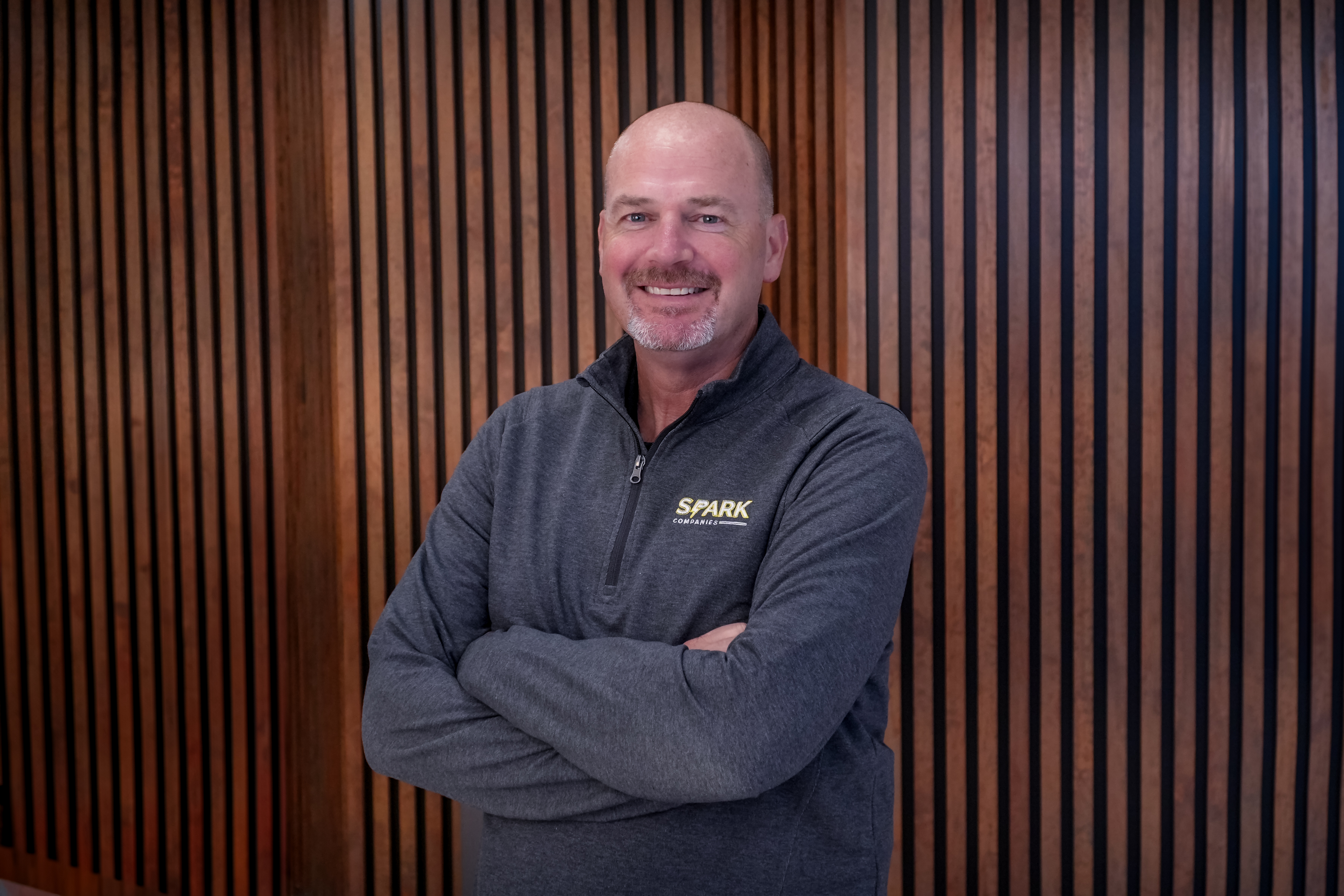
Chief Sales Officer
Dave Veres is a 30-year staffing industry veteran and Chief Sales Officer at Spark Companies. He spent 27 years at Aerotek, helping grow the business from $300M to $13.6B and building scalable business development processes across automotive, aerospace and defense, and hardware/software/systems — many of which are still in use 20 years later. His diagnostic approach to client relationships earned high-volume partnerships with Fortune 250 companies and caught the attention of Allegis Group co-founder Jim Davis, and was selected to lead cross-operational enterprise initiatives spanning multiple billion-dollar business units. A former Michigan State baseball captain, First Team All-Big Ten shortstop, and Defensive Player of the Year, Dave brings the same relationship-first philosophy to the boardroom that he learned on the diamond. He and his wife Erin have been married over 30 years and are the proud parents of two sons, Kade and Cam.