Millee: Your AI-Powered Recruiting Co-Pilot
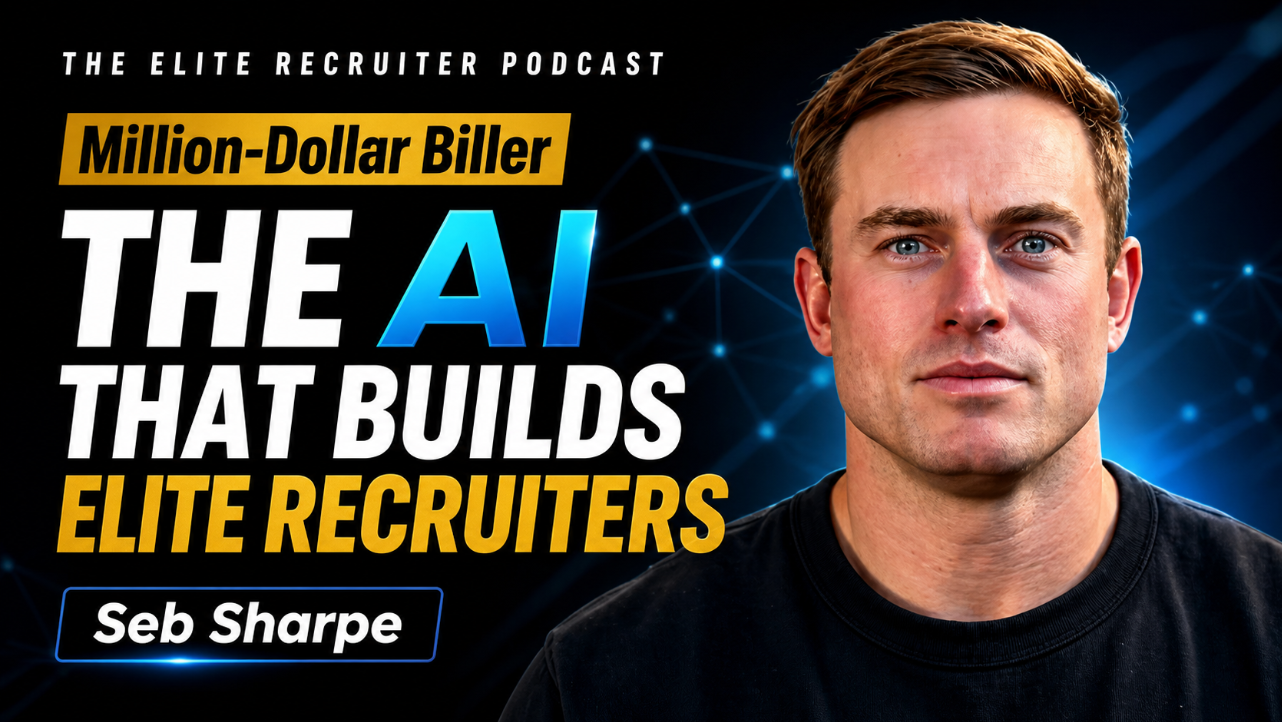
Welcome back to the blog, everyone! This week on the podcast, we dove deep into the transformative power of artificial intelligence in the recruitment industry. Our guest, Seb Sharpe, brought an incredibly insightful perspective on how AI isn't just a tool, but a fundamental shift in how we approach talent acquisition. If you haven't listened to the episode yet, I highly encourage you to check out "Million-Dollar Biller: The AI That Builds Elite Recruiters." In that conversation, Seb really laid bare the idea that AI is less about saving careers and more about exposing the foundational strength of a recruiter's strategy. Today, we're going to expand on one of the most exciting applications of this AI revolution: the Millee platform. We'll unpack what makes Millee so special, how it operates like an experienced recruiter sitting right in your inbox, and most importantly, how its unique health-score dashboard can be the secret weapon for identifying truly alive deals versus those that are, frankly, dead in the water.
What is Millee? An AI Co-Pilot for Your Inbox
Let's start with the fundamental question: what exactly is Millee? In essence, Millee is an AI-powered recruiting intelligence platform. But to simply label it as "software" would be a massive understatement. Think of Millee as your personal AI co-pilot, specifically designed to navigate the complexities of your daily recruitment workflow. It doesn't replace you; instead, it augments your capabilities, acting as an intelligent assistant that understands the nuances of the recruitment process. It's built on a foundation of vast amounts of high-quality recruiting data, allowing it to learn and adapt, much like a seasoned recruiter who has seen thousands of placements and interactions.
The core concept behind Millee is to bring sophisticated AI capabilities directly into your existing workflow, primarily your inbox. This is a crucial distinction. Many AI tools exist in a separate space, requiring you to log in, process information, and then translate it back into your operational tools. Millee, however, integrates seamlessly. It's designed to observe, analyze, and provide insights within the very environment where most recruitment happens: your email. This immediate proximity to your daily activities makes its intelligence instantly actionable and incredibly valuable.
Imagine having an incredibly experienced recruiter, one who has meticulously tracked and analyzed countless candidate journeys, deal pipelines, and client interactions, looking over your shoulder. This hypothetical recruiter doesn't just observe; they offer insights, flag opportunities, and warn you of potential pitfalls. That's the essence of Millee. It's not just about automating tasks; it's about enhancing your decision-making and improving your efficiency by providing intelligence that would otherwise be time-consuming, if not impossible, to glean manually.
How Millee Functions Like an Elite Recruiter
So, how does Millee manage to emulate the skills of an elite recruiter? It boils down to its AI's ability to process and understand human communication, identify patterns, and predict outcomes. When we talk about an elite recruiter, we're talking about someone who has an almost innate sense of what's happening in a deal, who understands the subtle cues in client and candidate communication, and who can prioritize their efforts effectively. Millee aims to replicate this by leveraging advanced natural language processing (NLP) and machine learning algorithms.
Firstly, Millee analyzes your email communications. This isn't just about keyword spotting; it's about understanding context, sentiment, and intent. It can differentiate between a casual inquiry and a serious expression of interest. It can gauge the level of engagement from both candidates and clients. For instance, it can detect if a candidate is actively interviewing elsewhere, if a client is genuinely excited about a particular profile, or if communication has gone cold.
Secondly, Millee builds a comprehensive understanding of your pipeline. By integrating with your inbox, it can track the progress of each role, the stage of each candidate in the interview process, and the level of interaction with your clients. This creates a dynamic, real-time view of your recruitment activities. Unlike traditional CRM systems that rely on manual data entry, Millee passively collects this information, ensuring that the data is always current and reflects the actual state of affairs.
Thirdly, and perhaps most critically, Millee learns from your interactions and the broader recruiting landscape. It's trained on a massive dataset of recruiting activities, allowing it to recognize successful patterns and identify common pitfalls. This means it can provide proactive advice. For example, if it notices that a promising candidate's communication frequency is dropping, it might flag that to you, suggesting a timely outreach. Or, if a client has been unusually slow to respond to submissions, Millee might indicate that the deal's momentum is waning.
The "elite recruiter" analogy is powerful because it highlights Millee's focus on strategic intelligence rather than brute-force automation. An elite recruiter doesn't just send more emails; they send the right emails to the right people at the right time, and they know which conversations are worth pursuing with genuine energy. Millee aims to empower every recruiter with this level of discernment, transforming their daily operations from a series of reactive tasks into a proactive, intelligence-driven strategy.
The Millee Health Score: Identifying Real vs. 'Dead' Deals
This is where Millee truly shines and differentiates itself. The concept of "deal health" is something every recruiter grapples with. We've all experienced the frustration of investing significant time and energy into a role or a candidate, only to discover later that it was never going to materialize. Millee tackles this head-on with its innovative "Health Score" dashboard. This feature is a game-changer because it provides a quantifiable, objective assessment of the vitality of each deal in your pipeline.
How does it work? Millee analyzes a multitude of factors derived from your email and communication patterns. It looks at the frequency and responsiveness of communication between you, the client, and the candidate. It considers the sentiment expressed in these communications. It assesses the recency of key interactions, such as interview confirmations, feedback exchanges, or offer discussions. It even takes into account external signals, if available, like a candidate mentioning other active interview processes.
Based on these complex analyses, Millee assigns a health score to each of your active roles and key candidate relationships. This score isn't a static number; it's a dynamic indicator that fluctuates based on real-time communication and engagement. A high health score suggests a deal that is actively progressing, with strong engagement from all parties and positive sentiment. Conversely, a low health score might indicate declining engagement, stalled communication, or potential roadblocks that haven't been addressed.
The real magic of the health score lies in its ability to highlight "dead" deals that are masquerading as alive. We often fall into the trap of optimism, clinging to roles where communication has become sporadic, or where client feedback has been vague. Millee cuts through this ambiguity. If a deal's health score is consistently low and trending downwards, it's a strong signal that your precious time and resources might be better allocated elsewhere. This allows recruiters to make data-driven decisions about where to focus their energy, ensuring they are investing in opportunities with the highest probability of success.
Consider the alternative: manually trying to keep track of the health of dozens of roles, each with multiple stakeholders, would be an overwhelming, if not impossible, task. Millee automates this crucial diligence. It provides a clear, visual representation of deal health, enabling recruiters to quickly identify those that need immediate attention and those that might be best deprioritized to focus on more promising avenues. This proactive approach to identifying and addressing "cold" deals is what separates top performers from the rest, and it's a capability that Millee democratizes for everyone.
Beyond Speed: Why Millee Focuses on Intelligence, Not Just Volume
It's tempting to think that with AI, the primary benefit will be speed – sending more emails faster, scheduling more calls quicker, and so on. While Millee certainly contributes to efficiency and can accelerate certain processes, its true value proposition lies in its focus on intelligence over mere volume. This aligns perfectly with the insights shared by Seb Sharpe in our recent podcast episode. He argued that the recruiters who are betting on AI to simply do "more of the same, faster" are missing the point and are, in fact, accelerating their own irrelevance.
The recruitment landscape is becoming increasingly sophisticated. Clients and candidates are more discerning, and the competition for top talent is fiercer than ever. In this environment, simply increasing the volume of outreach without a corresponding increase in quality or strategic insight is unlikely to yield significant results. In fact, it can lead to burnout and a decrease in overall effectiveness.
Millee understands this. Instead of just encouraging you to blast out more messages, it provides the intelligence to make your communications more impactful. By understanding the nuances of your pipeline and the sentiment of your interactions, Millee helps you tailor your approach. It suggests when to engage, what to say, and who to prioritize. This means that every email you send, every call you make, is more likely to be productive because it's informed by a deeper understanding of the situation.
The health score is a prime example of this intelligence-driven approach. It's not about how many deals you have open, but how *healthy* those deals are. It encourages you to focus your energy on opportunities that have a genuine chance of closing, rather than wasting time on "ghost" roles or candidates who are no longer engaged. This strategic prioritization is what leads to consistent, high-value performance, not just a high volume of activity.
Furthermore, Millee's AI acts as a constant learning mechanism. It observes what works and what doesn't within your specific context and within the broader industry trends. This allows it to provide increasingly refined insights over time. It's not a static tool; it's an evolving partner that helps you adapt and improve your recruitment strategy. By focusing on intelligence, Millee empowers recruiters to be more effective, more strategic, and ultimately, more successful.
The Future of Recruiting: AI as an Amplifier, Not a Crutch
The conversation around AI in recruitment often sparks a debate: will AI replace recruiters? From what we're seeing with platforms like Millee and the insights shared by experts like Seb Sharpe, the answer is a resounding "no," but with a critical caveat. AI is not a replacement for the human element of recruitment – the relationship building, the empathy, the strategic negotiation, and the deep understanding of talent. Instead, AI is poised to become an indispensable amplifier of these human capabilities.
Think of AI as a highly skilled assistant that handles the grunt work, analyzes vast amounts of data, and provides actionable insights, freeing up the human recruiter to focus on what they do best. This is the vision of AI as an amplifier. It empowers elite recruiters to become even more elite, and it enables aspiring recruiters to develop the skills and strategic thinking necessary to succeed at the highest level.
Millee embodies this philosophy. It doesn't try to automate the entire recruitment process and pretend that it can replace the nuanced interactions between recruiter, candidate, and client. Instead, it enhances the recruiter's ability to understand and navigate these interactions. The health score, for example, doesn't tell you *what* to do to salvage a dying deal, but it signals that *something* needs to be done, prompting the recruiter to apply their human expertise to the situation.
The alternative, as highlighted in our podcast episode, is using AI as a crutch. This is where recruiters might rely on AI to simply churn out more volume, assuming that more activity will automatically lead to more success. This approach is unsustainable and ultimately detrimental. It leads to a superficial understanding of the market and a diminished ability to build meaningful relationships. As Seb Sharpe pointed out, this reliance on AI as a shortcut will eventually expose the weaknesses in a recruiter's foundational skills, leading to their irrelevance.
The future of recruitment, therefore, will be characterized by a symbiotic relationship between human talent and artificial intelligence. Recruiters who embrace AI as a tool to augment their skills, improve their strategic decision-making, and enhance their efficiency will thrive. Those who view AI as a replacement for genuine skill and strategic thinking will find themselves outmaneuvered. Platforms like Millee are at the forefront of this evolution, offering a glimpse into a future where AI empowers recruiters to achieve unprecedented levels of success.
Conclusion: Leveraging Millee for Peak Recruitment Performance
As we wrap up this deep dive into Millee, it's clear that this AI-powered recruiting co-pilot represents a significant leap forward in how we approach talent acquisition. The platform's ability to function like an experienced recruiter, observing, analyzing, and advising from within your inbox, is truly remarkable. As we discussed on the latest episode of the podcast, "Million-Dollar Biller: The AI That Builds Elite Recruiters," the AI revolution in recruitment is not about replacing humans, but about augmenting their capabilities. Millee is a prime example of this principle in action.
The innovative Health Score dashboard is perhaps Millee's most compelling feature, offering a clear, objective measure of deal vitality. By identifying which deals are genuinely alive and which are effectively dead, Millee empowers recruiters to allocate their time and resources with unprecedented efficiency and strategic insight. This focus on intelligence, rather than just volume, is what will differentiate successful recruiters in the evolving landscape of talent acquisition. By leveraging AI as an amplifier, not a crutch, recruiters can achieve peak performance, building stronger pipelines and delivering better outcomes for their clients and candidates.

Podcast Host/Recruiting Community Cheerleader
Benjamin Mena is a recruiting leader in executive search and government contracting. He serves as Managing Partner of Select Source Solutions, an executive search firm specializing in federal recruiting for government contractors. Benjamin is also the executive recruiter podcast host behind The Elite Recruiter Podcast – a top-ranked show for recruiting professionals that has amassed nearly 500,000 downloads to date. Recognized for his forward-thinking approach, he explores AI’s impact on recruiting and navigates the unique complexities of government hiring, positioning himself as a visionary voice in the industry.
Through his podcast and industry events, Benjamin has elevated recruitment strategies and supported recruiters, founders, and hiring leaders worldwide. The Elite Recruiter Podcast’s success has driven a vibrant community, including virtual recruiting summits that have drawn over 10,000 attendees. As a frequent recruiting summit speaker, Benjamin empowers audiences with actionable insights and innovative tactics. Backed by 20 years of experience recruiting for large defense contracts and complex federal programs, he stands out as a premier government contracting headhunter who is dedicated to advancing recruiting practices and helping organizations thrive in the evolving hiring landscape.
Beyond his work in executive search and podcasting, Benjamin is deeply focused on leading and elevating the global executive recruiting community. Through The Elite Recruiter Podcast, large-scale virtual summits, and curated peer conversations, he brings togeth… Read More