Why 'More Emails Faster' Isn't the AI Solution Recruiters Need
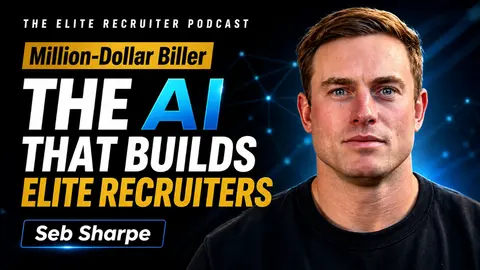
Welcome back to the blog, everyone! In our latest episode, we delved into a topic that's currently at the forefront of the recruitment industry: the impact of Artificial Intelligence. Specifically, we discussed the often-touted benefit of AI empowering recruiters to send "more emails faster." But as we explored, and as this blog post will further expand upon, is that simply increasing outreach volume with AI a genuine solution, or is it merely a mirage?
Our conversation with Seb Sharpe on the Million-Dollar Biller: The AI That Builds Elite Recruiters episode was a wake-up call for many. Seb made a compelling case that recruiters who believe AI's primary value lies in simply automating and accelerating their existing, often inefficient, processes are on a path to obsolescence. This post will unpack those ideas, dissecting why the "more emails faster" approach is fundamentally flawed and exploring what truly distinguishes successful recruiters from the rest. We'll look beyond the inbox to understand the core drivers of elite performance and how AI, when leveraged intelligently, can become a powerful tool for building sustainable, high-impact recruitment careers.
The Allure of 'More Emails Faster': Why It's a Recruiting Mirage
The promise of Artificial Intelligence in recruitment often boils down to a seductive narrative: automate the tedious, amplify the output, and achieve more in less time. For many in the industry, this translates into a straightforward equation: AI = more emails, faster sending. On the surface, it sounds like a winning formula. Imagine an AI assistant that can churn out personalized outreach messages at a rate no human ever could. The idea is that by bombarding a larger pool of candidates and clients with more communications, the law of averages will inevitably lead to more placements, more deals, and ultimately, more revenue.
This is particularly appealing to recruiters operating in high-volume, contingency-based environments where a constant stream of activity is often equated with productivity. The pressure to hit targets, to fill roles quickly, and to maintain a visible presence in the market can lead to a desperate search for tools that promise to alleviate that pressure. AI, with its perceived ability to handle repetitive tasks and scale communication, seems like the perfect antidote to the relentless demands of the recruiting profession.
Think about the traditional recruitment process. A recruiter might spend hours crafting emails, searching LinkedIn, and making calls. If an AI can automate the drafting of hundreds of these messages, and schedule them to be sent out in rapid succession, it's easy to see why the allure is so strong. The visual of an automated outreach machine working tirelessly in the background is a powerful one. It taps into the desire for efficiency and the hope that technology can magically solve the inherent complexities and challenges of human connection that lie at the heart of recruitment.
However, this focus on sheer volume, this obsession with "more emails faster," overlooks a fundamental truth about the recruitment industry. It’s a business built on relationships, trust, and understanding. While quantity can sometimes lead to quality outcomes, it's rarely the sole or even primary driver of success. This is where the allure of AI-driven volume becomes a mirage – a tempting illusion that distracts from the deeper, more impactful ways AI can transform recruitment.
The Harsh Reality: Why Volume Isn't the Key to Recruiting Success
The uncomfortable truth, as highlighted in our discussion with Seb, is that simply increasing the volume of outreach through AI is not the answer to building a successful and sustainable recruitment career. In fact, it can be a detrimental strategy. The recruitment industry, at its core, is about people. It's about understanding the nuanced needs of a hiring manager, empathizing with a candidate's career aspirations, and facilitating a match that benefits both parties. These are inherently human-centric activities that cannot be effectively replicated by simply firing off more generic messages.
Consider the hit ratio in contingency recruitment, which stubbornly hovers around 25%. This statistic alone suggests that the current approach, even with human effort, is far from a perfect science. Now, imagine amplifying that hit ratio with automated, potentially generic, outreach. Does sending 500 emails instead of 50 automatically guarantee four times the success if those emails lack personalization, context, and a genuine understanding of the recipient's needs? Unlikely. In many cases, it might even lead to a decrease in response rates as inboxes become flooded with what appear to be mass-produced, impersonal messages.
Recipients, whether they are candidates or clients, are discerning. They can often spot a templated, mass-sent email from a mile away. When a message feels generic, it fails to capture attention, build rapport, or convey a sense of genuine interest. Instead of building a connection, it can create a barrier, marking the sender as just another recruiter adding to the noise. This is particularly true for passive candidates, who are often highly skilled and in demand. They are less likely to respond to a generic plea for their attention and more likely to engage with someone who demonstrates a deep understanding of their skills, their career goals, and the specific opportunity being presented.
Furthermore, an over-reliance on volume can lead to a neglect of the critical qualitative aspects of recruitment. Instead of spending time understanding the intricacies of a role, delving into a candidate's motivations, or building strategic relationships with clients, recruiters might find themselves merely monitoring AI output. This shifts the focus from strategic engagement to administrative oversight, and in doing so, erodes the very skills that make a recruiter valuable. It's the equivalent of a chef focusing on making more plates of food faster, without paying attention to the quality of ingredients or the artistry of the dish.
The real drivers of success in recruitment are not simply the number of emails sent, but the quality of the interactions, the depth of the understanding, and the strength of the relationships forged. Volume can be a byproduct of effective strategy, but it should never be the strategy itself. The harsh reality is that chasing "more emails faster" is a treadmill that leads nowhere, a superficial fix that fails to address the underlying challenges and opportunities in the industry.
Beyond the Inbox: What Truly Drives Elite Recruitment
If simply sending more emails faster isn't the path to elite status, what is? The answer lies in shifting our focus from transactional volume to strategic intelligence and relationship building. Elite recruiters don't just fill jobs; they solve problems, build careers, and shape organizations. They understand that recruitment is a nuanced, human-centric process that requires more than just a high output of communication.
One of the most crucial elements is deep market intelligence. This goes beyond knowing which companies are hiring. It means understanding industry trends, identifying emerging skill sets, and comprehending the competitive landscape for talent. Elite recruiters are constantly learning, staying ahead of the curve, and positioning themselves as trusted advisors who can offer insights and guidance. This knowledge allows them to have more meaningful conversations, to identify opportunities others miss, and to present candidates who are not just qualified, but who are also the *right* fit, not just for the role, but for the company culture and long-term vision.
Personalization is another non-negotiable. In an era of mass communication, a truly personalized approach cuts through the noise. This isn't just about changing a name in a template. It's about demonstrating genuine research into the candidate's background, understanding their career trajectory, and tailoring the message to their specific interests and aspirations. For clients, personalization means understanding their business challenges, their team dynamics, and the strategic importance of the hires they need. This level of tailored engagement builds trust and establishes the recruiter as a valuable partner, not just a transactional vendor.
Relationship building is the bedrock of elite recruitment. This involves nurturing a network of both candidates and clients over the long term. It's about staying in touch, offering value beyond immediate placements, and becoming a go-to resource for career advice or talent acquisition strategies. These enduring relationships are the source of repeat business, exclusive mandates, and invaluable market insights. Elite recruiters understand that their network is their net worth, and they invest time and effort in cultivating these connections.
Furthermore, elite recruiters possess exceptional consultative skills. They are adept at active listening, asking insightful questions, and providing strategic advice. They act as consultants, guiding both candidates and clients through the complexities of the hiring process. This involves managing expectations, mediating discussions, and ensuring a smooth and positive experience for all parties involved. It's this consultative approach that differentiates them from those who are merely order-takers.
Finally, elite recruiters are characterized by their resilience and their continuous pursuit of self-improvement. They learn from every interaction, analyze their successes and failures, and are always looking for ways to refine their approach. This commitment to growth, coupled with a deep understanding of the human element in recruitment, is what truly drives success and distinguishes them in a crowded field.
The AI Advantage: Shifting from Output to Intelligence
The discussion around AI in recruitment often gets stuck on the superficial – can it automate tasks? Can it send more emails? While these are valid questions, they miss the truly transformative potential of AI. The real advantage of AI for recruiters isn't in amplifying existing, potentially flawed, processes, but in elevating their intelligence and strategic capabilities. It’s about moving beyond just *doing* more, to *knowing* more and *doing* better.
AI has the power to process and analyze vast amounts of data in ways that are impossible for humans. This data can provide unprecedented insights into market trends, candidate profiles, and client needs. For example, AI can identify patterns in successful hires, predict which candidates are likely to be a good fit based on a multitude of factors beyond a resume, and even forecast future talent demands within specific industries. This is intelligence, not just automation.
Imagine an AI that can sift through millions of data points to identify the subtle indicators of a candidate's potential for a specific role – not just based on keywords, but on their career progression, the companies they've worked for, and even their professional network. This level of predictive analytics allows recruiters to move from reactive searching to proactive talent identification. Instead of waiting for a job to be posted, they can start building pipelines of high-potential candidates who align with future needs.
For clients, AI can offer a level of strategic insight that goes beyond simply fulfilling a requisition. It can help them understand the competitive talent landscape, benchmark their compensation packages, and identify potential risks and opportunities in their hiring strategies. This transforms the recruiter from a vendor into a strategic partner, capable of offering data-driven advice that impacts the client’s business success.
Furthermore, AI can act as an intelligent assistant, augmenting the recruiter's capabilities rather than replacing them. Think of an AI that can provide real-time market intelligence during a client call, suggest follow-up actions based on the conversation's nuances, or even offer insights into a candidate's potential concerns that the recruiter might not have anticipated. This isn't about firing off more emails; it's about enriching the quality and strategic value of every interaction.
The true AI advantage lies in its ability to enhance a recruiter's intelligence, their ability to make informed decisions, and their capacity to build deeper, more meaningful connections. By shifting the focus from mere output to intelligent insights and enhanced human interaction, AI can empower recruiters to become more effective, more strategic, and ultimately, more successful in building their careers.
Building a Sustainable Career in Recruitment: The Real AI Solution
The recruitment industry is at a crossroads. On one path lies the allure of "more emails faster," a strategy that promises quick wins but ultimately leads to a shallow and unsustainable career. On the other path lies a future where AI is leveraged not to simply amplify existing efforts, but to fundamentally enhance the intelligence, relationships, and strategic value that recruiters bring to the table. This is the path to building a truly sustainable and rewarding career.
The recruiters who embrace this second path are the ones who will thrive. They understand that AI is not a magic bullet for inefficiency, but a powerful tool for augmentation. They are using AI to gain a deeper understanding of the market, to identify high-potential candidates with greater accuracy, and to build more robust, long-term relationships with both clients and candidates. This isn't about replacing human judgment; it's about empowering it with data and insights.
Consider the concept of "accountability" that Seb touches upon. AI can provide visibility into the true health of a recruitment pipeline. It can highlight deals that are languishing, candidates who are disengaging, and clients who are becoming unresponsive. This data-driven feedback loop allows recruiters to course-correct, to focus their energy where it will have the most impact, and to avoid wasting time on activities that are unlikely to yield results. This proactive approach, guided by AI intelligence, is crucial for sustainable success.
Building a sustainable career also means cultivating a reputation as a trusted advisor. When recruiters can leverage AI to provide data-backed insights and strategic recommendations, they move beyond the transactional to the consultative. This builds credibility and fosters long-term partnerships, leading to repeat business and a more stable revenue stream. It’s about becoming indispensable, not just interchangeable.
The true AI solution for recruiters is one that empowers them to become more strategic, more insightful, and more relationship-focused. It’s about using technology to amplify their human strengths, to make better decisions, and to build a career that is not just productive in the short term, but resilient and rewarding in the long term. This is the future of recruitment, and the recruiters who embrace it will be the ones shaping the industry for years to come.
Looking Ahead: The Bifurcation of the Recruitment Industry
The introduction of powerful AI tools into the recruitment landscape is not a singular event; it is the catalyst for a significant shift that will likely lead to a bifurcation within the industry. We are already seeing the early signs of this divergence, and in the coming years, the gap between those who adapt and those who resist will only widen. This isn't about a simple technological upgrade; it's about a fundamental redefinition of what it means to be a successful recruiter.
On one side, we will see the recruiters who embrace AI as a tool to augment their capabilities, not merely to automate existing tasks. These are the individuals who will use AI to gain deeper market intelligence, to identify talent with unprecedented precision, and to build stronger, more strategic relationships. They will leverage AI to triple their output in terms of quality and impact, not just quantity. Their focus will be on consultative selling, on becoming trusted advisors, and on delivering strategic value to their clients. These recruiters will be highly efficient, highly informed, and highly sought after. They will be the ones who can command higher fees, secure exclusive mandates, and build truly sustainable, high-earning careers.
On the other side, we will see the recruiters who cling to traditional methods, or who adopt AI only in its most superficial applications, such as simply increasing the volume of generic outreach. These individuals will find themselves increasingly outmatched. As their competitors leverage AI for smarter insights and more effective engagement, their efforts will become less impactful, their response rates will dwindle, and their market share will erode. They will be caught in a cycle of trying to do more of what isn’t working, while the leading edge of the industry moves forward. The "more emails faster" approach will be their undoing, leaving them quietly falling behind as the market demands a higher caliber of service and strategic thinking.
This bifurcation will redefine the perception of recruiters. Those who are seen as strategic partners, capable of leveraging technology to deliver exceptional value, will be elevated. Those who remain transactional, focusing on volume over substance, will be marginalized. The industry will become polarized between elite performers who are empowered by intelligent AI and those who are overwhelmed by it. The future belongs to the recruiters who understand that AI is not a substitute for skill and intelligence, but a powerful accelerant for them.
In conclusion, the notion of "more emails faster" as the primary benefit of AI in recruitment is a dangerous oversimplification. As we've explored throughout this post, true success in recruitment lies in strategic intelligence, deep relationships, and consultative expertise. AI's real power is in enhancing these core competencies, not in simply increasing output. This topic was a central theme in our recent episode, Million-Dollar Biller: The AI That Builds Elite Recruiters, where Seb Sharpe powerfully articulated why relying on sheer volume is a flawed strategy. The future of recruitment lies in leveraging AI to become smarter, more insightful, and more valuable partners, paving the way for sustainable and successful careers.

Podcast Host/Recruiting Community Cheerleader
Benjamin Mena is a recruiting leader in executive search and government contracting. He serves as Managing Partner of Select Source Solutions, an executive search firm specializing in federal recruiting for government contractors. Benjamin is also the executive recruiter podcast host behind The Elite Recruiter Podcast – a top-ranked show for recruiting professionals that has amassed nearly 500,000 downloads to date. Recognized for his forward-thinking approach, he explores AI’s impact on recruiting and navigates the unique complexities of government hiring, positioning himself as a visionary voice in the industry.
Through his podcast and industry events, Benjamin has elevated recruitment strategies and supported recruiters, founders, and hiring leaders worldwide. The Elite Recruiter Podcast’s success has driven a vibrant community, including virtual recruiting summits that have drawn over 10,000 attendees. As a frequent recruiting summit speaker, Benjamin empowers audiences with actionable insights and innovative tactics. Backed by 20 years of experience recruiting for large defense contracts and complex federal programs, he stands out as a premier government contracting headhunter who is dedicated to advancing recruiting practices and helping organizations thrive in the evolving hiring landscape.
Beyond his work in executive search and podcasting, Benjamin is deeply focused on leading and elevating the global executive recruiting community. Through The Elite Recruiter Podcast, large-scale virtual summits, and curated peer conversations, he brings togeth… Read More